Supreme Court Challenges Trump’s Trade Agenda in Pivotal Tariff Ruling
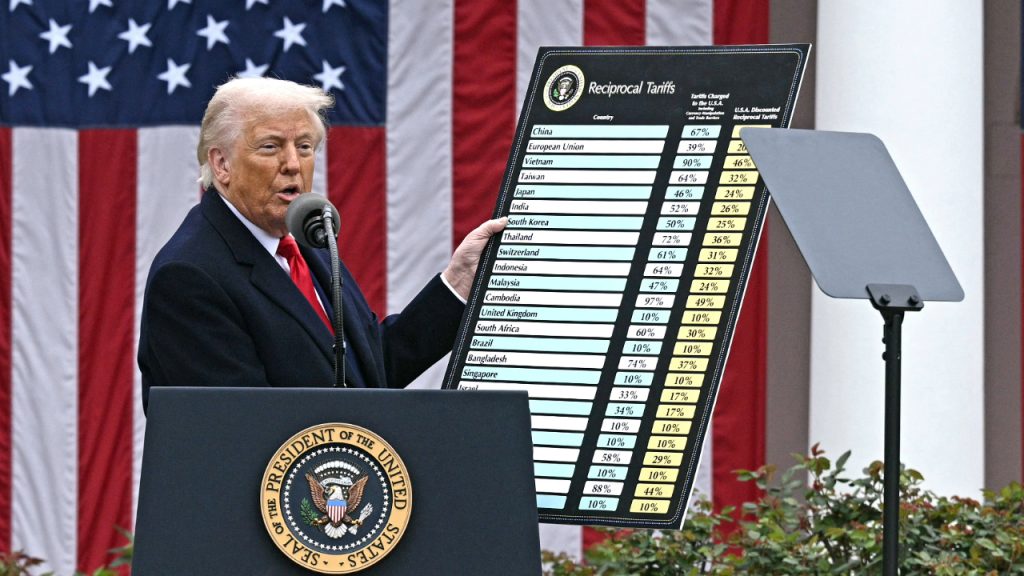
FOX Business host Charles Payne discusses the claims that tariffs are inflationary on ‘Making Money.’
The Supreme Court recently delivered a significant setback to President Donald Trump’s trade agenda, ruling against him in a pivotal case that questioned the legality of tariffs impacting global markets and U.S. supply chains.
As of now, the White House has not responded to Fox News Digital’s request for comments regarding this ruling.
TRUMP DEFENDS TARIFFS, SAYS US HAS BEEN ‘THE KING OF BEING SCREWED’ BY TRADE IMBALANCE
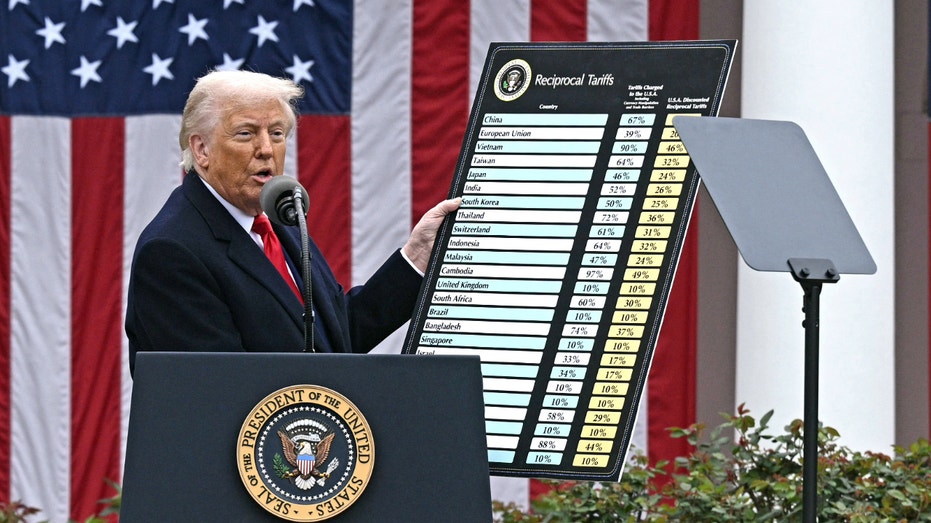
President Donald Trump announced his “Liberation Day” reciprocal tariffs in April 2025. (Brendan Smialowski/AFP/Getty Images / Getty Images)
The two cases at the heart of this ruling, which Trump has labeled as “life or death” for the United States, compelled the Supreme Court to evaluate the extent of presidential power in reshaping U.S. trade policy.
These challenges, Learning Resources Inc. v. Trump and Trump v. V.O.S. Selections Inc., were initiated by an educational toy manufacturer and a family-owned wine and spirits importer, both contesting the legality of Trump’s tariffs.
At the core of these disputes lies a crucial question: did the International Emergency Economic Powers Act (IEEPA) grant the president the authority to impose these tariffs, or did it overstep constitutional boundaries? This legal battle follows Trump’s “Liberation Day” tariffs introduced in April, which aimed to rectify trade imbalances and lessen dependence on foreign goods.
US TARIFF REVENUE UP 300% UNDER TRUMP AS SUPREME COURT BATTLE LOOMS
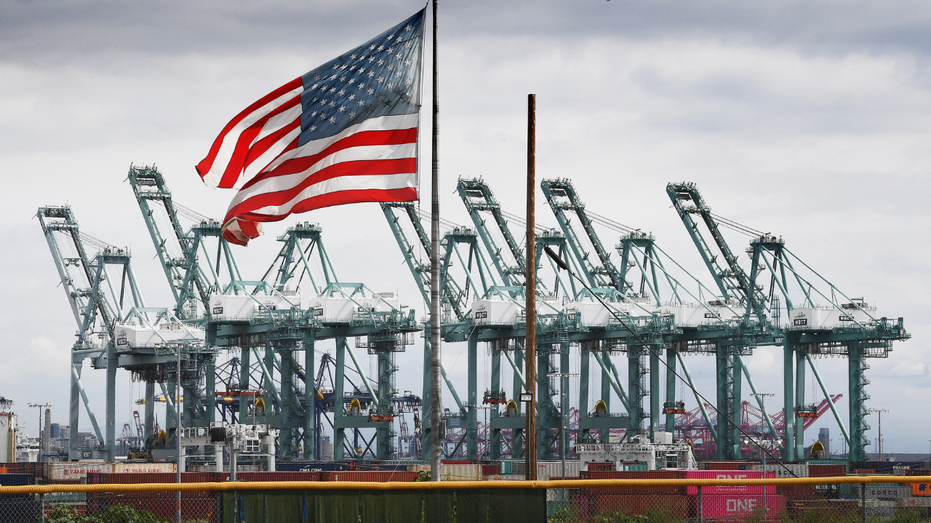
Trump has promised to use some of the revenue from tariffs to issue $2,000 checks to Americans and to pay down the nation’s debt. (Mark Ralston/AFP/Getty Images)
This ruling arrives at a time when tariff revenue and the associated economic stakes have reached unprecedented levels. Duties surged from $9.6 billion in March to $23.9 billion in May following the implementation of the tariffs. For fiscal 2025, which concluded on September 30, collections soared to $215.2 billion, with the upward trend continuing into fiscal 2026, where receipts are already surpassing last year’s figures.
Since Trump’s return to office, tariff collections have skyrocketed by approximately 300%, providing a substantial boost to federal revenues. In January alone, duties amounted to $30.4 billion, reflecting a 275% increase from the previous year, while revenue for the current fiscal year has reached $124 billion, marking a 304% rise compared to the same period last year.
TRUMP SAYS SUPREME COURT CASE ON TRADE IS ‘LIFE OR DEATH’ FOR THE US
Tariffs act as a tax on imports, often leading U.S. importers to absorb the initial costs before passing them on to wholesalers, retailers, and ultimately consumers. This means households and businesses may face increased prices for a wide range of goods, from electronics to raw materials.
The impact of tariffs on the economy is complex, hinging on how much of the burden consumers bear, how domestic producers react, and whether the anticipated economic or geopolitical benefits justify the additional costs to consumers. This complexity renders the Supreme Court’s ruling particularly significant for households and businesses already grappling with rising expenses.
The surge in revenue highlights the critical role tariffs play in Trump’s economic strategy, with the administration asserting that these collections can fund domestic initiatives, reduce national debt, and potentially provide a proposed $2,000 dividend to Americans.
However, with total national obligations exceeding $38 trillion, tariff revenue represents a mere fraction of what is owed—billions collected against trillions in debt.
CLICK HERE TO GET FOX BUSINESS ON THE GO
Trump continues to assert that aggressive tariffs are essential to address what he perceives as years of unfair global trade practices, emphasizing how integral trade policy is to his broader economic framework.
As affordability remains a key concern for voters approaching the midterm elections, any policy that raises consumer prices is likely to come under increased political scrutiny.
Read the Supreme Court decision:
FOX Business host Charles Payne discusses the claims that tariffs are inflationary on ‘Making Money.’
The Supreme Court recently delivered a significant setback to President Donald Trump’s trade agenda, ruling against him in a pivotal case that questioned the legality of tariffs impacting global markets and U.S. supply chains.
As of now, the White House has not responded to Fox News Digital’s request for comments regarding this ruling.
TRUMP DEFENDS TARIFFS, SAYS US HAS BEEN ‘THE KING OF BEING SCREWED’ BY TRADE IMBALANCE
President Donald Trump announced his “Liberation Day” reciprocal tariffs in April 2025. (Brendan Smialowski/AFP/Getty Images / Getty Images)
The two cases at the heart of this ruling, which Trump has labeled as “life or death” for the United States, compelled the Supreme Court to evaluate the extent of presidential power in reshaping U.S. trade policy.
These challenges, Learning Resources Inc. v. Trump and Trump v. V.O.S. Selections Inc., were initiated by an educational toy manufacturer and a family-owned wine and spirits importer, both contesting the legality of Trump’s tariffs.
At the core of these disputes lies a crucial question: did the International Emergency Economic Powers Act (IEEPA) grant the president the authority to impose these tariffs, or did it overstep constitutional boundaries? This legal battle follows Trump’s “Liberation Day” tariffs introduced in April, which aimed to rectify trade imbalances and lessen dependence on foreign goods.
US TARIFF REVENUE UP 300% UNDER TRUMP AS SUPREME COURT BATTLE LOOMS
Trump has promised to use some of the revenue from tariffs to issue $2,000 checks to Americans and to pay down the nation’s debt. (Mark Ralston/AFP/Getty Images)
This ruling arrives at a time when tariff revenue and the associated economic stakes have reached unprecedented levels. Duties surged from $9.6 billion in March to $23.9 billion in May following the implementation of the tariffs. For fiscal 2025, which concluded on September 30, collections soared to $215.2 billion, with the upward trend continuing into fiscal 2026, where receipts are already surpassing last year’s figures.
Since Trump’s return to office, tariff collections have skyrocketed by approximately 300%, providing a substantial boost to federal revenues. In January alone, duties amounted to $30.4 billion, reflecting a 275% increase from the previous year, while revenue for the current fiscal year has reached $124 billion, marking a 304% rise compared to the same period last year.
TRUMP SAYS SUPREME COURT CASE ON TRADE IS ‘LIFE OR DEATH’ FOR THE US
Tariffs act as a tax on imports, often leading U.S. importers to absorb the initial costs before passing them on to wholesalers, retailers, and ultimately consumers. This means households and businesses may face increased prices for a wide range of goods, from electronics to raw materials.
The impact of tariffs on the economy is complex, hinging on how much of the burden consumers bear, how domestic producers react, and whether the anticipated economic or geopolitical benefits justify the additional costs to consumers. This complexity renders the Supreme Court’s ruling particularly significant for households and businesses already grappling with rising expenses.
The surge in revenue highlights the critical role tariffs play in Trump’s economic strategy, with the administration asserting that these collections can fund domestic initiatives, reduce national debt, and potentially provide a proposed $2,000 dividend to Americans.
However, with total national obligations exceeding $38 trillion, tariff revenue represents a mere fraction of what is owed—billions collected against trillions in debt.
CLICK HERE TO GET FOX BUSINESS ON THE GO
Trump continues to assert that aggressive tariffs are essential to address what he perceives as years of unfair global trade practices, emphasizing how integral trade policy is to his broader economic framework.
As affordability remains a key concern for voters approaching the midterm elections, any policy that raises consumer prices is likely to come under increased political scrutiny.