Supreme Court to Rule on Trump’s Tariff Authority This Friday
White House senior counselor for trade and manufacturing Peter Navarro discusses President Donald Trump’s economic agenda and the Supreme Court’s upcoming decision on tariffs on ‘Mornings with Maria.’
The nation’s highest court is poised to rule Friday on a case that could redefine the scope of President Donald Trump‘s trade agenda.
This pivotal case arises from lawsuits filed by an educational toy manufacturer and a family-owned wine and spirits importer, both challenging Trump’s tariffs. The court must determine whether the International Emergency Economic Powers Act (IEEPA) granted the president the authority to impose these tariffs, or if such actions exceeded constitutional limits.
TRUMP DEFENDS TARIFFS, SAYS US HAS BEEN ‘THE KING OF BEING SCREWED’ BY TRADE IMBALANCE
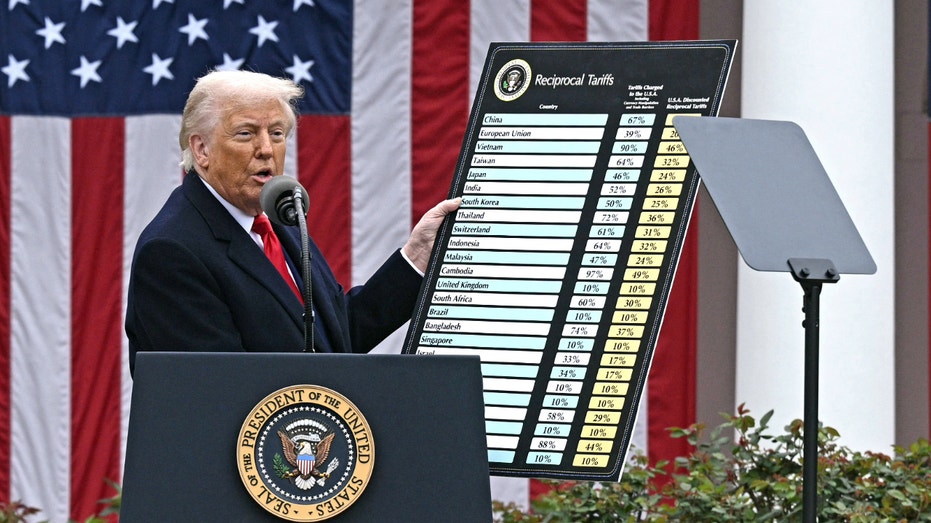
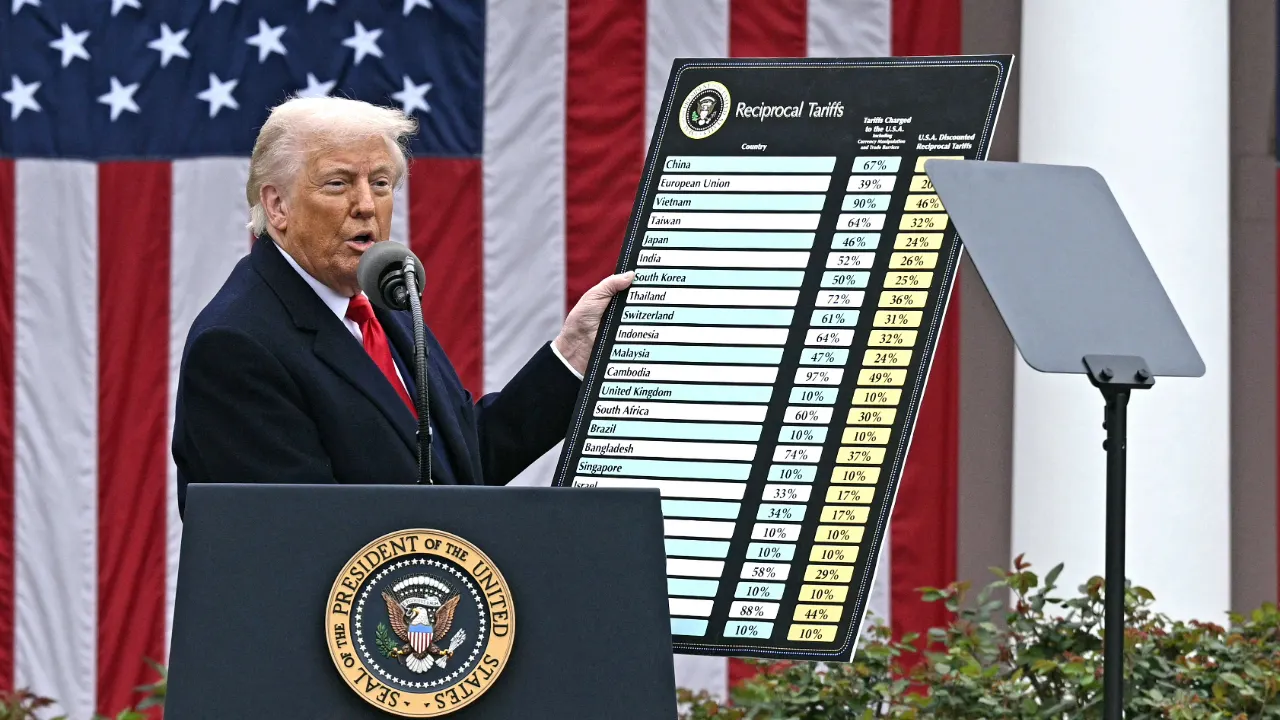
President Donald Trump delivers remarks on reciprocal tariffs during an event in the Rose Garden in April. (Brendan Smialowski/AFP via Getty Images)
Tariffs are essentially taxes imposed on imported goods. While these taxes are paid by companies at the border, the financial burden often trickles down to consumers through increased prices.
The Supreme Court decision arrives at a time when tariff revenue and the economic stakes associated with it have surged to unprecedented levels.
TRUMP SAYS TARIFF-FUNDED DIVIDEND PAYMENTS FOR AMERICANS WILL BEGIN NEXT YEAR
Since the announcement of his “Liberation Day” tariffs in April, monthly tariff collections have skyrocketed from $23.9 billion in May to $31.6 billion by September. The total duty revenue reached an impressive $215.2 billion in fiscal year 2025, which concluded on September 30, according to the Treasury Department’s “Customs and Certain Excise Taxes” report.
This upward trend has continued into the new fiscal year, with over $98 billion collected since October 1, as Treasury data shows.
The influx of tariff revenue has become a cornerstone of Trump’s economic strategy, with the president asserting that these funds can support domestic initiatives.
On November 9, Trump proposed using tariff revenue to provide a $2,000 dividend to low- and middle-income Americans by mid-2026, while any surplus funds would be directed toward reducing the nation’s $38 trillion debt.
CLICK HERE TO GET FOX BUSINESS ON THE GO

The facade of the U.S. Supreme Court in Washington, D.C., on Oct. 3, 2024. (Valerie Plesch/picture alliance/Getty Images)
Despite the controversies, the Trump administration argues that aggressive tariffs are essential to address what he perceives as years of unfair global trade practices. This stance underscores how deeply trade policy is woven into his broader economic framework.
The outcome of this proposal, however, hinges on whether the court affirms the president’s authority to impose the tariffs that generate this significant revenue.
White House senior counselor for trade and manufacturing Peter Navarro discusses President Donald Trump’s economic agenda and the Supreme Court’s upcoming decision on tariffs on ‘Mornings with Maria.’
The nation’s highest court is poised to rule Friday on a case that could redefine the scope of President Donald Trump‘s trade agenda.
This pivotal case arises from lawsuits filed by an educational toy manufacturer and a family-owned wine and spirits importer, both challenging Trump’s tariffs. The court must determine whether the International Emergency Economic Powers Act (IEEPA) granted the president the authority to impose these tariffs, or if such actions exceeded constitutional limits.
TRUMP DEFENDS TARIFFS, SAYS US HAS BEEN ‘THE KING OF BEING SCREWED’ BY TRADE IMBALANCE
President Donald Trump delivers remarks on reciprocal tariffs during an event in the Rose Garden in April. (Brendan Smialowski/AFP via Getty Images)
Tariffs are essentially taxes imposed on imported goods. While these taxes are paid by companies at the border, the financial burden often trickles down to consumers through increased prices.
The Supreme Court decision arrives at a time when tariff revenue and the economic stakes associated with it have surged to unprecedented levels.
TRUMP SAYS TARIFF-FUNDED DIVIDEND PAYMENTS FOR AMERICANS WILL BEGIN NEXT YEAR
Since the announcement of his “Liberation Day” tariffs in April, monthly tariff collections have skyrocketed from $23.9 billion in May to $31.6 billion by September. The total duty revenue reached an impressive $215.2 billion in fiscal year 2025, which concluded on September 30, according to the Treasury Department’s “Customs and Certain Excise Taxes” report.
This upward trend has continued into the new fiscal year, with over $98 billion collected since October 1, as Treasury data shows.
The influx of tariff revenue has become a cornerstone of Trump’s economic strategy, with the president asserting that these funds can support domestic initiatives.
On November 9, Trump proposed using tariff revenue to provide a $2,000 dividend to low- and middle-income Americans by mid-2026, while any surplus funds would be directed toward reducing the nation’s $38 trillion debt.
CLICK HERE TO GET FOX BUSINESS ON THE GO
The facade of the U.S. Supreme Court in Washington, D.C., on Oct. 3, 2024. (Valerie Plesch/picture alliance/Getty Images)
Despite the controversies, the Trump administration argues that aggressive tariffs are essential to address what he perceives as years of unfair global trade practices. This stance underscores how deeply trade policy is woven into his broader economic framework.
The outcome of this proposal, however, hinges on whether the court affirms the president’s authority to impose the tariffs that generate this significant revenue.