Texas County Officials Race to Develop $5M Flood Warning System Ahead of Upcoming Season
As Texas prepares for the upcoming flood season, Kerr County officials are racing against time to establish a long-awaited flood warning system, with an estimated cost of up to $5 million. The county is looking to the state for significant financial support to make this project a reality.
Last week, county officials outlined the components of the flood warning system, which will include sirens, rain gauges, a dedicated website for tracking flood conditions, and illuminated signs that activate during severe flooding. While the website is already under development, the county is seeking assistance to fund the remaining elements.
Once funding is secured and a contractor is selected, the system could be operational within four to six months, according to a former county commissioner who is leading the project team.
Earlier this week, the Texas Water Development Board (TWDB) took steps to expedite state funding for flood-prone counties. Each of the 30 counties included in the governor’s disaster declaration following the devastating July floods could receive grants of up to $1 million. Additionally, they may request up to $250,000 more without needing board approval, while larger requests will undergo a slower approval process.
This initiative aims to accelerate access to $50 million allocated by state lawmakers earlier this year for flood warning systems in counties affected by the catastrophic floods, which claimed over 100 lives during the July 4 weekend, with Kerr County being particularly hard-hit. Selected counties received the necessary paperwork for the $1 million grants on Thursday, allowing them to proceed with their plans.
Senate Bill 3, passed during a special session this summer, mandates the TWDB to identify areas within the 30 affected counties that require the installation of flood warning sirens. This determination will be based on historical flooding patterns and other factors, including fatalities and properties at risk of flash flooding. The bill also calls for the development of best practices for operating these systems.
The guidance for the warning systems is currently in progress, with an announcement expected in January. The public will have a 30-day window to provide feedback on the proposed systems.
Support for implementing alert systems has come from key state leaders, including Gov. Greg Abbott, Lt. Gov. Dan Patrick, and House Speaker Dustin Burrows, all advocating for their establishment by next summer.
“It’s crucial that we make funds available as quickly as possible so communities can access them,” stated L’Oreal Stepney, chair of the water development board, during a recent meeting.
However, it remains uncertain whether the expedited state funding will be sufficient to complete the Kerr County flood warning system before the spring, which typically brings the heaviest rainfall in Texas.
Tara Bushnoe, General Manager of the Upper Guadalupe River Authority, which is collaborating with Kerr County on the project, noted that TWDB funding is expected to be a significant financial resource for the initiative.
In response to the catastrophic floods and the new legislation, Kerr County officials formed a project team comprising representatives from the county, the river authority, and the cities of Kerrville and Ingram to strategize the warning system.
Tom Moser, a former Kerr County commissioner, presented the team’s plan to county commissioners on December 8. The proposed system will integrate National Weather Service forecasts with data from over 100 rain and stream gauges across the Guadalupe River watershed. When river levels reach a critical point, the system will issue alerts on a public website, activate outdoor sirens, and illuminate flood warning signs.
Kerr County Commissioner Rich Paces emphasized that the website will enable residents, summer camps, volunteer fire departments, and first responders to monitor conditions in real-time. Moser mentioned that the county has yet to allocate any funds for the system, which he estimates will cost around $5 million. The goal is to provide at least 15 minutes of warning to allow residents and visitors to seek safety.
“We’re ready to move forward,” Moser asserted. “The bottom line is, let’s get it done.”
Bushnoe indicated that the river authority is funding the initial phase of the system, including the website, which will compile weather forecasts and rain gauge data for emergency officials. This phase is currently under development and is expected to launch early next year.
Sen. Paul Bettencourt, a Houston Republican and the lead author of the flood siren bill, has been receiving monthly updates from the TWDB regarding the progress of the siren systems ahead of the next flash flood season, which peaks in spring and summer in Texas.
“They’re doing everything possible to deploy the flash flood siren warning systems by the next flash flood season,” Bettencourt remarked.
Emergency response experts have noted that while there is no single solution to prevent disasters like the July 4 floods, a siren system could be particularly beneficial in remote areas like the Hill Country, where cell service is unreliable, especially if residents are informed about the appropriate actions to take when the sirens sound.
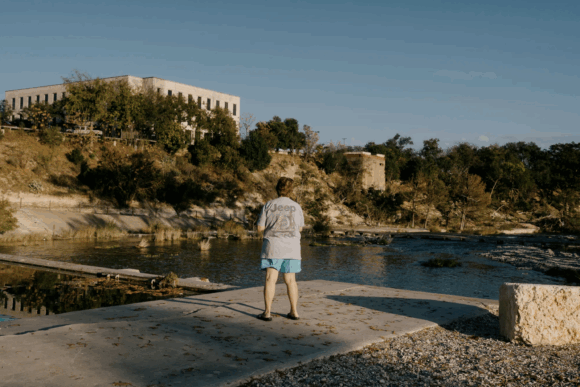
Photo: A volunteer who helped after the July 4 flood visits Kerrville’s Louise Hays Park on Nov. 21, 2025. Brenda Bazán for The Texas Tribune
As Texas prepares for the upcoming flood season, Kerr County officials are racing against time to establish a long-awaited flood warning system, with an estimated cost of up to $5 million. The county is looking to the state for significant financial support to make this project a reality.
Last week, county officials outlined the components of the flood warning system, which will include sirens, rain gauges, a dedicated website for tracking flood conditions, and illuminated signs that activate during severe flooding. While the website is already under development, the county is seeking assistance to fund the remaining elements.
Once funding is secured and a contractor is selected, the system could be operational within four to six months, according to a former county commissioner who is leading the project team.
Earlier this week, the Texas Water Development Board (TWDB) took steps to expedite state funding for flood-prone counties. Each of the 30 counties included in the governor’s disaster declaration following the devastating July floods could receive grants of up to $1 million. Additionally, they may request up to $250,000 more without needing board approval, while larger requests will undergo a slower approval process.
This initiative aims to accelerate access to $50 million allocated by state lawmakers earlier this year for flood warning systems in counties affected by the catastrophic floods, which claimed over 100 lives during the July 4 weekend, with Kerr County being particularly hard-hit. Selected counties received the necessary paperwork for the $1 million grants on Thursday, allowing them to proceed with their plans.
Senate Bill 3, passed during a special session this summer, mandates the TWDB to identify areas within the 30 affected counties that require the installation of flood warning sirens. This determination will be based on historical flooding patterns and other factors, including fatalities and properties at risk of flash flooding. The bill also calls for the development of best practices for operating these systems.
The guidance for the warning systems is currently in progress, with an announcement expected in January. The public will have a 30-day window to provide feedback on the proposed systems.
Support for implementing alert systems has come from key state leaders, including Gov. Greg Abbott, Lt. Gov. Dan Patrick, and House Speaker Dustin Burrows, all advocating for their establishment by next summer.
“It’s crucial that we make funds available as quickly as possible so communities can access them,” stated L’Oreal Stepney, chair of the water development board, during a recent meeting.
However, it remains uncertain whether the expedited state funding will be sufficient to complete the Kerr County flood warning system before the spring, which typically brings the heaviest rainfall in Texas.
Tara Bushnoe, General Manager of the Upper Guadalupe River Authority, which is collaborating with Kerr County on the project, noted that TWDB funding is expected to be a significant financial resource for the initiative.
In response to the catastrophic floods and the new legislation, Kerr County officials formed a project team comprising representatives from the county, the river authority, and the cities of Kerrville and Ingram to strategize the warning system.
Tom Moser, a former Kerr County commissioner, presented the team’s plan to county commissioners on December 8. The proposed system will integrate National Weather Service forecasts with data from over 100 rain and stream gauges across the Guadalupe River watershed. When river levels reach a critical point, the system will issue alerts on a public website, activate outdoor sirens, and illuminate flood warning signs.
Kerr County Commissioner Rich Paces emphasized that the website will enable residents, summer camps, volunteer fire departments, and first responders to monitor conditions in real-time. Moser mentioned that the county has yet to allocate any funds for the system, which he estimates will cost around $5 million. The goal is to provide at least 15 minutes of warning to allow residents and visitors to seek safety.
“We’re ready to move forward,” Moser asserted. “The bottom line is, let’s get it done.”
Bushnoe indicated that the river authority is funding the initial phase of the system, including the website, which will compile weather forecasts and rain gauge data for emergency officials. This phase is currently under development and is expected to launch early next year.
Sen. Paul Bettencourt, a Houston Republican and the lead author of the flood siren bill, has been receiving monthly updates from the TWDB regarding the progress of the siren systems ahead of the next flash flood season, which peaks in spring and summer in Texas.
“They’re doing everything possible to deploy the flash flood siren warning systems by the next flash flood season,” Bettencourt remarked.
Emergency response experts have noted that while there is no single solution to prevent disasters like the July 4 floods, a siren system could be particularly beneficial in remote areas like the Hill Country, where cell service is unreliable, especially if residents are informed about the appropriate actions to take when the sirens sound.
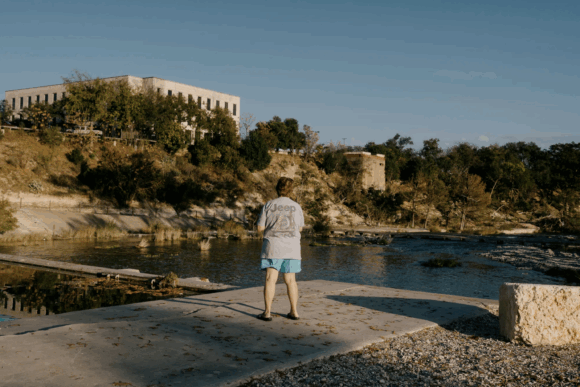
Photo: A volunteer who helped after the July 4 flood visits Kerrville’s Louise Hays Park on Nov. 21, 2025. Brenda Bazán for The Texas Tribune