Trump Bailout Provides Major Relief for US Rice and Cotton Farmers
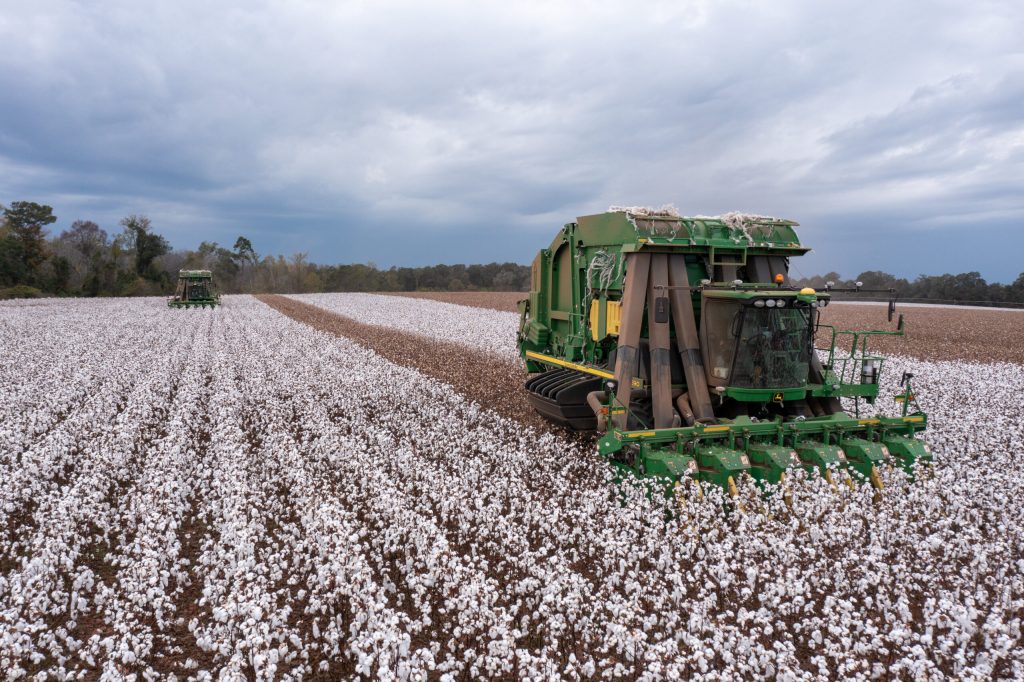
The US Department of Agriculture has finally released the much-anticipated details of its $12 billion aid package aimed at supporting farmers. Notably, American growers of rice and cotton are set to receive the largest payments under this initiative.
While the announcement has been met with approval from farmers and industry groups, many have expressed concerns that the aid amounts are insufficient to address the ongoing challenges facing the agricultural sector. For instance, Illinois farmer John Bartman pointed out that the payments for corn fall short of covering essential seed costs, which can range from $50 to $100 per acre. “We can’t even buy a pizza for $30,” he remarked, highlighting the financial strain on farmers.
Earlier this month, President Donald Trump unveiled the aid package, although it initially lacked specific details regarding payment amounts for individual farmers. As growers prepare for the upcoming planting season, they are grappling with financial pressures stemming from low crop prices, the ongoing trade war, and rising costs for fertilizers, seeds, and machinery.
The Farmer Bridge Assistance Program allocates $11 billion in one-time payments, expected to be distributed by the end of February, for a variety of crops, including corn, soybeans, peanuts, and sorghum. Additionally, $1 billion is earmarked for sugar and specialty crops.
According to the USDA, payment rates vary significantly: rice farmers can receive up to $132.89 per acre, while cotton farmers can expect $117.35. In contrast, payments for flax are as low as $8.05 per acre. For soybeans, which have been significantly impacted by the US-China trade dispute, farmers can apply for $30.88 per acre, while corn farmers will receive $44.36 per acre.
USDA Secretary Brooke Rollins emphasized that these one-time payments are intended to provide farmers with a crucial bridge to continue their operations, stating, “These payments will help farmers feed and clothe America and the world while the Trump administration works to open new markets and strengthen the farm safety net.”
The National Corn Growers Association, representing over 36,000 US corn farmers, welcomed the assistance but stressed that more efforts are needed to develop markets that offer “long-term economic certainty.”
Wesley Davis, chief agriculture economist at Meridian Ag Advisors, noted that farmers who rent land will still face significant challenges despite the aid. “It remains difficult for farmers leasing land—about 50% of corn and soy acres—to achieve profitability this year,” he explained. “While this aid may benefit landowners, those paying cash rent will likely continue to feel the squeeze.”
Davis also pointed out that many farmers have already committed to their crop inputs for the upcoming season, meaning the aid may not significantly alter their plans. Most surveys indicate that farmers intend to use the bailout funds primarily to pay off existing debts rather than invest in new equipment or crop inputs.
Walter Kunisch, senior commodity market strategist at Hilltop Securities Inc., expressed optimism that the payment rates will help stabilize cotton farmers, who have been particularly affected by low crop prices. “We believe that the rate will provide an incentive to plant cotton rather than switching to soybeans and corn in the crucial Delta and Mid-South growing regions,” he stated.
Copyright 2026 Bloomberg.
Topics
USA
Agribusiness
Interested in Agribusiness?
Get automatic alerts for this topic.
The US Department of Agriculture has finally released the much-anticipated details of its $12 billion aid package aimed at supporting farmers. Notably, American growers of rice and cotton are set to receive the largest payments under this initiative.
While the announcement has been met with approval from farmers and industry groups, many have expressed concerns that the aid amounts are insufficient to address the ongoing challenges facing the agricultural sector. For instance, Illinois farmer John Bartman pointed out that the payments for corn fall short of covering essential seed costs, which can range from $50 to $100 per acre. “We can’t even buy a pizza for $30,” he remarked, highlighting the financial strain on farmers.
Earlier this month, President Donald Trump unveiled the aid package, although it initially lacked specific details regarding payment amounts for individual farmers. As growers prepare for the upcoming planting season, they are grappling with financial pressures stemming from low crop prices, the ongoing trade war, and rising costs for fertilizers, seeds, and machinery.
The Farmer Bridge Assistance Program allocates $11 billion in one-time payments, expected to be distributed by the end of February, for a variety of crops, including corn, soybeans, peanuts, and sorghum. Additionally, $1 billion is earmarked for sugar and specialty crops.
According to the USDA, payment rates vary significantly: rice farmers can receive up to $132.89 per acre, while cotton farmers can expect $117.35. In contrast, payments for flax are as low as $8.05 per acre. For soybeans, which have been significantly impacted by the US-China trade dispute, farmers can apply for $30.88 per acre, while corn farmers will receive $44.36 per acre.
USDA Secretary Brooke Rollins emphasized that these one-time payments are intended to provide farmers with a crucial bridge to continue their operations, stating, “These payments will help farmers feed and clothe America and the world while the Trump administration works to open new markets and strengthen the farm safety net.”
The National Corn Growers Association, representing over 36,000 US corn farmers, welcomed the assistance but stressed that more efforts are needed to develop markets that offer “long-term economic certainty.”
Wesley Davis, chief agriculture economist at Meridian Ag Advisors, noted that farmers who rent land will still face significant challenges despite the aid. “It remains difficult for farmers leasing land—about 50% of corn and soy acres—to achieve profitability this year,” he explained. “While this aid may benefit landowners, those paying cash rent will likely continue to feel the squeeze.”
Davis also pointed out that many farmers have already committed to their crop inputs for the upcoming season, meaning the aid may not significantly alter their plans. Most surveys indicate that farmers intend to use the bailout funds primarily to pay off existing debts rather than invest in new equipment or crop inputs.
Walter Kunisch, senior commodity market strategist at Hilltop Securities Inc., expressed optimism that the payment rates will help stabilize cotton farmers, who have been particularly affected by low crop prices. “We believe that the rate will provide an incentive to plant cotton rather than switching to soybeans and corn in the crucial Delta and Mid-South growing regions,” he stated.
Copyright 2026 Bloomberg.
Topics
USA
Agribusiness
Interested in Agribusiness?
Get automatic alerts for this topic.