Trump Directs SEC to Reassess Proxy Adviser Regulations in ESG Critique
President Donald Trump has taken a significant step by issuing an executive order aimed at limiting the influence of proxy advisory firms. This initiative is part of a broader effort to reduce the sway that third-party entities have over the direction of public companies.
On Thursday, the executive order directed the chairman of the Securities and Exchange Commission (SEC) to review existing regulations concerning proxy advisers. The order emphasizes the need to consider revising or rescinding rules, regulations, guidance, bulletins, and memoranda that contradict the objectives of this order. Particular attention is given to those that involve ‘diversity, equity, and inclusion’ as well as ‘environmental, social, and governance’ (ESG) policies.
Two prominent proxy advisory firms mentioned in the order are Institutional Shareholder Services Inc. (ISS) and Glass Lewis & Co. These firms provide essential guidance to institutional investors on how to vote during shareholder meetings. The executive order claims that these advisers have supported shareholder proposals that require American companies to conduct racial equity audits and significantly reduce greenhouse gas emissions. Furthermore, it notes that one of these firms continues to offer guidance based on the racial or ethnic diversity of corporate boards.
Concerns have been raised regarding potential conflicts of interest and the quality of recommendations made by these firms. The order states, “The United States must therefore increase oversight of and take action to restore public confidence in the proxy advisor industry, including by promoting accountability, transparency, and competition.”
This latest move is indicative of how Trump and his allies have targeted diversity and equity initiatives, as well as efforts to combat climate change—practices that have long been criticized by conservative factions. The administration’s scrutiny of proxy advisers is intensifying as a result.
In response to the executive order, ISS stated that it would carefully review the implications and consider how to mitigate any potential impact on its clients. The firm emphasized that its clients are sophisticated institutional investors who determine their voting preferences by selecting from a range of voting policies or creating customized policies tailored to their specific needs. “ISS does not dictate or set corporate governance standards,” the adviser added.
Representatives from Glass Lewis did not immediately respond to requests for comment outside of regular business hours.
Both ISS and Glass Lewis are currently under investigation by the Federal Trade Commission (FTC) for potential violations of US antitrust laws related to their shareholder advice on politically sensitive topics. The executive order also instructs the FTC chair to consult with the US Attorney General and review ongoing state antitrust investigations into proxy advisers to identify any links to violations of federal antitrust law.
SEC Chair Paul Atkins mentioned last month that the regulator is considering reforms for proxy advisers. Earlier this year, the House Judiciary Committee demanded that these firms provide records to assess the adequacy of US antitrust laws in addressing competition concerns within the proxy advisory market. Additionally, Senate Banking Committee Republicans have investigated ISS and Glass Lewis for potential conflicts of interest and political bias.
In a notable shift, Glass Lewis announced that starting in the 2027 annual shareholder season, it would discontinue its “house view” on how investors should vote, marking the end of a decades-long practice of providing benchmark recommendations.
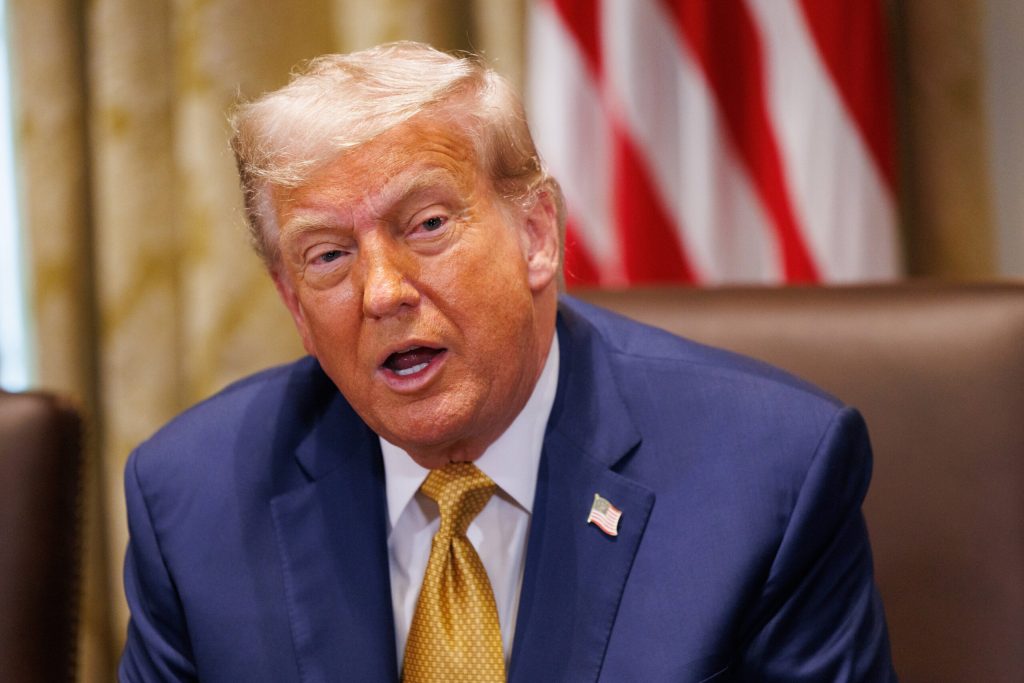
Photo: Photographer: Aaron Schwartz/CNP/Bloomberg
Copyright 2025 Bloomberg.
The most important insurance news, in your inbox every business day.
Get the insurance industry’s trusted newsletter
President Donald Trump has taken a significant step by issuing an executive order aimed at limiting the influence of proxy advisory firms. This initiative is part of a broader effort to reduce the sway that third-party entities have over the direction of public companies.
On Thursday, the executive order directed the chairman of the Securities and Exchange Commission (SEC) to review existing regulations concerning proxy advisers. The order emphasizes the need to consider revising or rescinding rules, regulations, guidance, bulletins, and memoranda that contradict the objectives of this order. Particular attention is given to those that involve ‘diversity, equity, and inclusion’ as well as ‘environmental, social, and governance’ (ESG) policies.
Two prominent proxy advisory firms mentioned in the order are Institutional Shareholder Services Inc. (ISS) and Glass Lewis & Co. These firms provide essential guidance to institutional investors on how to vote during shareholder meetings. The executive order claims that these advisers have supported shareholder proposals that require American companies to conduct racial equity audits and significantly reduce greenhouse gas emissions. Furthermore, it notes that one of these firms continues to offer guidance based on the racial or ethnic diversity of corporate boards.
Concerns have been raised regarding potential conflicts of interest and the quality of recommendations made by these firms. The order states, “The United States must therefore increase oversight of and take action to restore public confidence in the proxy advisor industry, including by promoting accountability, transparency, and competition.”
This latest move is indicative of how Trump and his allies have targeted diversity and equity initiatives, as well as efforts to combat climate change—practices that have long been criticized by conservative factions. The administration’s scrutiny of proxy advisers is intensifying as a result.
In response to the executive order, ISS stated that it would carefully review the implications and consider how to mitigate any potential impact on its clients. The firm emphasized that its clients are sophisticated institutional investors who determine their voting preferences by selecting from a range of voting policies or creating customized policies tailored to their specific needs. “ISS does not dictate or set corporate governance standards,” the adviser added.
Representatives from Glass Lewis did not immediately respond to requests for comment outside of regular business hours.
Both ISS and Glass Lewis are currently under investigation by the Federal Trade Commission (FTC) for potential violations of US antitrust laws related to their shareholder advice on politically sensitive topics. The executive order also instructs the FTC chair to consult with the US Attorney General and review ongoing state antitrust investigations into proxy advisers to identify any links to violations of federal antitrust law.
SEC Chair Paul Atkins mentioned last month that the regulator is considering reforms for proxy advisers. Earlier this year, the House Judiciary Committee demanded that these firms provide records to assess the adequacy of US antitrust laws in addressing competition concerns within the proxy advisory market. Additionally, Senate Banking Committee Republicans have investigated ISS and Glass Lewis for potential conflicts of interest and political bias.
In a notable shift, Glass Lewis announced that starting in the 2027 annual shareholder season, it would discontinue its “house view” on how investors should vote, marking the end of a decades-long practice of providing benchmark recommendations.
Photo: Photographer: Aaron Schwartz/CNP/Bloomberg
Copyright 2025 Bloomberg.
The most important insurance news, in your inbox every business day.
Get the insurance industry’s trusted newsletter