Trump Issues Warning to Halt Detroit-Canada Bridge Amid New Dispute

President Donald Trump has issued a strong warning regarding the opening of a new bridge linking Michigan and Ontario. He stated that he would block its opening until the United States receives compensation and ownership of half of the structure, announcing that negotiations would commence immediately.
“I will not allow this bridge to open until the United States is fully compensated for everything we have given them, and also, importantly, Canada treats the United States with the Fairness and Respect that we deserve,” Trump declared on social media. He further emphasized, “With all that we have given them, we should own, perhaps, at least one half of this asset.”
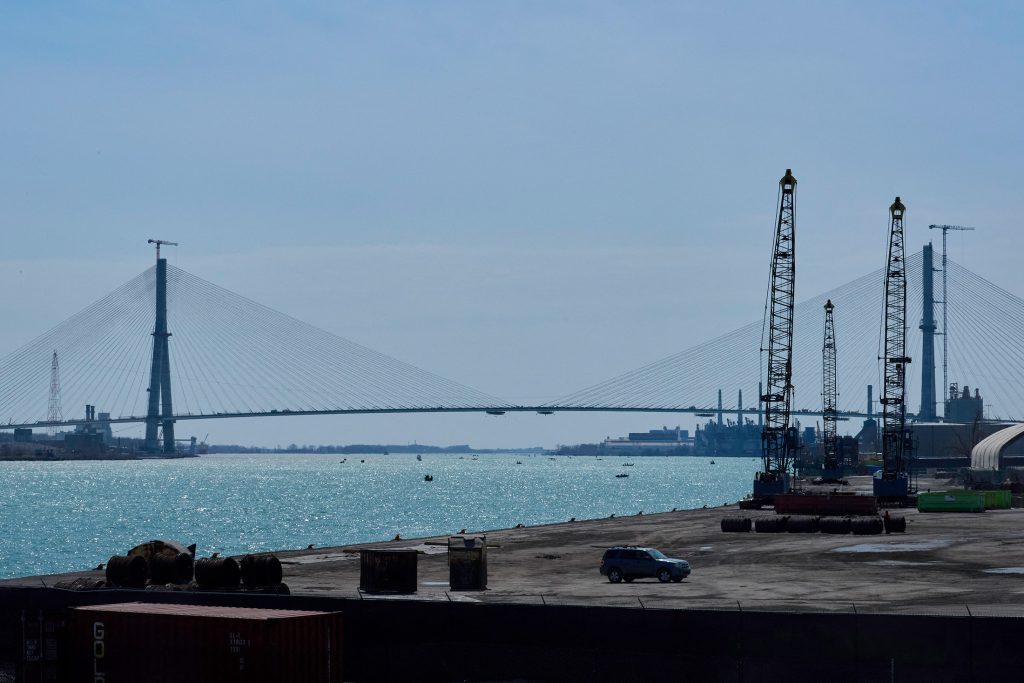
The president’s post featured an image of the Gordie Howe International Bridge, which connects Detroit and Windsor. This six-lane bridge was anticipated to open to traffic soon, pending formal tests and approvals. Named after a legendary Canadian hockey player who played for the Detroit Red Wings, the bridge is set to become the largest Canadian port on the US-Canada border, according to the US Department of Transportation. The project was fully financed by the Canadian government, with an estimated cost of C$6.4 billion ($4.7 billion), to be repaid over time through tolls.
Prime Minister Mark Carney reported having a “positive” conversation with Trump on Tuesday morning, during which he clarified that the bridge would operate under a joint ownership agreement between Michigan and Canada. Carney highlighted that US workers and US steel were integral to the construction, and he noted that the bridge would enhance cross-border trade and tourism. “This is a great example of cooperation between our countries. I look forward to it opening,” he told reporters in Ottawa.
Carney also mentioned that Trump requested US Ambassador Pete Hoekstra, a Michigan native, to assist in “smoothing the conversation” around the bridge, a suggestion Carney found appropriate. The discussion then shifted to other topics, including the upcoming review of the US-Mexico-Canada Agreement, details of which Carney chose not to disclose.
Michigan Governor Gretchen Whitmer’s press secretary, Stacey LaRouche, reiterated that the bridge was financed by Canada, constructed by union workers from both nations, and would operate under a joint ownership agreement. She described the project as “a tremendous example of bipartisan and international cooperation” and expressed confidence that “it’s going to open one way or another; the governor looks forward to attending the ribbon cutting.”
This is not the first time the bridge has been a topic of contention in the Oval Office. The US family that owns the nearby Ambassador Bridge lobbied Trump during his first term to rescind a waiver granted by President Barack Obama in 2012, which allowed the new bridge to be built without using only US steel, acknowledging that the Canadians were funding it.
Ontario Premier Doug Ford stated that the bridge would open because it serves the best interests of both nations, including Republican members of Congress in Michigan ahead of the midterm elections. Candace Laing, CEO of the Canadian Chamber of Commerce, remarked that the Trump administration was correct in 2017 to endorse the bridge as a priority project, calling it “a vital economic link between our two countries.”
Trump’s remarks are part of a broader pattern of criticism directed at Canada, a key trading partner that purchases more US exports than any other nation. Recently, he threatened to impose a 100% tariff on Canadian goods if Canada pursued a trade deal with China, expressing frustration over comments made by Carney at Davos that critiqued his foreign and economic policies.
Last month, Trump also threatened to impose a 50% tariff on aircraft from Canada and to decertify new planes manufactured there, although he has yet to act on these threats. A deal made between Carney and Chinese President Xi Jinping in January reduced tariffs, allowing for increased Canadian food sales to China in exchange for a quota of electric vehicles that can be sold in Canada. Trump has portrayed this deal as a potential threat, arguing it could give China undue influence over Canada.
In his social media post on Monday, Trump reiterated his criticisms, stating, “Prime Minister Carney wants to make a deal with China — which will eat Canada alive. We’ll just get the leftovers! I don’t think so.” The Windsor-Detroit area is a crucial corridor for the tightly integrated North American automotive industry, a supply chain that Trump aims to weaken with his tariffs. For instance, Ford Motor Co. manufactures engines in Windsor that are sent to its US assembly plants.
The Gordie Howe crossing was initiated partly because manufacturers sought an alternative to the Ambassador Bridge. Windsor Mayor Drew Dilkens described Trump’s post as “unhinged” and “out of the blue,” but he acknowledged it might clarify why the bridge’s opening has been delayed from late 2025. He characterized the project as a “once-in-a-generation” opportunity, noting that one would typically expect the president and the Canadian prime minister to celebrate such a relationship together. However, he remarked, “Trump has basically made trading enemies with every country on the planet.”
The US president also criticized Canada for its restrictions on US alcohol and tariffs on dairy imports, labeling these levies as “unacceptable” and detrimental to “our Farmers at great financial risk.” Ontario’s Ford, whose province has kept American alcohol off government-run store shelves since Trump initiated the trade war last year, indicated he intends to maintain this ban.
The latest dispute arises as the US and Canada prepare to renegotiate the USMCA, the continental trade agreement that Trump endorsed during his first term.
The Gordie Howe International Bridge connects southern Detroit, Michigan, US, and Windsor, Ontario, Canada. Photographer: Dominic Gwinn/AFP/Getty Images
Copyright 2026 Bloomberg.
Topics
Canada
President Donald Trump has issued a strong warning regarding the opening of a new bridge linking Michigan and Ontario. He stated that he would block its opening until the United States receives compensation and ownership of half of the structure, announcing that negotiations would commence immediately.
“I will not allow this bridge to open until the United States is fully compensated for everything we have given them, and also, importantly, Canada treats the United States with the Fairness and Respect that we deserve,” Trump declared on social media. He further emphasized, “With all that we have given them, we should own, perhaps, at least one half of this asset.”
The president’s post featured an image of the Gordie Howe International Bridge, which connects Detroit and Windsor. This six-lane bridge was anticipated to open to traffic soon, pending formal tests and approvals. Named after a legendary Canadian hockey player who played for the Detroit Red Wings, the bridge is set to become the largest Canadian port on the US-Canada border, according to the US Department of Transportation. The project was fully financed by the Canadian government, with an estimated cost of C$6.4 billion ($4.7 billion), to be repaid over time through tolls.
Prime Minister Mark Carney reported having a “positive” conversation with Trump on Tuesday morning, during which he clarified that the bridge would operate under a joint ownership agreement between Michigan and Canada. Carney highlighted that US workers and US steel were integral to the construction, and he noted that the bridge would enhance cross-border trade and tourism. “This is a great example of cooperation between our countries. I look forward to it opening,” he told reporters in Ottawa.
Carney also mentioned that Trump requested US Ambassador Pete Hoekstra, a Michigan native, to assist in “smoothing the conversation” around the bridge, a suggestion Carney found appropriate. The discussion then shifted to other topics, including the upcoming review of the US-Mexico-Canada Agreement, details of which Carney chose not to disclose.
Michigan Governor Gretchen Whitmer’s press secretary, Stacey LaRouche, reiterated that the bridge was financed by Canada, constructed by union workers from both nations, and would operate under a joint ownership agreement. She described the project as “a tremendous example of bipartisan and international cooperation” and expressed confidence that “it’s going to open one way or another; the governor looks forward to attending the ribbon cutting.”
This is not the first time the bridge has been a topic of contention in the Oval Office. The US family that owns the nearby Ambassador Bridge lobbied Trump during his first term to rescind a waiver granted by President Barack Obama in 2012, which allowed the new bridge to be built without using only US steel, acknowledging that the Canadians were funding it.
Ontario Premier Doug Ford stated that the bridge would open because it serves the best interests of both nations, including Republican members of Congress in Michigan ahead of the midterm elections. Candace Laing, CEO of the Canadian Chamber of Commerce, remarked that the Trump administration was correct in 2017 to endorse the bridge as a priority project, calling it “a vital economic link between our two countries.”
Trump’s remarks are part of a broader pattern of criticism directed at Canada, a key trading partner that purchases more US exports than any other nation. Recently, he threatened to impose a 100% tariff on Canadian goods if Canada pursued a trade deal with China, expressing frustration over comments made by Carney at Davos that critiqued his foreign and economic policies.
Last month, Trump also threatened to impose a 50% tariff on aircraft from Canada and to decertify new planes manufactured there, although he has yet to act on these threats. A deal made between Carney and Chinese President Xi Jinping in January reduced tariffs, allowing for increased Canadian food sales to China in exchange for a quota of electric vehicles that can be sold in Canada. Trump has portrayed this deal as a potential threat, arguing it could give China undue influence over Canada.
In his social media post on Monday, Trump reiterated his criticisms, stating, “Prime Minister Carney wants to make a deal with China — which will eat Canada alive. We’ll just get the leftovers! I don’t think so.” The Windsor-Detroit area is a crucial corridor for the tightly integrated North American automotive industry, a supply chain that Trump aims to weaken with his tariffs. For instance, Ford Motor Co. manufactures engines in Windsor that are sent to its US assembly plants.
The Gordie Howe crossing was initiated partly because manufacturers sought an alternative to the Ambassador Bridge. Windsor Mayor Drew Dilkens described Trump’s post as “unhinged” and “out of the blue,” but he acknowledged it might clarify why the bridge’s opening has been delayed from late 2025. He characterized the project as a “once-in-a-generation” opportunity, noting that one would typically expect the president and the Canadian prime minister to celebrate such a relationship together. However, he remarked, “Trump has basically made trading enemies with every country on the planet.”
The US president also criticized Canada for its restrictions on US alcohol and tariffs on dairy imports, labeling these levies as “unacceptable” and detrimental to “our Farmers at great financial risk.” Ontario’s Ford, whose province has kept American alcohol off government-run store shelves since Trump initiated the trade war last year, indicated he intends to maintain this ban.
The latest dispute arises as the US and Canada prepare to renegotiate the USMCA, the continental trade agreement that Trump endorsed during his first term.
The Gordie Howe International Bridge connects southern Detroit, Michigan, US, and Windsor, Ontario, Canada. Photographer: Dominic Gwinn/AFP/Getty Images
Copyright 2026 Bloomberg.
Topics
Canada