Trump’s Venezuela Strategy Challenges Investors’ Tolerance for Geopolitical Risk
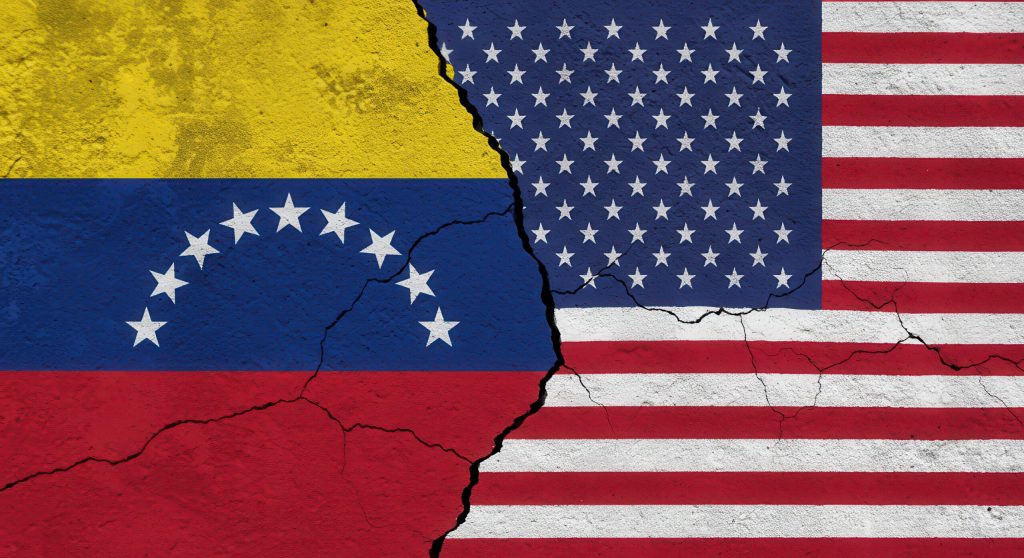
Markets may have shrugged off the audacious U.S. capture of Venezuelan President Nicolas Maduro, but some investors warn that geopolitical risks are perhaps being underestimated after Donald Trump threatened further action in the Americas.
On Monday, investors held their nerve as stocks in Asia surged, and oil prices dipped modestly. However, safe-haven flows lifted gold prices following President Trump’s declaration that the U.S. would take control of the oil-producing nation.
Washington has not made such a direct intervention in Latin America since the invasion of Panama in 1989. Trump’s threats against Colombia and Mexico underscore a significant shift in U.S. policy, bringing geopolitical risks back into focus for financial markets as the new year begins.
“We’re being reminded that geopolitical risks are much larger than some number cast on imports,” stated Vishnu Varathan, head of macro research for Asia Ex-Japan at Mizuho Securities in Singapore. He raised a critical question: “Is broader LatAm stability at risk? Then it’s a different proposition, isn’t it? The flow-through effects could be much greater.”
Despite the relatively calm market reaction to Maduro’s capture, analysts and investors noted that Venezuela’s oil production is small compared to global output, and it would take years of investment to ramp up production significantly.
Nonetheless, the military actions will likely weigh on market sentiment, although they could eventually unlock Venezuela’s vast oil reserves and boost risk assets in the long run. Trump mentioned that American oil companies are ready to tackle the challenging task of entering Venezuela and investing to restore production in the country.
“There should be broader geopolitical implications from this event, but in my view, the financial markets are not very efficient in pricing such risks accurately,” remarked Tai Hui, chief market strategist for Asia-Pacific at J.P. Morgan Asset Management.
Markets’ First Test in 2026
U.S. and global stocks made a robust start to the new year after ending 2025 near record highs, having achieved double-digit gains in a tumultuous year marked by tariff wars, central bank policy, and escalating geopolitical tensions.
The immediate impact is likely to be felt in the defense sector, as countries are expected to increase defense spending in response to Trump’s willingness to use U.S. military force as part of his broader policy agenda. Concurrently, the heightened uncertainty surrounding U.S. policies may exert pressure on the dollar and its safe-haven status, analysts suggest.
While the U.S. dollar firmed slightly on Monday, it is recovering from its worst year since 2017, having dropped over 9% against major currencies in 2025.
For investors, Trump’s actions in Venezuela have raised unsettling questions about their implications for China’s stance towards Taiwan and whether Washington might pursue regime change more aggressively in Iran.
However, Li Fang-kuo, chairman of Taiwan food conglomerate Uni-President 1216.TW stock investment advisory unit, noted that investors are not overly concerned about a potential Chinese attack on Taiwan. “Yes, China has staged military drills around Taiwan, but we’ve seen nothing like the months of escalation we saw from the U.S. against Venezuela,” he stated.
Indeed, some analysts suggest that investors have grown accustomed to Trump’s various foreign policy and military maneuvers. Charu Chanana, chief investment strategist at Saxo, described the U.S. action in Venezuela as more of a geopolitical bombshell than an oil shock for now, emphasizing that unless it threatens the broader supply chain, investors tend to refocus on rates, earnings, and positioning.
“We’re in a regime where geopolitics has become a persistent feature, not a surprise,” Chanana concluded.
(Reporting by Ankur Banerjee, Rae Wee, and Gregor Stuart Hunter in Singapore; additional reporting by Faith Hung in Taipei; editing by Shri Navaratnam)
Markets may have shrugged off the audacious U.S. capture of Venezuelan President Nicolas Maduro, but some investors warn that geopolitical risks are perhaps being underestimated after Donald Trump threatened further action in the Americas.
On Monday, investors held their nerve as stocks in Asia surged, and oil prices dipped modestly. However, safe-haven flows lifted gold prices following President Trump’s declaration that the U.S. would take control of the oil-producing nation.
Washington has not made such a direct intervention in Latin America since the invasion of Panama in 1989. Trump’s threats against Colombia and Mexico underscore a significant shift in U.S. policy, bringing geopolitical risks back into focus for financial markets as the new year begins.
“We’re being reminded that geopolitical risks are much larger than some number cast on imports,” stated Vishnu Varathan, head of macro research for Asia Ex-Japan at Mizuho Securities in Singapore. He raised a critical question: “Is broader LatAm stability at risk? Then it’s a different proposition, isn’t it? The flow-through effects could be much greater.”
Despite the relatively calm market reaction to Maduro’s capture, analysts and investors noted that Venezuela’s oil production is small compared to global output, and it would take years of investment to ramp up production significantly.
Nonetheless, the military actions will likely weigh on market sentiment, although they could eventually unlock Venezuela’s vast oil reserves and boost risk assets in the long run. Trump mentioned that American oil companies are ready to tackle the challenging task of entering Venezuela and investing to restore production in the country.
“There should be broader geopolitical implications from this event, but in my view, the financial markets are not very efficient in pricing such risks accurately,” remarked Tai Hui, chief market strategist for Asia-Pacific at J.P. Morgan Asset Management.
Markets’ First Test in 2026
U.S. and global stocks made a robust start to the new year after ending 2025 near record highs, having achieved double-digit gains in a tumultuous year marked by tariff wars, central bank policy, and escalating geopolitical tensions.
The immediate impact is likely to be felt in the defense sector, as countries are expected to increase defense spending in response to Trump’s willingness to use U.S. military force as part of his broader policy agenda. Concurrently, the heightened uncertainty surrounding U.S. policies may exert pressure on the dollar and its safe-haven status, analysts suggest.
While the U.S. dollar firmed slightly on Monday, it is recovering from its worst year since 2017, having dropped over 9% against major currencies in 2025.
For investors, Trump’s actions in Venezuela have raised unsettling questions about their implications for China’s stance towards Taiwan and whether Washington might pursue regime change more aggressively in Iran.
However, Li Fang-kuo, chairman of Taiwan food conglomerate Uni-President 1216.TW stock investment advisory unit, noted that investors are not overly concerned about a potential Chinese attack on Taiwan. “Yes, China has staged military drills around Taiwan, but we’ve seen nothing like the months of escalation we saw from the U.S. against Venezuela,” he stated.
Indeed, some analysts suggest that investors have grown accustomed to Trump’s various foreign policy and military maneuvers. Charu Chanana, chief investment strategist at Saxo, described the U.S. action in Venezuela as more of a geopolitical bombshell than an oil shock for now, emphasizing that unless it threatens the broader supply chain, investors tend to refocus on rates, earnings, and positioning.
“We’re in a regime where geopolitics has become a persistent feature, not a surprise,” Chanana concluded.
(Reporting by Ankur Banerjee, Rae Wee, and Gregor Stuart Hunter in Singapore; additional reporting by Faith Hung in Taipei; editing by Shri Navaratnam)