UK Actuaries Warn of Climate Risk Underestimation in Loss Models
The finance industry is increasingly relying on climate models that may underestimate the rapid pace of rising temperatures, according to a recent study conducted by Britain’s leading association of actuaries.
The Institute and Faculty of Actuaries, in collaboration with scientists from the University of Exeter, highlights that financial firms are not applying the same level of rigor to climate-related risks as they do to other significant risks.
Sandy Trust, the report’s lead author and director of sustainability risk at Baillie Gifford, emphasizes that the use of inadequate models in the finance sector has led banks, insurers, and asset managers to accept a “chance of failure” that is “a hundred times greater than the chance we accept of insurance company failure.”
The study reveals that many current climate models fail to accurately account for the ongoing reductions in aerosol pollution, which has, paradoxically, helped shield the Earth from solar radiation. As aerosol pollution decreases, it becomes increasingly evident that temperatures are rising more swiftly than what current greenhouse gas emission levels would suggest.
Furthermore, the research indicates that the effects of deforestation have been significantly underestimated. The findings conclude that greenhouse gas levels are already so elevated that even achieving net-zero emissions by 2050 may not limit global warming to 1.5°C. This raises the risk of reaching critical tipping points, beyond which irreversible damage, such as melting ice sheets, could occur.
“If we were to treat 1.5°C as a solvency event, we would want only a 0.5% chance of breaching that solvency,” Trust stated in an interview. However, “many carbon budgets only provide a 50% or two-thirds chance of limiting warming,” which is considered a very low probability from an actuarial standpoint.
Read More: Wildfires, Storms Fuel 2025 Insured Losses of $108 Billion: Munich Re Report
The implications of these findings come at a time when climate science faces numerous challenges. In the United States, former President Donald Trump withdrew the country from international agreements aimed at combating climate change. Concurrently, the rise of artificial intelligence has increased energy demand, leading to higher emissions.
In the European Union, lawmakers and member states concluded 2025 with a commitment to significantly reduce climate regulations.
Ignoring climate risk is already proving costly. A January paper from researchers at the European Central Bank found that banks incur higher borrowing costs if they have greater exposure to climate transition risks.
The researchers behind the IFoA and University of Exeter paper advocate for a “planet solvency recovery plan,” modeled on financial regulations, to safeguard economic growth. This plan includes urgent measures to halt deforestation and accelerate renewable energy development. They argue that governments and financial institutions must routinely evaluate how well the planet is adapting to human activities.
“We have well-established risk management techniques and protocols to ensure financial stability and solvency,” Trust remarked. “We simply need to apply the same rigor and discipline to climate change.”
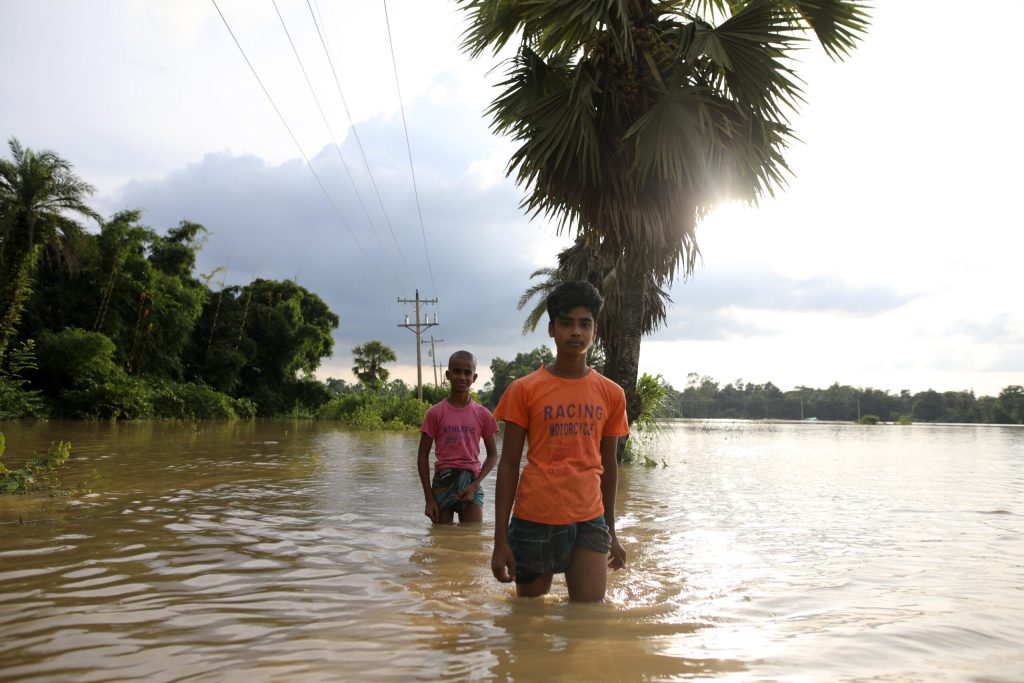
Photograph: People wade through floodwaters in Parshuram, in Feni, Bangladesh, in 2025. Photographer: Zakir Hossain Chowdhury/NurPhoto/Getty Images
Copyright 2026 Bloomberg.
Topics
Profit Loss
Climate Change
Interested in Climate Change?
Get automatic alerts for this topic.
The finance industry is increasingly relying on climate models that may underestimate the rapid pace of rising temperatures, according to a recent study conducted by Britain’s leading association of actuaries.
The Institute and Faculty of Actuaries, in collaboration with scientists from the University of Exeter, highlights that financial firms are not applying the same level of rigor to climate-related risks as they do to other significant risks.
Sandy Trust, the report’s lead author and director of sustainability risk at Baillie Gifford, emphasizes that the use of inadequate models in the finance sector has led banks, insurers, and asset managers to accept a “chance of failure” that is “a hundred times greater than the chance we accept of insurance company failure.”
The study reveals that many current climate models fail to accurately account for the ongoing reductions in aerosol pollution, which has, paradoxically, helped shield the Earth from solar radiation. As aerosol pollution decreases, it becomes increasingly evident that temperatures are rising more swiftly than what current greenhouse gas emission levels would suggest.
Furthermore, the research indicates that the effects of deforestation have been significantly underestimated. The findings conclude that greenhouse gas levels are already so elevated that even achieving net-zero emissions by 2050 may not limit global warming to 1.5°C. This raises the risk of reaching critical tipping points, beyond which irreversible damage, such as melting ice sheets, could occur.
“If we were to treat 1.5°C as a solvency event, we would want only a 0.5% chance of breaching that solvency,” Trust stated in an interview. However, “many carbon budgets only provide a 50% or two-thirds chance of limiting warming,” which is considered a very low probability from an actuarial standpoint.
Read More: Wildfires, Storms Fuel 2025 Insured Losses of $108 Billion: Munich Re Report
The implications of these findings come at a time when climate science faces numerous challenges. In the United States, former President Donald Trump withdrew the country from international agreements aimed at combating climate change. Concurrently, the rise of artificial intelligence has increased energy demand, leading to higher emissions.
In the European Union, lawmakers and member states concluded 2025 with a commitment to significantly reduce climate regulations.
Ignoring climate risk is already proving costly. A January paper from researchers at the European Central Bank found that banks incur higher borrowing costs if they have greater exposure to climate transition risks.
The researchers behind the IFoA and University of Exeter paper advocate for a “planet solvency recovery plan,” modeled on financial regulations, to safeguard economic growth. This plan includes urgent measures to halt deforestation and accelerate renewable energy development. They argue that governments and financial institutions must routinely evaluate how well the planet is adapting to human activities.
“We have well-established risk management techniques and protocols to ensure financial stability and solvency,” Trust remarked. “We simply need to apply the same rigor and discipline to climate change.”
Photograph: People wade through floodwaters in Parshuram, in Feni, Bangladesh, in 2025. Photographer: Zakir Hossain Chowdhury/NurPhoto/Getty Images
Copyright 2026 Bloomberg.
Topics
Profit Loss
Climate Change
Interested in Climate Change?
Get automatic alerts for this topic.