UK Breaks Annual Heat and Sunshine Records in 2022

The UK just wrapped the warmest and sunniest year ever recorded.
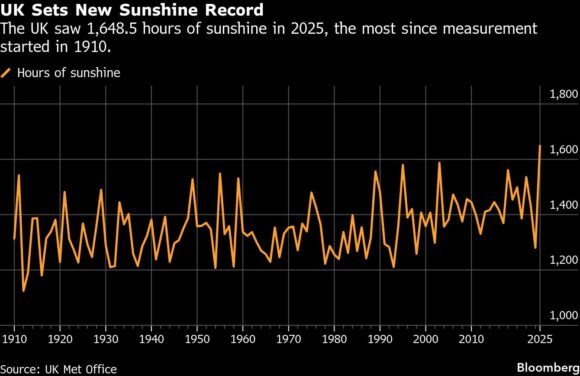
The average temperature for the UK in 2025 reached an unprecedented 10.09°C, marking the highest since modern weather observations began in 1884, according to new data from the UK Met Office. Additionally, the year concluded with a remarkable 1,648.5 hours of sunshine, the most recorded since data collection started in 1910.
England set new annual records for both temperature and sunshine in 2025. Meanwhile, Scotland, Wales, and Northern Ireland also experienced record or near-record high temperatures and total sunshine hours.
A combination of heat, sunshine, and long-term climate change shifts contributed to this unprecedented weather year in the UK, as noted by the Met Office. By mid-May, the country was experiencing its driest and sunniest spring in over a century. Record-warm ocean waters further elevated temperatures leading into summer, which was marked by several heatwaves and an increased risk of wildfires. In response, water companies implemented hosepipe bans to manage reservoir levels as drought conditions took hold across England.
Seasonal changes during autumn and winter provided some relief to many regions, although drought conditions persisted in parts of central England, as indicated by Ofwat data.
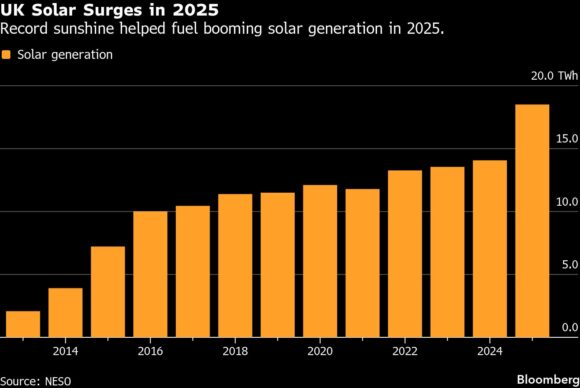
The record-breaking sunshine also spurred a significant increase in solar energy generation. In 2025, more than 18.5 terawatt-hours of solar energy were produced, reflecting a 30% increase from the previous year and the highest amount recorded to date, according to data from the National Energy System Operator.
In a statement, UK Energy Minister Michael Shanks emphasized that the record sunshine underscores a pathway to enhance energy production and reduce energy costs. “Solar is one of the cheapest forms of power,” he remarked. “As we move into 2026, we will scale up the solar power we need to shield households from volatile fossil fuel markets and tackle the climate crisis.”
Photograph: The sun sets over a residential street in the Stoke Newington district of London. Photo credit: Jose Sarmento Matos/Bloomberg
Copyright 2026 Bloomberg.
The most important insurance news, in your inbox every business day.
Get the insurance industry’s trusted newsletter
The UK just wrapped the warmest and sunniest year ever recorded.
The average temperature for the UK in 2025 reached an unprecedented 10.09°C, marking the highest since modern weather observations began in 1884, according to new data from the UK Met Office. Additionally, the year concluded with a remarkable 1,648.5 hours of sunshine, the most recorded since data collection started in 1910.
England set new annual records for both temperature and sunshine in 2025. Meanwhile, Scotland, Wales, and Northern Ireland also experienced record or near-record high temperatures and total sunshine hours.
A combination of heat, sunshine, and long-term climate change shifts contributed to this unprecedented weather year in the UK, as noted by the Met Office. By mid-May, the country was experiencing its driest and sunniest spring in over a century. Record-warm ocean waters further elevated temperatures leading into summer, which was marked by several heatwaves and an increased risk of wildfires. In response, water companies implemented hosepipe bans to manage reservoir levels as drought conditions took hold across England.
Seasonal changes during autumn and winter provided some relief to many regions, although drought conditions persisted in parts of central England, as indicated by Ofwat data.
The record-breaking sunshine also spurred a significant increase in solar energy generation. In 2025, more than 18.5 terawatt-hours of solar energy were produced, reflecting a 30% increase from the previous year and the highest amount recorded to date, according to data from the National Energy System Operator.
In a statement, UK Energy Minister Michael Shanks emphasized that the record sunshine underscores a pathway to enhance energy production and reduce energy costs. “Solar is one of the cheapest forms of power,” he remarked. “As we move into 2026, we will scale up the solar power we need to shield households from volatile fossil fuel markets and tackle the climate crisis.”
Photograph: The sun sets over a residential street in the Stoke Newington district of London. Photo credit: Jose Sarmento Matos/Bloomberg
Copyright 2026 Bloomberg.
The most important insurance news, in your inbox every business day.
Get the insurance industry’s trusted newsletter