Union Alerted to Potential Mass Resignations Over Return-to-Office Policy, Yet No Departures Occurred
When Vermont Gov. Phil Scott announced that state workers would need to return to offices at least three days per week starting December 1, the state employees’ union raised concerns that this initiative could lead to a mass exodus of top staff. However, recent data suggests that this may not be the case.
Comparing mid-September to mid-December 2025 with the same period in 2024, retirements have increased slightly from 66 to 76, according to the Vermont Department of Human Resources. In contrast, resignations have decreased from 205 to 185, marking a nearly 10% drop compared to last year.
Sarah Clark, Vermont’s secretary of administration, noted in a recent interview that the number of applicants for state jobs has actually risen. “When you look out at what’s happening both in the federal government and the private sector, I think state government is a very attractive employer,” she said, attributing this appeal in part to the state’s health and pension benefits.
The Vermont state government and its employees’ union have been at odds since Scott announced the return-to-office mandate. Like many employers across the nation, Vermont’s government is grappling with the challenge of reintegrating its workforce into the office after the widespread adoption of remote work during the COVID-19 pandemic.
Reflecting on the first month of the three-day office mandate, Clark described the transition as relatively smooth, although employees have reported challenges related to childcare and long commutes. “This is a big change for our workforce, and I’m empathetic to their concerns and needs,” she stated. “But I’m also excited about the opportunity that it presents for us to support Vermonters and work collectively together.”
Despite this optimism, the Vermont State Employees’ Association, which represents state workers, is pursuing legal challenges to the mandate. “The administration didn’t talk to employees. They just threw this out there and said, ‘This is the way it is,’” said Steve Howard, the union’s executive director. “We don’t agree with that. We think they have an obligation to bargain with us.”
In late November, the union took the Scott administration to court, seeking a delay or denial of the return-to-office mandate. Although the judge did not issue an injunction, finding that employees had sufficient relief through the state’s exemption process, the union continues its legal challenges, with a Vermont Labor Relation Board hearing expected in February.
Howard mentioned that employees have received “contradictory guidance” from managers regarding exemption applications and qualifications. Some supervisors “still don’t know what to tell people” about navigating the mandate.
As of mid-December, the Scott administration had received approximately 500 requests for exceptions to the in-office policy, with about 40 approved. Employees are allowed to maintain their previous schedules while their requests are processed.
State leaders are reviewing all requests for remote work flexibility on a case-by-case basis. While state-issued guidance outlines limited circumstances for exemptions, officials have indicated that exceptions are not restricted to those reasons. Any employee believing they have a “compelling reason” for an exception can present their case.
Vermont’s flexible working arrangements law permits employees to request changes to their working conditions, including remote work flexibility. Employers must consider these requests in light of their business operations and legal obligations.
Interestingly, half to two-thirds of state employees had already been working in person more than three days per week, meaning the hybrid mandate did not significantly impact their work. However, the added costs associated with returning to offices have drawn criticism, especially in a tight budget year. The state is leasing new office space in Waterbury, costing $430,000 in the first year and $2.3 million by the end of a five-year lease, along with one-time preparation costs of $385,000.
While data does not indicate a mass exodus of state employees, some have resigned due to the return-to-office requirement. Matthew Grimo, a paralegal with the Vermont Agency of Transportation, shared that he had been commuting two days per week from Burlington to Barre. An additional day of the roughly 50-minute commute was financially untenable for him, leading to his resignation.
“I love my team, I love working with my team,” Grimo expressed. “One hundred percent I wouldn’t have considered this if the return to office had not cropped up.” He submitted a request for exemption in November but had yet to receive a response, prompting his decision to resign.
In his new job, Grimo will need to commute more often, but the drive will be significantly shorter. “It’s five minutes from my house versus an hour,” he noted, “which makes all the difference to me.”
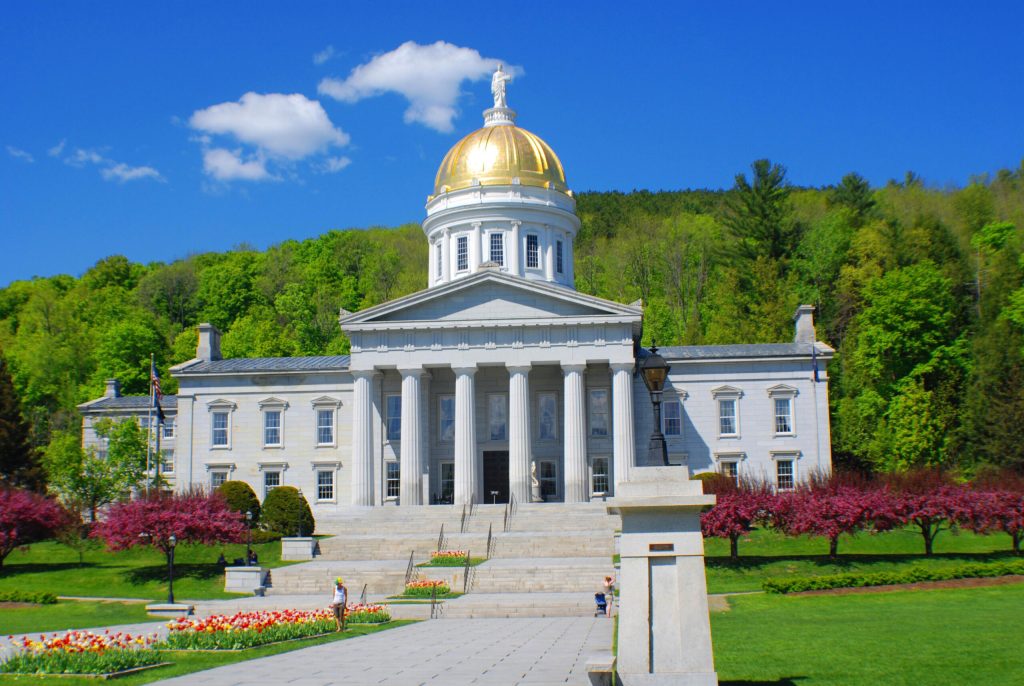
Photo: Vermont State Capitol, Montpelier.
This story was originally published by VTDigger and distributed through a partnership with The Associated Press.
Copyright 2026 Associated Press. All rights reserved. This material may not be published, broadcast, rewritten, or redistributed.
When Vermont Gov. Phil Scott announced that state workers would need to return to offices at least three days per week starting December 1, the state employees’ union raised concerns that this initiative could lead to a mass exodus of top staff. However, recent data suggests that this may not be the case.
Comparing mid-September to mid-December 2025 with the same period in 2024, retirements have increased slightly from 66 to 76, according to the Vermont Department of Human Resources. In contrast, resignations have decreased from 205 to 185, marking a nearly 10% drop compared to last year.
Sarah Clark, Vermont’s secretary of administration, noted in a recent interview that the number of applicants for state jobs has actually risen. “When you look out at what’s happening both in the federal government and the private sector, I think state government is a very attractive employer,” she said, attributing this appeal in part to the state’s health and pension benefits.
The Vermont state government and its employees’ union have been at odds since Scott announced the return-to-office mandate. Like many employers across the nation, Vermont’s government is grappling with the challenge of reintegrating its workforce into the office after the widespread adoption of remote work during the COVID-19 pandemic.
Reflecting on the first month of the three-day office mandate, Clark described the transition as relatively smooth, although employees have reported challenges related to childcare and long commutes. “This is a big change for our workforce, and I’m empathetic to their concerns and needs,” she stated. “But I’m also excited about the opportunity that it presents for us to support Vermonters and work collectively together.”
Despite this optimism, the Vermont State Employees’ Association, which represents state workers, is pursuing legal challenges to the mandate. “The administration didn’t talk to employees. They just threw this out there and said, ‘This is the way it is,’” said Steve Howard, the union’s executive director. “We don’t agree with that. We think they have an obligation to bargain with us.”
In late November, the union took the Scott administration to court, seeking a delay or denial of the return-to-office mandate. Although the judge did not issue an injunction, finding that employees had sufficient relief through the state’s exemption process, the union continues its legal challenges, with a Vermont Labor Relation Board hearing expected in February.
Howard mentioned that employees have received “contradictory guidance” from managers regarding exemption applications and qualifications. Some supervisors “still don’t know what to tell people” about navigating the mandate.
As of mid-December, the Scott administration had received approximately 500 requests for exceptions to the in-office policy, with about 40 approved. Employees are allowed to maintain their previous schedules while their requests are processed.
State leaders are reviewing all requests for remote work flexibility on a case-by-case basis. While state-issued guidance outlines limited circumstances for exemptions, officials have indicated that exceptions are not restricted to those reasons. Any employee believing they have a “compelling reason” for an exception can present their case.
Vermont’s flexible working arrangements law permits employees to request changes to their working conditions, including remote work flexibility. Employers must consider these requests in light of their business operations and legal obligations.
Interestingly, half to two-thirds of state employees had already been working in person more than three days per week, meaning the hybrid mandate did not significantly impact their work. However, the added costs associated with returning to offices have drawn criticism, especially in a tight budget year. The state is leasing new office space in Waterbury, costing $430,000 in the first year and $2.3 million by the end of a five-year lease, along with one-time preparation costs of $385,000.
While data does not indicate a mass exodus of state employees, some have resigned due to the return-to-office requirement. Matthew Grimo, a paralegal with the Vermont Agency of Transportation, shared that he had been commuting two days per week from Burlington to Barre. An additional day of the roughly 50-minute commute was financially untenable for him, leading to his resignation.
“I love my team, I love working with my team,” Grimo expressed. “One hundred percent I wouldn’t have considered this if the return to office had not cropped up.” He submitted a request for exemption in November but had yet to receive a response, prompting his decision to resign.
In his new job, Grimo will need to commute more often, but the drive will be significantly shorter. “It’s five minutes from my house versus an hour,” he noted, “which makes all the difference to me.”
Photo: Vermont State Capitol, Montpelier.
This story was originally published by VTDigger and distributed through a partnership with The Associated Press.
Copyright 2026 Associated Press. All rights reserved. This material may not be published, broadcast, rewritten, or redistributed.