UPS Plane Incident in Kentucky: Component with a History of Four Failures on Previous Flights

Boeing issued a warning to plane owners in 2011 regarding a faulty part linked to a tragic UPS plane crash that claimed 15 lives in November 2025. However, at that time, the manufacturer did not consider the issue a safety threat, as noted by the National Transportation Safety Board (NTSB) on Wednesday.
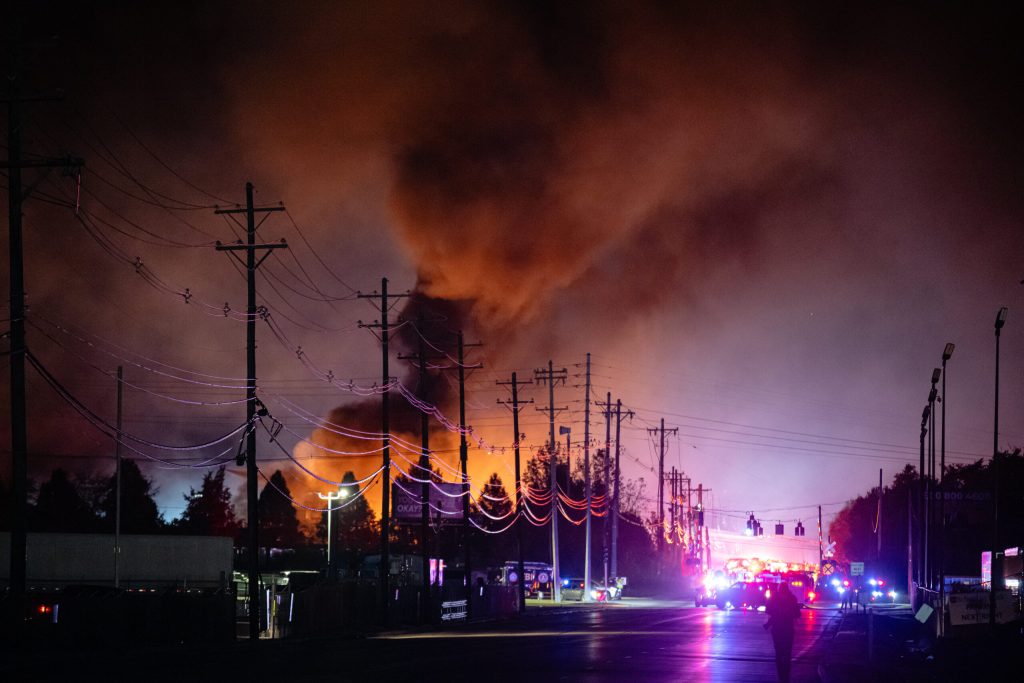
The UPS aircraft crashed shortly after takeoff from Louisville, Kentucky, when the left engine detached from the wing during its roll down the runway. The incident resulted in the deaths of three pilots and 12 individuals on the ground near Muhammad Ali International Airport.
According to the NTSB, Boeing had documented four prior failures of a component designed to secure the MD-11’s engines to the wings on three different aircraft. Despite this, the manufacturer concluded that these failures did not pose a safety risk. Notably, these planes were originally built by McDonnell Douglas, which Boeing later acquired.
Investigators found cracks in the engine mount parts that had gone unnoticed during routine maintenance, raising concerns about the effectiveness of the maintenance schedule. The last thorough inspection of these critical components occurred in October 2021, with the next detailed examination not scheduled for approximately 7,000 more takeoffs and landings.
While the exact timeline for the development of these cracks remains unclear, the crash bears similarities to a 1979 incident in Chicago, where an American Airlines DC-10 lost its left engine during takeoff, resulting in 273 fatalities. The DC-10 was the predecessor of the MD-11.
The aftermath of the 1979 crash led to the grounding of 274 DC-10s worldwide. The aircraft was later cleared for service after the NTSB determined that maintenance workers had improperly reattached the engine, absolving the design of any fatal flaws despite previous accidents involving the DC-10.
Jeff Guzzetti, a former FAA and NTSB crash investigator, expressed surprise that Boeing did not classify the failures of the spherical bearing race as a “safety of flight condition” in 2011, especially given that a service bulletin from McDonnell Douglas in 1980 had done so. He noted that American Airlines had previously removed the engine for inspection of that bearing.
“This raises questions about the adequacy of the severity of the 2011 service letter and how UPS acted upon that information,” Guzzetti stated.
The service bulletin issued by Boeing did not mandate repairs, unlike an FAA airworthiness directive, which was not issued in this case. Alan Diehl, another former federal crash investigator, pointed out that while the bulletin recommended replacing the bearings with a redesigned, more reliable part, it still permitted operators to replace defective bearings with older, less reliable versions.
“As the investigation continues, the NTSB will need to assess whether this service bulletin adequately addressed a known issue that could have led to catastrophic outcomes,” Diehl remarked. “The UPS crash underscores the necessity for enhanced maintenance protocols on older aircraft.”
The NTSB has not disclosed whether there have been additional documented failures of the spherical bearing race since 2011. Investigators discovered that part broken into two pieces after the crash, with the lugs that secured it also cracked.
Images released by the NTSB from the November 4 crash depict flames erupting as the rear of the engine began to detach before it flew over the wing, engulfing it in fire. While the factual report released Wednesday does not specify the cause of the engine’s detachment, it is evident that the failure of this bearing is a focal point of the investigation. The final report from the NTSB, which typically takes over a year to complete, will provide more clarity.
This report is expected to play a significant role in the first lawsuit related to the crash, filed last month, as it will scrutinize what Boeing knew at the time and how UPS responded to the 2011 bulletin.
“This further illustrates that there were warning signs prior to the crash that any reasonable organization should have acted upon to prevent the Louisville incident,” stated attorney Brad Cosgrove from the Clifford Law firm, which filed the initial lawsuit.
The report clarifies that neither of the plane’s other engines was on fire before the crash, countering earlier speculation that debris from the left engine may have damaged the tail engine.
As the NTSB investigation remains ongoing, Boeing, UPS, and the Federal Aviation Administration are limited in their comments. Both Boeing and UPS have expressed their condolences to the families affected by the crash. “We remain profoundly saddened by the Flight 2976 accident,” said UPS spokesperson Jim Mayer. “Our thoughts continue to be with the families and the Louisville community during this difficult time.”
The 34-year-old MD-11 aircraft only managed to ascend 30 feet (9.1 meters) before crashing into several industrial buildings beyond the runway, creating a massive fireball visible from miles away. Dramatic footage captured the plane engulfed in flames as it collided with buildings, releasing a significant plume of smoke.
While airlines phased out the MD-11 for commercial use due to inefficiencies compared to newer models, cargo carriers like UPS and FedEx continued to operate them, with some modified for firefighting. Following the crash, all MD-11s and 10 related DC-10s have been grounded.
Cosgrove believes it will eventually become evident that these MD-11s “probably should have been retired and that they had exceeded their shelf life.”
Photo: The scene of the crash in Louisville. (AP Photo/Jon Cherry, File)
Topics
Kentucky
Boeing issued a warning to plane owners in 2011 regarding a faulty part linked to a tragic UPS plane crash that claimed 15 lives in November 2025. However, at that time, the manufacturer did not consider the issue a safety threat, as noted by the National Transportation Safety Board (NTSB) on Wednesday.
The UPS aircraft crashed shortly after takeoff from Louisville, Kentucky, when the left engine detached from the wing during its roll down the runway. The incident resulted in the deaths of three pilots and 12 individuals on the ground near Muhammad Ali International Airport.
According to the NTSB, Boeing had documented four prior failures of a component designed to secure the MD-11’s engines to the wings on three different aircraft. Despite this, the manufacturer concluded that these failures did not pose a safety risk. Notably, these planes were originally built by McDonnell Douglas, which Boeing later acquired.
Investigators found cracks in the engine mount parts that had gone unnoticed during routine maintenance, raising concerns about the effectiveness of the maintenance schedule. The last thorough inspection of these critical components occurred in October 2021, with the next detailed examination not scheduled for approximately 7,000 more takeoffs and landings.
While the exact timeline for the development of these cracks remains unclear, the crash bears similarities to a 1979 incident in Chicago, where an American Airlines DC-10 lost its left engine during takeoff, resulting in 273 fatalities. The DC-10 was the predecessor of the MD-11.
The aftermath of the 1979 crash led to the grounding of 274 DC-10s worldwide. The aircraft was later cleared for service after the NTSB determined that maintenance workers had improperly reattached the engine, absolving the design of any fatal flaws despite previous accidents involving the DC-10.
Jeff Guzzetti, a former FAA and NTSB crash investigator, expressed surprise that Boeing did not classify the failures of the spherical bearing race as a “safety of flight condition” in 2011, especially given that a service bulletin from McDonnell Douglas in 1980 had done so. He noted that American Airlines had previously removed the engine for inspection of that bearing.
“This raises questions about the adequacy of the severity of the 2011 service letter and how UPS acted upon that information,” Guzzetti stated.
The service bulletin issued by Boeing did not mandate repairs, unlike an FAA airworthiness directive, which was not issued in this case. Alan Diehl, another former federal crash investigator, pointed out that while the bulletin recommended replacing the bearings with a redesigned, more reliable part, it still permitted operators to replace defective bearings with older, less reliable versions.
“As the investigation continues, the NTSB will need to assess whether this service bulletin adequately addressed a known issue that could have led to catastrophic outcomes,” Diehl remarked. “The UPS crash underscores the necessity for enhanced maintenance protocols on older aircraft.”
The NTSB has not disclosed whether there have been additional documented failures of the spherical bearing race since 2011. Investigators discovered that part broken into two pieces after the crash, with the lugs that secured it also cracked.
Images released by the NTSB from the November 4 crash depict flames erupting as the rear of the engine began to detach before it flew over the wing, engulfing it in fire. While the factual report released Wednesday does not specify the cause of the engine’s detachment, it is evident that the failure of this bearing is a focal point of the investigation. The final report from the NTSB, which typically takes over a year to complete, will provide more clarity.
This report is expected to play a significant role in the first lawsuit related to the crash, filed last month, as it will scrutinize what Boeing knew at the time and how UPS responded to the 2011 bulletin.
“This further illustrates that there were warning signs prior to the crash that any reasonable organization should have acted upon to prevent the Louisville incident,” stated attorney Brad Cosgrove from the Clifford Law firm, which filed the initial lawsuit.
The report clarifies that neither of the plane’s other engines was on fire before the crash, countering earlier speculation that debris from the left engine may have damaged the tail engine.
As the NTSB investigation remains ongoing, Boeing, UPS, and the Federal Aviation Administration are limited in their comments. Both Boeing and UPS have expressed their condolences to the families affected by the crash. “We remain profoundly saddened by the Flight 2976 accident,” said UPS spokesperson Jim Mayer. “Our thoughts continue to be with the families and the Louisville community during this difficult time.”
The 34-year-old MD-11 aircraft only managed to ascend 30 feet (9.1 meters) before crashing into several industrial buildings beyond the runway, creating a massive fireball visible from miles away. Dramatic footage captured the plane engulfed in flames as it collided with buildings, releasing a significant plume of smoke.
While airlines phased out the MD-11 for commercial use due to inefficiencies compared to newer models, cargo carriers like UPS and FedEx continued to operate them, with some modified for firefighting. Following the crash, all MD-11s and 10 related DC-10s have been grounded.
Cosgrove believes it will eventually become evident that these MD-11s “probably should have been retired and that they had exceeded their shelf life.”
Photo: The scene of the crash in Louisville. (AP Photo/Jon Cherry, File)
Topics
Kentucky