US Housing Shortage Sparks Adoption of 3D Printing by Builders
FOX Business’ Jeff Flock joins ‘Mornings with Maria’ live from Austin, Texas, showcasing 3D-printed homes.
The United States is currently grappling with a growing housing shortage, escalating construction costs, and a limited supply of skilled labor. These challenges are prompting builders to explore innovative solutions beyond traditional construction methods. One such solution gaining traction is three-dimensional printing, which is swiftly transitioning from theoretical concepts to practical applications.
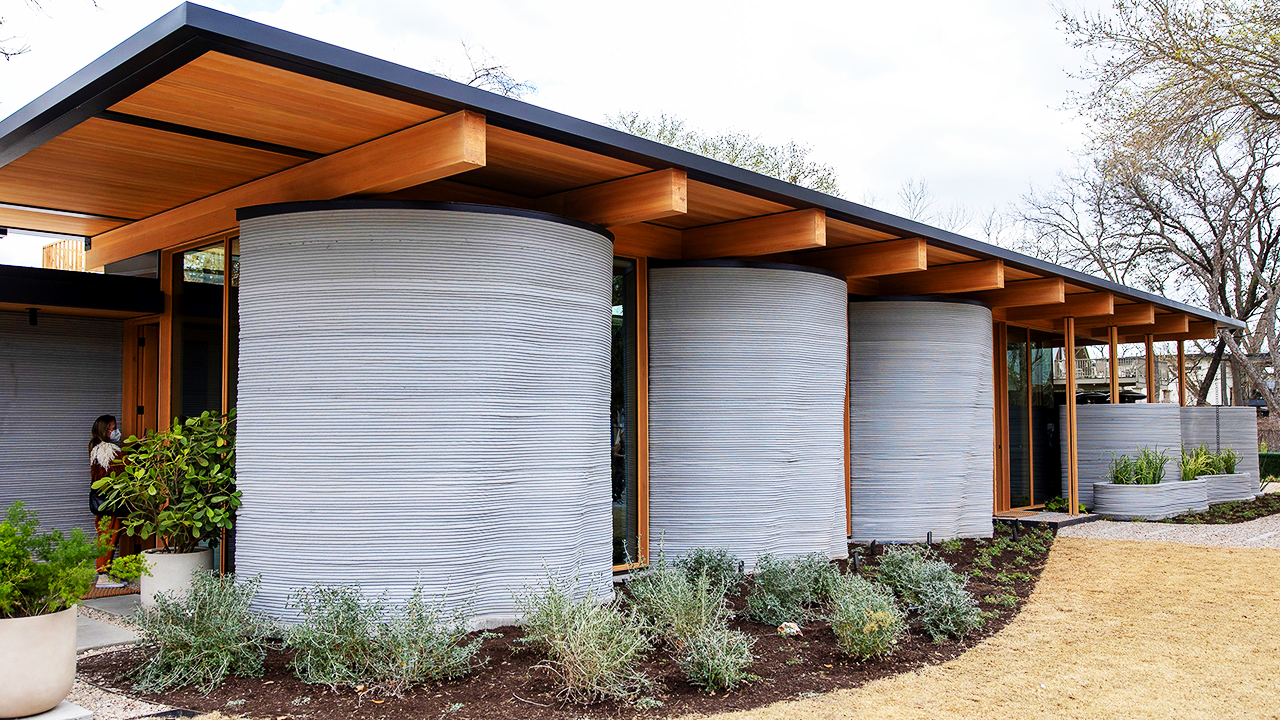
Once limited to small pilot projects, 3D-printed homes are now being constructed and sold in active neighborhoods across the U.S. This cutting-edge technology significantly streamlines the building process by utilizing large-scale printers that extrude layers of concrete, allowing walls to form in a fraction of the time compared to conventional construction techniques.
HOMEBUILDERS REPORTEDLY DEVELOPING ‘TRUMP HOMES’ PROGRAM TO IMPROVE AFFORDABILITY
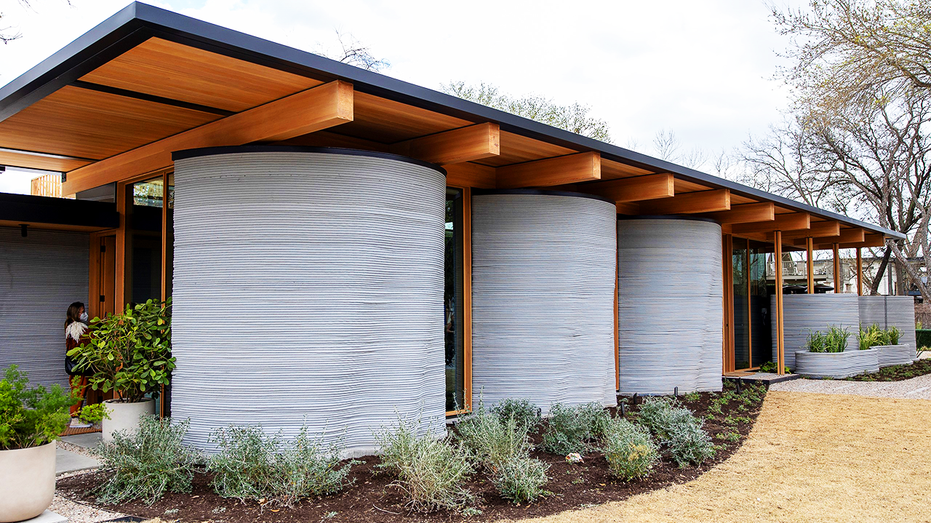
3D-printed home in Austin, Texas. (Nick Wagner/Xinhua via Getty Images / Getty Images)
During a recent segment on “Mornings with Maria“, FOX Business’ Jeff Flock reported live from a 3D-printed housing development in Austin, Texas, where this innovative technology is already making an impact.
Proponents of 3D printing in construction argue that it offers numerous advantages beyond speed. Jason Ballard, co-founder and CEO of ICON, emphasizes that the technology addresses several critical issues in the housing market, including affordability and durability.
Ohio GOP gubernatorial candidate Vivek Ramaswamy discusses his economic vision for the state, calling for deregulation and expanded housing on ‘Kudlow.’
“It is more energy efficient… stronger, resilient to natural disasters… it is like measurably better in every way that we care to measure buildings,” Ballard stated.
JUST 17% OF VOTERS THINK NOW IS A GOOD TIME TO BUY A HOME AS AFFORDABILITY CONCERNS WEIGH: POLL
The appeal of 3D-printed homes is already resonating with potential buyers. Developments featuring these homes have attracted interest from first-time homebuyers seeking solid construction and long-term efficiency. The concrete walls are designed to withstand pests, weather, and structural wear, while the curved interiors provide builders with greater flexibility in layout and design.
One early buyer, Vicky Pridgen, noted that the material played a significant role in her decision-making process. “It would take a lot to like break down these walls or have like ants funnel through the layers of concrete, so it seems sturdy to me,” Pridgen remarked.
The Corcoran Group broker Noble Black breaks down President Donald Trump’s housing affordability plans proposals and the state of the market on ‘Varney & Co.’
As housing demand continues to exceed supply in many regions, builders are increasingly focusing on methods that reduce construction time without compromising quality. With labor shortages and high construction costs persisting, many are turning to alternative construction techniques, including 3D printing.
FOX Business’ Jeff Flock joins ‘Mornings with Maria’ live from Austin, Texas, showcasing 3D-printed homes.
The United States is currently grappling with a growing housing shortage, escalating construction costs, and a limited supply of skilled labor. These challenges are prompting builders to explore innovative solutions beyond traditional construction methods. One such solution gaining traction is three-dimensional printing, which is swiftly transitioning from theoretical concepts to practical applications.
Once limited to small pilot projects, 3D-printed homes are now being constructed and sold in active neighborhoods across the U.S. This cutting-edge technology significantly streamlines the building process by utilizing large-scale printers that extrude layers of concrete, allowing walls to form in a fraction of the time compared to conventional construction techniques.
HOMEBUILDERS REPORTEDLY DEVELOPING ‘TRUMP HOMES’ PROGRAM TO IMPROVE AFFORDABILITY
3D-printed home in Austin, Texas. (Nick Wagner/Xinhua via Getty Images / Getty Images)
During a recent segment on “Mornings with Maria“, FOX Business’ Jeff Flock reported live from a 3D-printed housing development in Austin, Texas, where this innovative technology is already making an impact.
Proponents of 3D printing in construction argue that it offers numerous advantages beyond speed. Jason Ballard, co-founder and CEO of ICON, emphasizes that the technology addresses several critical issues in the housing market, including affordability and durability.
Ohio GOP gubernatorial candidate Vivek Ramaswamy discusses his economic vision for the state, calling for deregulation and expanded housing on ‘Kudlow.’
“It is more energy efficient… stronger, resilient to natural disasters… it is like measurably better in every way that we care to measure buildings,” Ballard stated.
JUST 17% OF VOTERS THINK NOW IS A GOOD TIME TO BUY A HOME AS AFFORDABILITY CONCERNS WEIGH: POLL
The appeal of 3D-printed homes is already resonating with potential buyers. Developments featuring these homes have attracted interest from first-time homebuyers seeking solid construction and long-term efficiency. The concrete walls are designed to withstand pests, weather, and structural wear, while the curved interiors provide builders with greater flexibility in layout and design.
One early buyer, Vicky Pridgen, noted that the material played a significant role in her decision-making process. “It would take a lot to like break down these walls or have like ants funnel through the layers of concrete, so it seems sturdy to me,” Pridgen remarked.
The Corcoran Group broker Noble Black breaks down President Donald Trump’s housing affordability plans proposals and the state of the market on ‘Varney & Co.’
As housing demand continues to exceed supply in many regions, builders are increasingly focusing on methods that reduce construction time without compromising quality. With labor shortages and high construction costs persisting, many are turning to alternative construction techniques, including 3D printing.