Venezuelan Oil Sector Operates via WhatsApp Following Cyberattack
Venezuela’s oil industry is currently grappling with significant operational challenges following a cyberattack on state-owned Petróleos de Venezuela SA (PDVSA). Since the attack on December 15, the company has resorted to managing its daily operations through phone calls and handwritten reports, as its technological systems remain compromised.
The cyberattack has severely disrupted PDVSA’s operations, forcing the company to function outside its own technological networks. This has resulted in delays in payments to contractors and employees, as well as a lack of access to crucial production data, according to multiple sources familiar with the situation who spoke on the condition of anonymity.
While the identity of the attackers remains unknown, the United States has been vocal about its intentions to control future sales of Venezuelan oil, particularly in light of its ongoing efforts to undermine the leadership of Nicolás Maduro. However, the US has not claimed responsibility for the cyber incident.
Read more: Companies Work to Handle Safety Challenges of New Venezuelan Oil Exports: Sources
This incident underscores the fragility of Venezuela’s technological infrastructure, particularly in an industry that is vital to the nation’s economy. Years of disinvestment and rampant corruption have left PDVSA in a precarious position, and US sanctions have further hampered the company’s ability to procure necessary updates for its systems.
Neither the Venezuelan oil ministry nor PDVSA responded immediately to requests for comments regarding the situation.
The cyberattack also impacted PDVSA’s operational platform, known as SCADA, which is essential for managing processes in refineries, compression plants, and pipelines. The company’s SAP software remains offline, forcing many operational processes to be conducted manually. As a result, PDVSA is unable to access critical platforms for accounting, payments, and production data.
Internal communication has also been severely affected, with email systems down. Employees across various departments—including legal, finance, engineering, and health—are now relying on messaging apps like WhatsApp and Telegram for internal communication. In the Orinoco Belt operations, employees are similarly using Telegram and Gmail to stay connected.
Moreover, employees are facing uncertainty regarding payments. A retiree from PDVSA reported difficulties in verifying his pension deposit for January, as access to his historical account on the company’s portal was unavailable. He was instructed to submit his personal information manually to a clerk at PDVSA headquarters in Caracas, who then processed payments through an alternative account.
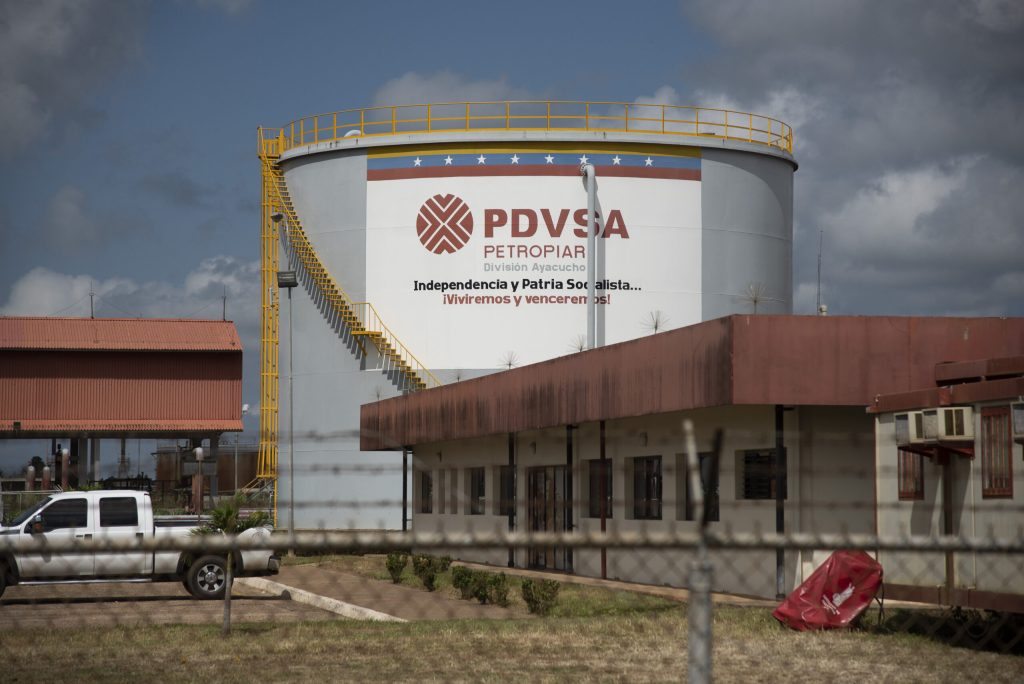
Photograph: An oil tank at the Petroleos de Venezuela SA Petropiar facility in El Tigre, Venezuela. Photo credit: Carlos Becerra/Bloomberg
Interested in Cyber?
Get automatic alerts for this topic.
Venezuela’s oil industry is currently grappling with significant operational challenges following a cyberattack on state-owned Petróleos de Venezuela SA (PDVSA). Since the attack on December 15, the company has resorted to managing its daily operations through phone calls and handwritten reports, as its technological systems remain compromised.
The cyberattack has severely disrupted PDVSA’s operations, forcing the company to function outside its own technological networks. This has resulted in delays in payments to contractors and employees, as well as a lack of access to crucial production data, according to multiple sources familiar with the situation who spoke on the condition of anonymity.
While the identity of the attackers remains unknown, the United States has been vocal about its intentions to control future sales of Venezuelan oil, particularly in light of its ongoing efforts to undermine the leadership of Nicolás Maduro. However, the US has not claimed responsibility for the cyber incident.
Read more: Companies Work to Handle Safety Challenges of New Venezuelan Oil Exports: Sources
This incident underscores the fragility of Venezuela’s technological infrastructure, particularly in an industry that is vital to the nation’s economy. Years of disinvestment and rampant corruption have left PDVSA in a precarious position, and US sanctions have further hampered the company’s ability to procure necessary updates for its systems.
Neither the Venezuelan oil ministry nor PDVSA responded immediately to requests for comments regarding the situation.
The cyberattack also impacted PDVSA’s operational platform, known as SCADA, which is essential for managing processes in refineries, compression plants, and pipelines. The company’s SAP software remains offline, forcing many operational processes to be conducted manually. As a result, PDVSA is unable to access critical platforms for accounting, payments, and production data.
Internal communication has also been severely affected, with email systems down. Employees across various departments—including legal, finance, engineering, and health—are now relying on messaging apps like WhatsApp and Telegram for internal communication. In the Orinoco Belt operations, employees are similarly using Telegram and Gmail to stay connected.
Moreover, employees are facing uncertainty regarding payments. A retiree from PDVSA reported difficulties in verifying his pension deposit for January, as access to his historical account on the company’s portal was unavailable. He was instructed to submit his personal information manually to a clerk at PDVSA headquarters in Caracas, who then processed payments through an alternative account.
Photograph: An oil tank at the Petroleos de Venezuela SA Petropiar facility in El Tigre, Venezuela. Photo credit: Carlos Becerra/Bloomberg
Interested in Cyber?
Get automatic alerts for this topic.