Venezuelan Oil Tankers Depart Without Flags or Safety Documents, Shipping Data Reveals
Recent shipping data reveals that tankers laden with Venezuelan crude and fuel have departed the nation’s waters, now navigating international waters without a registered flag or necessary ship safety documentation.
The current whereabouts of these vessels remain uncertain since their exit from Venezuelan territory. This lack of transparency raises significant concerns regarding maritime safety and regulatory compliance.
All commercial vessels are required to be registered, or “flagged,” with a country. This registration is crucial not only for adhering to safety and environmental regulations but also for ensuring that ships meet the standards necessary for operation.
Ship classification societies play a vital role in this process, providing essential safety services that include verifying the seaworthiness of vessels. Such certification is indispensable for obtaining insurance and gaining entry into ports around the world.
In mid-December, U.S. President Donald Trump enacted a blockade targeting all sanctioned tankers heading to Venezuela. This move came just before the dramatic capture of Venezuelan President Nicolas Maduro by U.S. troops early Saturday morning.
Despite Trump’s assertion on Saturday that an oil embargo remains fully enforced following Maduro’s extraction, these ships have continued their journeys, raising questions about the effectiveness of the blockade.
(Reporting by Jonathan Saul and Marianna Parraga; editing by Tomasz Janowski)
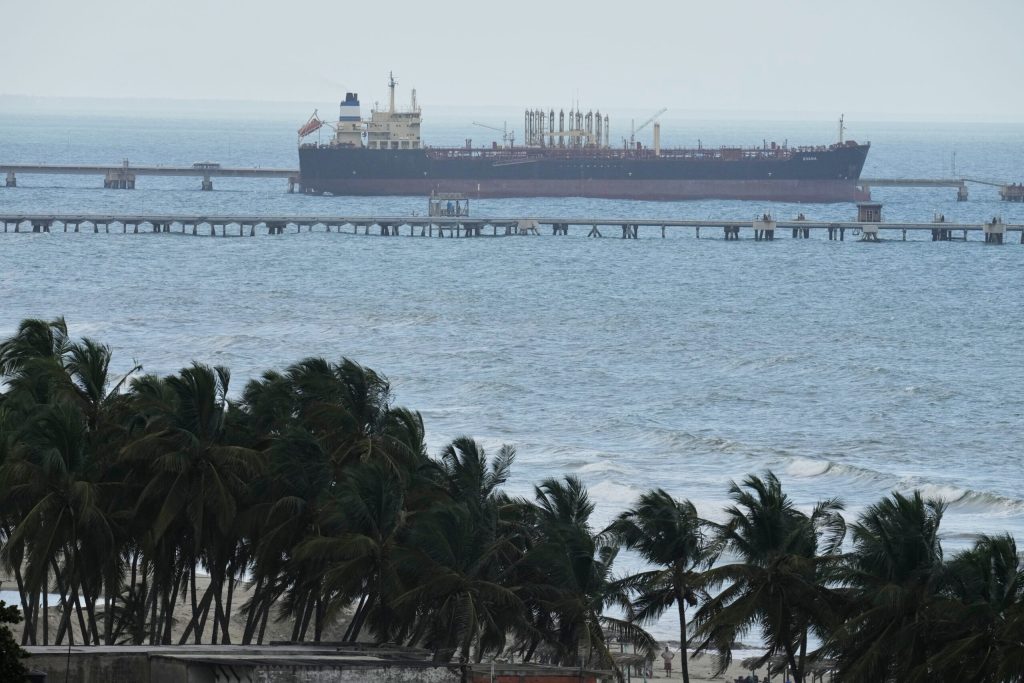
Photograph: Evana, an oil tanker, is docked at El Palito port in Puerto Cabello, Venezuela, Sunday, Dec. 21, 2025. (AP Photo/Matias Delacroix)
Recent shipping data reveals that tankers laden with Venezuelan crude and fuel have departed the nation’s waters, now navigating international waters without a registered flag or necessary ship safety documentation.
The current whereabouts of these vessels remain uncertain since their exit from Venezuelan territory. This lack of transparency raises significant concerns regarding maritime safety and regulatory compliance.
All commercial vessels are required to be registered, or “flagged,” with a country. This registration is crucial not only for adhering to safety and environmental regulations but also for ensuring that ships meet the standards necessary for operation.
Ship classification societies play a vital role in this process, providing essential safety services that include verifying the seaworthiness of vessels. Such certification is indispensable for obtaining insurance and gaining entry into ports around the world.
In mid-December, U.S. President Donald Trump enacted a blockade targeting all sanctioned tankers heading to Venezuela. This move came just before the dramatic capture of Venezuelan President Nicolas Maduro by U.S. troops early Saturday morning.
Despite Trump’s assertion on Saturday that an oil embargo remains fully enforced following Maduro’s extraction, these ships have continued their journeys, raising questions about the effectiveness of the blockade.
(Reporting by Jonathan Saul and Marianna Parraga; editing by Tomasz Janowski)
Photograph: Evana, an oil tanker, is docked at El Palito port in Puerto Cabello, Venezuela, Sunday, Dec. 21, 2025. (AP Photo/Matias Delacroix)