The Researcher Who Decided Not to Know
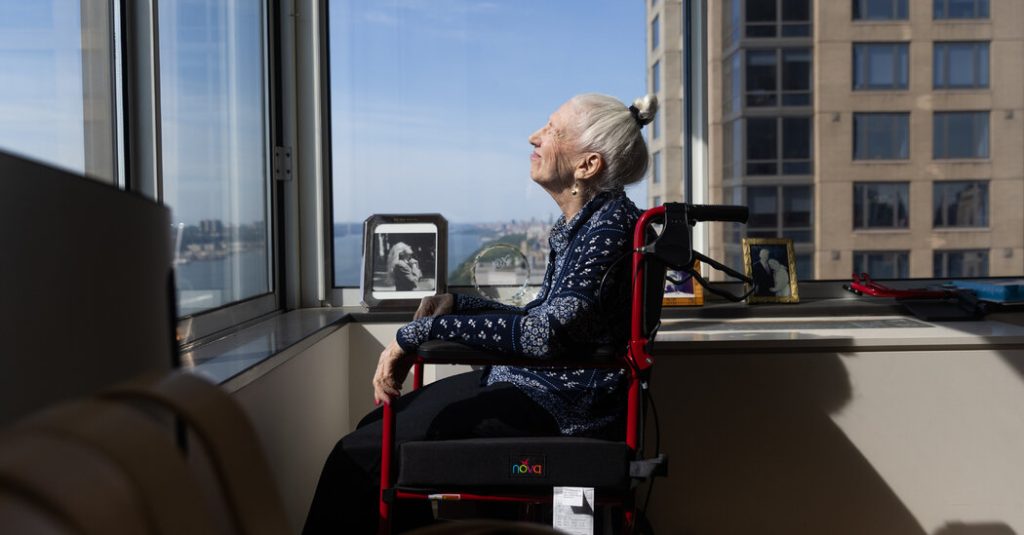
On my second visit with Nancy Wexler at her Manhattan apartment, she had a gift for me: a copy of her newly published memoir, “My Life, My Science: Pursuing a Cure for Huntington’s Disease.” This heartfelt gesture was made even more poignant by the fact that it was signed with a stamp of her signature; Nancy is unable to sign it herself due to the progression of her illness.
As I entered her home, I noticed that she couldn’t rise from her brown faux-leather recliner to greet me—she requires assistance to stand. Speaking is a challenge for her, and she can manage only a few badly slurred words or phrases, or, with great effort, a short sentence.
On that bright, windy afternoon, Nancy sat alongside her sister, Alice Wexler, in their recliners, their backs to windows that offered a stunning view of the Hudson River far below. Although Alice lives in California, she makes it a point to visit Nancy every other month, providing much-needed companionship and support.
At 80 years old, Nancy Wexler is living with Huntington’s disease, a devastating brain disorder that impairs a person’s ability to control movements. Unfortunately, there is no treatment and no cure for this condition.
Huntington’s disease is hereditary; Nancy’s grandfather, three uncles, and her mother all suffered from it. In a twist of fate, Alice does not carry the gene. When a parent has Huntington’s, each child has a 50 percent chance of inheriting it. Their mother, overwhelmed by the disease, attempted suicide—a tragic choice that others with Huntington’s have also faced—before ultimately succumbing to the illness.
However, Nancy is not just any Huntington’s disease patient. For decades, she spearheaded a groundbreaking research initiative in a remote area of Venezuela that identified the gene responsible for Huntington’s. This pivotal work led to the development of a blood test that allows at-risk individuals to determine if they will inherit the disease. In recognition of her contributions, Nancy has received numerous accolades, including two prestigious Lasker awards, which are among the highest honors in the field of science. Her life’s work has been dedicated to understanding the implications of living with Huntington’s disease, both for those at risk and for those who are afflicted.
What she did not anticipate, however, was that she would become a patient herself. After playing a crucial role in research that enabled others to learn their fate regarding this devastating disease, Nancy chose not to undergo testing herself.
Now, as the disease has progressed to a point where she can no longer actively contribute to the fight against Huntington’s, it raises an important question: How might her life and research have unfolded differently had she made the opposite choice? If one’s fate is sealed, is it better or worse to know?
On my second visit with Nancy Wexler at her Manhattan apartment, she had a gift for me: a copy of her newly published memoir, “My Life, My Science: Pursuing a Cure for Huntington’s Disease.” This heartfelt gesture was made even more poignant by the fact that it was signed with a stamp of her signature; Nancy is unable to sign it herself due to the progression of her illness.
As I entered her home, I noticed that she couldn’t rise from her brown faux-leather recliner to greet me—she requires assistance to stand. Speaking is a challenge for her, and she can manage only a few badly slurred words or phrases, or, with great effort, a short sentence.
On that bright, windy afternoon, Nancy sat alongside her sister, Alice Wexler, in their recliners, their backs to windows that offered a stunning view of the Hudson River far below. Although Alice lives in California, she makes it a point to visit Nancy every other month, providing much-needed companionship and support.
At 80 years old, Nancy Wexler is living with Huntington’s disease, a devastating brain disorder that impairs a person’s ability to control movements. Unfortunately, there is no treatment and no cure for this condition.
Huntington’s disease is hereditary; Nancy’s grandfather, three uncles, and her mother all suffered from it. In a twist of fate, Alice does not carry the gene. When a parent has Huntington’s, each child has a 50 percent chance of inheriting it. Their mother, overwhelmed by the disease, attempted suicide—a tragic choice that others with Huntington’s have also faced—before ultimately succumbing to the illness.
However, Nancy is not just any Huntington’s disease patient. For decades, she spearheaded a groundbreaking research initiative in a remote area of Venezuela that identified the gene responsible for Huntington’s. This pivotal work led to the development of a blood test that allows at-risk individuals to determine if they will inherit the disease. In recognition of her contributions, Nancy has received numerous accolades, including two prestigious Lasker awards, which are among the highest honors in the field of science. Her life’s work has been dedicated to understanding the implications of living with Huntington’s disease, both for those at risk and for those who are afflicted.
What she did not anticipate, however, was that she would become a patient herself. After playing a crucial role in research that enabled others to learn their fate regarding this devastating disease, Nancy chose not to undergo testing herself.
Now, as the disease has progressed to a point where she can no longer actively contribute to the fight against Huntington’s, it raises an important question: How might her life and research have unfolded differently had she made the opposite choice? If one’s fate is sealed, is it better or worse to know?