Joseph Fraumeni, 93, Dies; Helped Discover Genetic Link to Cancer
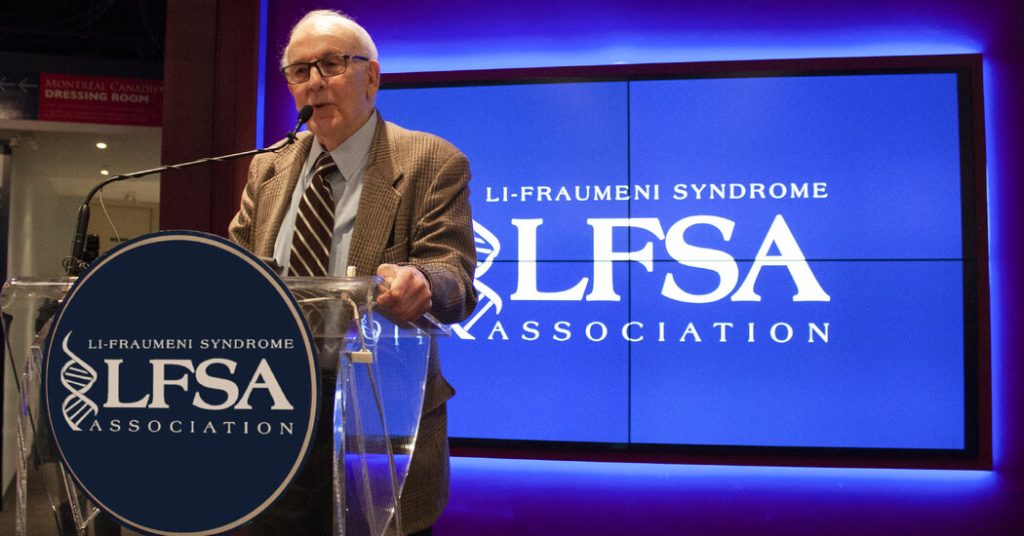
Dr. Joseph F. Fraumeni Jr., a pioneering figure in cancer research, passed away on June 22 in McLean, Virginia, at the age of 93. He was instrumental in discovering one of the first cancers linked to a human gene, a breakthrough that has led to the identification of over 120 genes associated with cancer predisposition.
His death was confirmed by his niece, Holly Fraumeni, at a skilled nursing facility.
Beyond his groundbreaking research on hereditary cancer links, Dr. Fraumeni made significant contributions in identifying environmental and lifestyle factors that increase cancer risk. He led the world’s foremost cancer epidemiology program at the National Cancer Institute in Bethesda, Maryland, for decades.
“He belongs on the Mount Rushmore of epidemiology,” remarked Dr. Norman E. Sharpless, a former director of the institute, in an interview with The Cancer Letter.
Epidemiology focuses on disease patterns within populations. Dr. Fraumeni often referenced an old New Yorker cover featuring birds on a rooftop, with one bird facing backward. He likened this backward-looking bird to an epidemiologist, emphasizing the importance of understanding how past behaviors and exposures influence current health.
Dr. Fraumeni recognized the potential of molecular biology technologies developed in the 1970s and ’80s to uncover cancer causes through population and family studies. As a leader at the cancer institute, he directed grants for this purpose and is credited as the founder of molecular epidemiology.
“That was part of his brilliance: He could see that this would completely be transformational, and he made sure that it was,” said Dr. Judy E. Garber of the Dana-Farber Cancer Institute.
In the 1960s, when Dr. Fraumeni began his most notable research, molecular-level tools were not yet available. His study focused on four families with a history of various cancers appearing in childhood or early adulthood.
“It was devastating,” he told The New York Times in 2015, reflecting on the limited understanding of cancer causes at the time.
While cigarette smoking had been linked to lung cancer in the 1950s, the broader field of cancer epidemiology struggled to establish genetic links. Many scientists were skeptical about the genetic origins of malignant tumors, focusing instead on external factors like pollution and chemical exposure.
The detailed medical histories compiled by Dr. Fraumeni and his colleague, Dr. Frederick P. Li, indicated that an inherited gene predisposed family members to cancer. Their findings, published in 1969, identified a hereditary disorder that significantly increases the risk of multiple cancers at a young age, later termed Li-Fraumeni syndrome.
Though rare, Dr. Fraumeni and Dr. Li were determined to identify the specific genetic cause, hoping to uncover the genetic origins of more common cancers.
In 1990, a significant breakthrough was reported: collaborators traced Li-Fraumeni syndrome to a mutation in the TP53 gene, marking one of the first instances of an inherited gene linked to cancer.
Today, approximately 5 to 10 percent of cancers are considered hereditary, with around 120 genes identified, including those linked to breast and colon cancers.
Dr. Fraumeni understood that cancer is not merely a question of nature versus nurture; rather, environmental and genetic factors are intertwined. In the 1970s, he spearheaded the creation of the first maps of cancer deaths in the U.S., which became the U.S. Atlas of Cancer Mortality.
These color-coded maps, highlighting counties with higher cancer frequencies, led to further studies identifying malignancies caused by arsenic from copper smelters and asbestos used in shipyards. They also established a link between oral cancers and tobacco snuff used by women in rural Southern areas.
This groundbreaking research resulted in policy changes that have prevented countless malignancies and premature deaths, as noted by The Cancer Letter.
Joseph Francis Fraumeni Jr. was born on April 1, 1933, in Everett, Massachusetts, the elder of two sons of Joseph F. Fraumeni, an optometrist, and Pauline (Malta) Fraumeni, an antiques collector. The family later moved to North Reading, Massachusetts, where he grew up.
Encouraged by his father and a family friend who was a physician, Dr. Fraumeni pursued a career in medicine. “Whenever he saw me, he would call me ‘Doctor,’ even when I was a little kid,” Dr. Fraumeni recalled in a 2014 interview.
After graduating from Harvard in 1954, he attended Duke University School of Medicine, earning his M.D. in 1958, followed by a master’s degree from the Harvard School of Public Health in 1965.
Dr. Fraumeni served as a commissioned officer in the U.S. Public Health Service, achieving the rank of rear admiral and assistant surgeon general. He joined the National Cancer Institute in 1962 as a researcher and became the founding director of its division of cancer epidemiology and genetics in 1995.
In 1977, he married Patricia D’Arcy, who passed away in February. The couple did not have children. He is survived by his niece, a brother named Arthur, and two nephews, Richard and Joseph.
Dr. Fraumeni officially retired in 2014, becoming a scientist emeritus at the cancer institute. However, he continued to work regularly until the onset of the Covid-19 pandemic.
“Out of habit from his earlier work ethic,” his niece noted, “he stayed at the office until as late as 7 p.m. on Fridays well into his 80s.”
Dr. Joseph F. Fraumeni Jr., a pioneering figure in cancer research, passed away on June 22 in McLean, Virginia, at the age of 93. He was instrumental in discovering one of the first cancers linked to a human gene, a breakthrough that has led to the identification of over 120 genes associated with cancer predisposition.
His death was confirmed by his niece, Holly Fraumeni, at a skilled nursing facility.
Beyond his groundbreaking research on hereditary cancer links, Dr. Fraumeni made significant contributions in identifying environmental and lifestyle factors that increase cancer risk. He led the world’s foremost cancer epidemiology program at the National Cancer Institute in Bethesda, Maryland, for decades.
“He belongs on the Mount Rushmore of epidemiology,” remarked Dr. Norman E. Sharpless, a former director of the institute, in an interview with The Cancer Letter.
Epidemiology focuses on disease patterns within populations. Dr. Fraumeni often referenced an old New Yorker cover featuring birds on a rooftop, with one bird facing backward. He likened this backward-looking bird to an epidemiologist, emphasizing the importance of understanding how past behaviors and exposures influence current health.
Dr. Fraumeni recognized the potential of molecular biology technologies developed in the 1970s and ’80s to uncover cancer causes through population and family studies. As a leader at the cancer institute, he directed grants for this purpose and is credited as the founder of molecular epidemiology.
“That was part of his brilliance: He could see that this would completely be transformational, and he made sure that it was,” said Dr. Judy E. Garber of the Dana-Farber Cancer Institute.
In the 1960s, when Dr. Fraumeni began his most notable research, molecular-level tools were not yet available. His study focused on four families with a history of various cancers appearing in childhood or early adulthood.
“It was devastating,” he told The New York Times in 2015, reflecting on the limited understanding of cancer causes at the time.
While cigarette smoking had been linked to lung cancer in the 1950s, the broader field of cancer epidemiology struggled to establish genetic links. Many scientists were skeptical about the genetic origins of malignant tumors, focusing instead on external factors like pollution and chemical exposure.
The detailed medical histories compiled by Dr. Fraumeni and his colleague, Dr. Frederick P. Li, indicated that an inherited gene predisposed family members to cancer. Their findings, published in 1969, identified a hereditary disorder that significantly increases the risk of multiple cancers at a young age, later termed Li-Fraumeni syndrome.
Though rare, Dr. Fraumeni and Dr. Li were determined to identify the specific genetic cause, hoping to uncover the genetic origins of more common cancers.
In 1990, a significant breakthrough was reported: collaborators traced Li-Fraumeni syndrome to a mutation in the TP53 gene, marking one of the first instances of an inherited gene linked to cancer.
Today, approximately 5 to 10 percent of cancers are considered hereditary, with around 120 genes identified, including those linked to breast and colon cancers.
Dr. Fraumeni understood that cancer is not merely a question of nature versus nurture; rather, environmental and genetic factors are intertwined. In the 1970s, he spearheaded the creation of the first maps of cancer deaths in the U.S., which became the U.S. Atlas of Cancer Mortality.
These color-coded maps, highlighting counties with higher cancer frequencies, led to further studies identifying malignancies caused by arsenic from copper smelters and asbestos used in shipyards. They also established a link between oral cancers and tobacco snuff used by women in rural Southern areas.
This groundbreaking research resulted in policy changes that have prevented countless malignancies and premature deaths, as noted by The Cancer Letter.
Joseph Francis Fraumeni Jr. was born on April 1, 1933, in Everett, Massachusetts, the elder of two sons of Joseph F. Fraumeni, an optometrist, and Pauline (Malta) Fraumeni, an antiques collector. The family later moved to North Reading, Massachusetts, where he grew up.
Encouraged by his father and a family friend who was a physician, Dr. Fraumeni pursued a career in medicine. “Whenever he saw me, he would call me ‘Doctor,’ even when I was a little kid,” Dr. Fraumeni recalled in a 2014 interview.
After graduating from Harvard in 1954, he attended Duke University School of Medicine, earning his M.D. in 1958, followed by a master’s degree from the Harvard School of Public Health in 1965.
Dr. Fraumeni served as a commissioned officer in the U.S. Public Health Service, achieving the rank of rear admiral and assistant surgeon general. He joined the National Cancer Institute in 1962 as a researcher and became the founding director of its division of cancer epidemiology and genetics in 1995.
In 1977, he married Patricia D’Arcy, who passed away in February. The couple did not have children. He is survived by his niece, a brother named Arthur, and two nephews, Richard and Joseph.
Dr. Fraumeni officially retired in 2014, becoming a scientist emeritus at the cancer institute. However, he continued to work regularly until the onset of the Covid-19 pandemic.
“Out of habit from his earlier work ethic,” his niece noted, “he stayed at the office until as late as 7 p.m. on Fridays well into his 80s.”