US Power Grid Faces Strain Amidst Major Winter Storm Sweeping the Nation
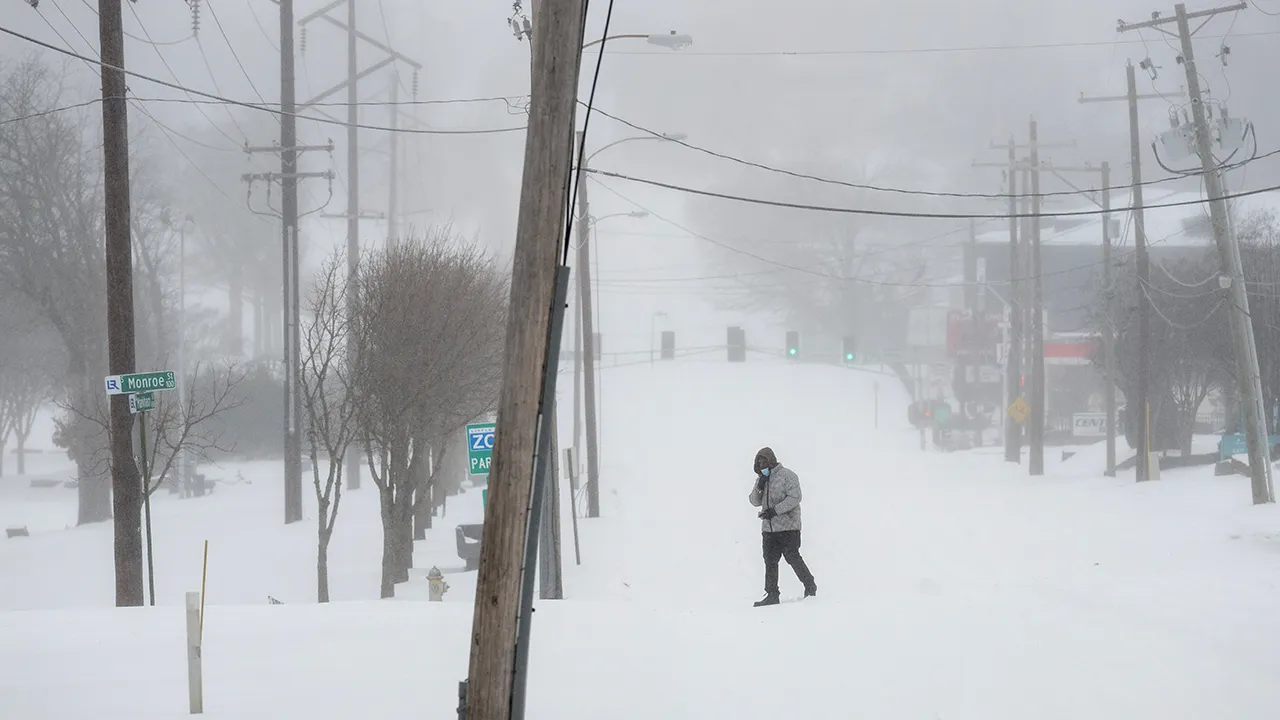
FOX Weather correspondent Ian Oliver discusses details of the major winter storm bringing sub-zero temperatures, heavy snow, and significant ice across multiple states on ‘Special Report.’
As a massive winter storm barrels across the U.S., power grid operators are taking extraordinary steps to keep the lights on and avoid rolling blackouts.
The storm, stretching over 2,300 miles, has triggered sharp price volatility in electricity markets and forced some regions to temporarily rely on oil-fired generation to meet demand, as reported by Reuters.
PJM Interconnection, the nation’s largest regional power grid serving 67 million people across the East and Mid-Atlantic, experienced wholesale electricity prices briefly surging above $3,000 per megawatt-hour early Saturday, a dramatic increase from under $200 earlier in the day.
In New England, fuel oil generation has been ramped up to help the region conserve natural gas, its primary fuel source, according to Reuters.
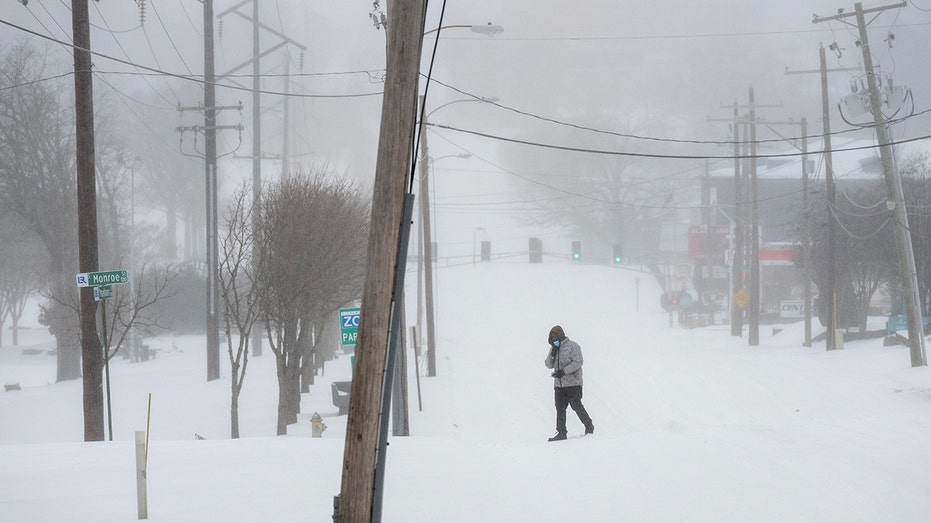
A person walks in the snow, Saturday, in Little Rock, Ark. (Will Newton/Getty Images / Getty Images)
At the center of the strain is the nation’s heavy dependence on natural gas delivery, according to Didi Caldwell, founder and CEO of site-selection firm Global Location Strategies. Natural gas now fuels roughly 40% of U.S. electricity generation, a significant increase from about 12% in 1990, making uninterrupted supply critical during extreme weather.
“What we lack is sufficient capacity to store and deliver gas in real time,” Caldwell told FOX Business, noting that the U.S. has abundant reserves. Unlike coal plants, which have historically stockpiled months of fuel on-site, most natural gas plants rely on just-in-time delivery. Any disruption to pipelines or infrastructure can quickly threaten power generation.
“If anything happens to disrupt the supply of gas to the generating stations, they have little to no practical backup,” she said.
Winter storms amplify the risk. Gas demand spikes as households crank up heat, while electricity demand surges at the same time—much of it fueled by natural gas.
STORE SHELVES WIPED CLEAN AS AMERICANS BRACE FOR MASSIVE WINTER STORM
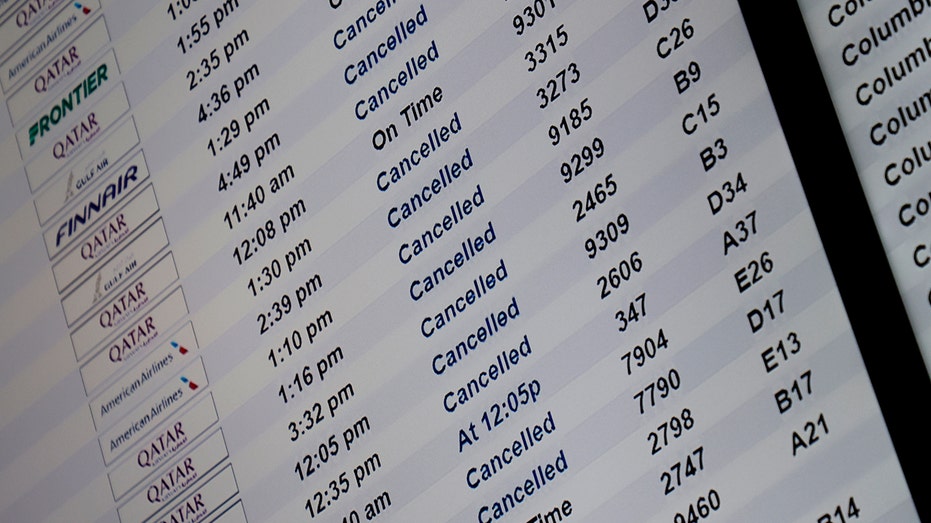
A detailed view of flight listings at Dallas Fort Worth International Airport on January 24, 2026, in Dallas, Texas. (Ron Jenkins/Getty Images / Getty Images)
“Every region is exposed, but for different reasons,” Caldwell explained. “In the southeast, the lack of storage and limited transport capacity means that during cold snaps, natural gas is competing with itself.”
One of the most vulnerable areas is Transcontinental Gas Pipe Line Co. Zone 5, which runs through Georgia, South Carolina, North Carolina, and Virginia. Caldwell noted that limited storage and pipeline capacity mean that during major winter events, prices for gas and transport capacity skyrocket.
The vulnerabilities of this system were laid bare during Texas’ deadly Winter Storm Uri in 2021, when frozen gas infrastructure triggered widespread power outages. While upgrades followed, the current storm is among the first major tests of those improvements.
USPS WARNS OF MAIL DELIVERY DELAYS IN OVER 30 STATES
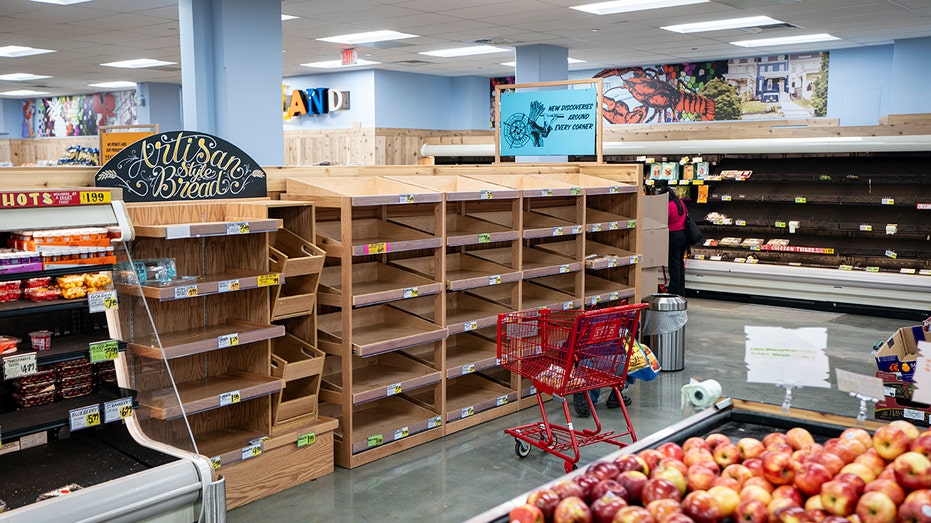
Empty bread shelves at a grocery store, Friday, in Washington, D.C., in anticipation of this weekend’s storm. (Al Drago/Getty Images / Getty Images)
A similar near-failure occurred in 2022 when gas systems in the Southeast and Mid-Atlantic were pushed to their limits during an Arctic cold event. The grid held only through emergency measures and thin margins, according to Caldwell.
Caldwell emphasized that long-term solutions will require grid modernization, targeted upgrades to gas delivery, and better coordination between gas and electric systems. “Adding more natural gas generation will not fix and may exacerbate the risks,” she cautioned.
PJM Interconnection did not immediately respond to FOX Business’ request for comment.
FOX Weather correspondent Ian Oliver discusses details of the major winter storm bringing sub-zero temperatures, heavy snow, and significant ice across multiple states on ‘Special Report.’
As a massive winter storm barrels across the U.S., power grid operators are taking extraordinary steps to keep the lights on and avoid rolling blackouts.
The storm, stretching over 2,300 miles, has triggered sharp price volatility in electricity markets and forced some regions to temporarily rely on oil-fired generation to meet demand, as reported by Reuters.
PJM Interconnection, the nation’s largest regional power grid serving 67 million people across the East and Mid-Atlantic, experienced wholesale electricity prices briefly surging above $3,000 per megawatt-hour early Saturday, a dramatic increase from under $200 earlier in the day.
In New England, fuel oil generation has been ramped up to help the region conserve natural gas, its primary fuel source, according to Reuters.
A person walks in the snow, Saturday, in Little Rock, Ark. (Will Newton/Getty Images / Getty Images)
At the center of the strain is the nation’s heavy dependence on natural gas delivery, according to Didi Caldwell, founder and CEO of site-selection firm Global Location Strategies. Natural gas now fuels roughly 40% of U.S. electricity generation, a significant increase from about 12% in 1990, making uninterrupted supply critical during extreme weather.
“What we lack is sufficient capacity to store and deliver gas in real time,” Caldwell told FOX Business, noting that the U.S. has abundant reserves. Unlike coal plants, which have historically stockpiled months of fuel on-site, most natural gas plants rely on just-in-time delivery. Any disruption to pipelines or infrastructure can quickly threaten power generation.
“If anything happens to disrupt the supply of gas to the generating stations, they have little to no practical backup,” she said.
Winter storms amplify the risk. Gas demand spikes as households crank up heat, while electricity demand surges at the same time—much of it fueled by natural gas.
STORE SHELVES WIPED CLEAN AS AMERICANS BRACE FOR MASSIVE WINTER STORM
A detailed view of flight listings at Dallas Fort Worth International Airport on January 24, 2026, in Dallas, Texas. (Ron Jenkins/Getty Images / Getty Images)
“Every region is exposed, but for different reasons,” Caldwell explained. “In the southeast, the lack of storage and limited transport capacity means that during cold snaps, natural gas is competing with itself.”
One of the most vulnerable areas is Transcontinental Gas Pipe Line Co. Zone 5, which runs through Georgia, South Carolina, North Carolina, and Virginia. Caldwell noted that limited storage and pipeline capacity mean that during major winter events, prices for gas and transport capacity skyrocket.
The vulnerabilities of this system were laid bare during Texas’ deadly Winter Storm Uri in 2021, when frozen gas infrastructure triggered widespread power outages. While upgrades followed, the current storm is among the first major tests of those improvements.
USPS WARNS OF MAIL DELIVERY DELAYS IN OVER 30 STATES
Empty bread shelves at a grocery store, Friday, in Washington, D.C., in anticipation of this weekend’s storm. (Al Drago/Getty Images / Getty Images)
A similar near-failure occurred in 2022 when gas systems in the Southeast and Mid-Atlantic were pushed to their limits during an Arctic cold event. The grid held only through emergency measures and thin margins, according to Caldwell.
Caldwell emphasized that long-term solutions will require grid modernization, targeted upgrades to gas delivery, and better coordination between gas and electric systems. “Adding more natural gas generation will not fix and may exacerbate the risks,” she cautioned.
PJM Interconnection did not immediately respond to FOX Business’ request for comment.