Robert Coles, Pulitzer-Winning Child Psychiatrist, Is Dead at 97
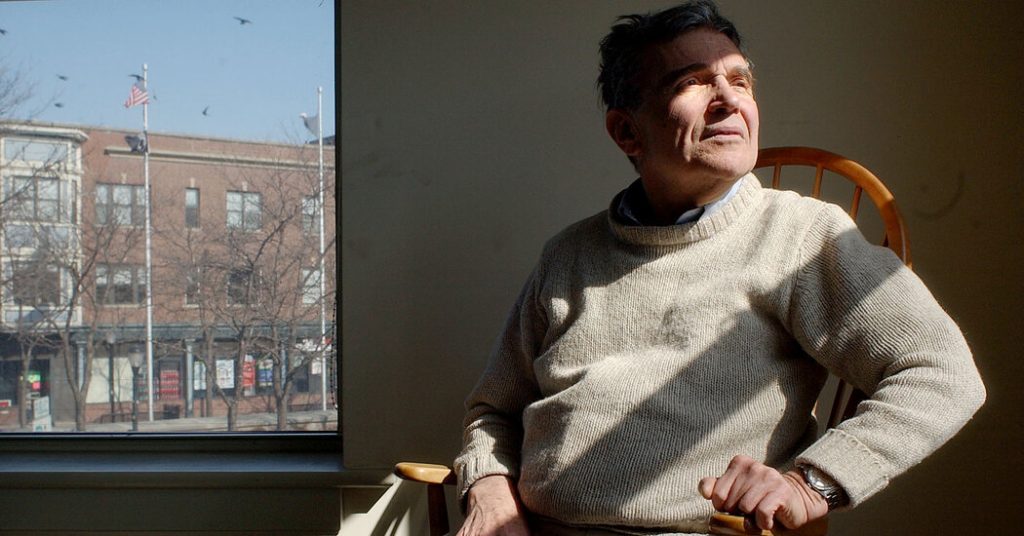
Robert Coles, a renowned child psychiatrist and storyteller, passed away on Thursday in Lincoln, Massachusetts, at the age of 97. His death was confirmed by his son, Robert.
A long-time professor at Harvard University, Dr. Coles was known for his unique approach to understanding children. He avoided rigid ideologies and psychiatric norms, choosing instead to immerse himself in the lives of children across the globe. He visited their homes, listening attentively to their stories and those of their families, often returning for months or even years to build trust and rapport.
Dr. Coles’s work shed light on the complex realities of a rapidly changing society. One of his most notable accounts was that of Ruby Bridges, a six-year-old girl who bravely integrated a public school in New Orleans amidst a hostile crowd in 1960. His explorations took him from impoverished Black neighborhoods to affluent white communities, and even included a year spent riding a bus with Black children traveling to schools in predominantly white areas.
He meticulously documented these experiences, transforming conversations, children’s drawings, and extensive notes into vivid narratives that captured how children confront challenges. His five-volume series, “Children of Crisis,” published between 1967 and 1977, earned him a Pulitzer Prize for Volumes 2 and 3 in 1973.
While some critics labeled his methods as unscientific, Dr. Coles maintained that he prioritized deeper truths over strict accuracy. David Riesman, a prominent sociologist, praised his work for dismantling stereotypes, emphasizing that it revealed the complexities of human nature: “Policemen are not pigs, white Southerners are not rednecks, and Blacks are not all suffering in exotic misery.”
Credit…Little, Brown and Company
Riesman noted that Dr. Coles’s work urged listeners to recognize the resilience and complexity of individuals, saying, “What he is saying is ‘People are more complicated, more varied, more interesting, have more resiliency and more survivability than you might think.’”
Kenneth Clark, a psychologist instrumental in the Supreme Court’s decision to end school segregation, remarked that Dr. Coles provided evidence that “hope is alive.” He likened Dr. Coles to figures like Martin Luther King, stating, “You can’t judge him by normal standards; they are men possessed.”
Dr. Coles often expressed a sense of “moral anxiety” as a white man documenting the lives of those in less privileged circumstances. In a 1997 interview, he reflected, “I work with very vulnerable people, and yet I’m not very vulnerable myself. It makes me uncomfortable, seeing the disparities between the world I document and the world I inhabit.”
As a beloved professor at Harvard, he engaged students across various disciplines, using literature to spark discussions. His literary contributions spanned diverse subjects, including profiles of Bruce Springsteen and Walker Percy, alongside novels, children’s books, and poetry.
His accolades included a MacArthur Fellowship in 1981, the Presidential Medal of Freedom in 1998, and the National Humanities Medal in 2001. Dr. Coles described himself in many ways: as a doctor, psychiatrist, wanderer, oral historian, social anthropologist, teacher, and storyteller.
A close friend, Dr. Percy, noted that Dr. Coles’s broad application of the title “doctor” was fitting, stating, “He treads a narrow path between theorizing and novelizing and emerges as what in fact he is: physician, and a wise and gentle one.”
Born on October 12, 1928, in Boston, Robert Martin Coles was the son of an English immigrant engineer and an Iowa Episcopal minister’s daughter. His childhood was marked by his parents’ love for literature, often reading Dickens and Eliot aloud to each other.
He attended Boston Latin School and graduated from Harvard in 1950. An essay he wrote about William Carlos Williams led to a memorable correspondence with the poet, who humorously critiqued his work on a prescription slip.
Inspired by Williams, Dr. Coles pursued medicine, earning his degree from Columbia and completing his internship at University of Chicago clinics.
In a 2005 interview, Dr. Coles recounted his experiences working with polio patients, which sparked his interest in the psychological effects of illness. This, along with a reluctance to inflict pain on children, led him to specialize in child psychiatry.
Drafted into the Air Force in 1958, he served as a captain in a psychiatric hospital in Biloxi, Mississippi. Witnessing the harsh realities faced by Black Southerners during a beach integration incident deeply affected him.
His journey into child psychology began with Ruby Bridges, whose courage in the face of racism left a lasting impression on him. Despite daily threats, she maintained a remarkable sense of compassion, famously stating that she prayed for those who opposed her.
Bridges became a central figure in Dr. Coles’s work, inspiring him to explore children’s moral and spiritual lives, leading to a collaborative children’s book.
As Bridges matured, she encouraged Dr. Coles to write “Women of Crisis,” a two-volume study published in 1978 and 1980, which he co-authored with his wife, Jane.
Jane Hallowell, whom Dr. Coles married in 1960, played a pivotal role in his work. She advised him to listen more and ask fewer questions during interviews with children, a strategy that proved effective in eliciting deeper responses.
In Volume 4 of “Children of Crisis,” Dr. Coles detailed this evolved approach, emphasizing the importance of observation over interrogation.
He learned that children were often more focused on their immediate surroundings than on global issues. For instance, a Black child in Mississippi expressed concern about the Ku Klux Klan’s potential possession of a bomb, while a migrant child likened his life to a yo-yo, reflecting a sense of impermanence.
Dr. Coles observed that visual expressions often conveyed more than words. One child depicted himself without arms, illustrating a profound sense of deprivation.
Throughout his travels, Dr. Coles studied diverse groups, from Alaska Natives to affluent suburbanites, with his family accompanying him on these journeys.
Dr. Coles’s wife, Jane, passed away in 1993. He is survived by his sons Robert, Daniel, and Michael, along with four grandsons. He resided in Concord, Massachusetts.
In 1989, Dr. Coles co-founded DoubleTake, a magazine dedicated to documentary photography and writing, which won a National Magazine Award for general excellence in 1998 but ultimately closed in 2004 despite benefit concerts by Bruce Springsteen.
Holding various professorial roles at Harvard, including the James Agee Professorship of Social Ethics, Dr. Coles also served as a visiting professor at Duke University. Yet, he often expressed a preference for the company of children over academics, stating, “I feel more at home sitting with a child in their home drawing pictures than I do in the Harvard Faculty Club.”
Alex Traub contributed reporting.
Robert Coles, a renowned child psychiatrist and storyteller, passed away on Thursday in Lincoln, Massachusetts, at the age of 97. His death was confirmed by his son, Robert.
A long-time professor at Harvard University, Dr. Coles was known for his unique approach to understanding children. He avoided rigid ideologies and psychiatric norms, choosing instead to immerse himself in the lives of children across the globe. He visited their homes, listening attentively to their stories and those of their families, often returning for months or even years to build trust and rapport.
Dr. Coles’s work shed light on the complex realities of a rapidly changing society. One of his most notable accounts was that of Ruby Bridges, a six-year-old girl who bravely integrated a public school in New Orleans amidst a hostile crowd in 1960. His explorations took him from impoverished Black neighborhoods to affluent white communities, and even included a year spent riding a bus with Black children traveling to schools in predominantly white areas.
He meticulously documented these experiences, transforming conversations, children’s drawings, and extensive notes into vivid narratives that captured how children confront challenges. His five-volume series, “Children of Crisis,” published between 1967 and 1977, earned him a Pulitzer Prize for Volumes 2 and 3 in 1973.
While some critics labeled his methods as unscientific, Dr. Coles maintained that he prioritized deeper truths over strict accuracy. David Riesman, a prominent sociologist, praised his work for dismantling stereotypes, emphasizing that it revealed the complexities of human nature: “Policemen are not pigs, white Southerners are not rednecks, and Blacks are not all suffering in exotic misery.”
Credit…Little, Brown and Company
Riesman noted that Dr. Coles’s work urged listeners to recognize the resilience and complexity of individuals, saying, “What he is saying is ‘People are more complicated, more varied, more interesting, have more resiliency and more survivability than you might think.’”
Kenneth Clark, a psychologist instrumental in the Supreme Court’s decision to end school segregation, remarked that Dr. Coles provided evidence that “hope is alive.” He likened Dr. Coles to figures like Martin Luther King, stating, “You can’t judge him by normal standards; they are men possessed.”
Dr. Coles often expressed a sense of “moral anxiety” as a white man documenting the lives of those in less privileged circumstances. In a 1997 interview, he reflected, “I work with very vulnerable people, and yet I’m not very vulnerable myself. It makes me uncomfortable, seeing the disparities between the world I document and the world I inhabit.”
As a beloved professor at Harvard, he engaged students across various disciplines, using literature to spark discussions. His literary contributions spanned diverse subjects, including profiles of Bruce Springsteen and Walker Percy, alongside novels, children’s books, and poetry.
His accolades included a MacArthur Fellowship in 1981, the Presidential Medal of Freedom in 1998, and the National Humanities Medal in 2001. Dr. Coles described himself in many ways: as a doctor, psychiatrist, wanderer, oral historian, social anthropologist, teacher, and storyteller.
A close friend, Dr. Percy, noted that Dr. Coles’s broad application of the title “doctor” was fitting, stating, “He treads a narrow path between theorizing and novelizing and emerges as what in fact he is: physician, and a wise and gentle one.”
Born on October 12, 1928, in Boston, Robert Martin Coles was the son of an English immigrant engineer and an Iowa Episcopal minister’s daughter. His childhood was marked by his parents’ love for literature, often reading Dickens and Eliot aloud to each other.
He attended Boston Latin School and graduated from Harvard in 1950. An essay he wrote about William Carlos Williams led to a memorable correspondence with the poet, who humorously critiqued his work on a prescription slip.
Inspired by Williams, Dr. Coles pursued medicine, earning his degree from Columbia and completing his internship at University of Chicago clinics.
In a 2005 interview, Dr. Coles recounted his experiences working with polio patients, which sparked his interest in the psychological effects of illness. This, along with a reluctance to inflict pain on children, led him to specialize in child psychiatry.
Drafted into the Air Force in 1958, he served as a captain in a psychiatric hospital in Biloxi, Mississippi. Witnessing the harsh realities faced by Black Southerners during a beach integration incident deeply affected him.
His journey into child psychology began with Ruby Bridges, whose courage in the face of racism left a lasting impression on him. Despite daily threats, she maintained a remarkable sense of compassion, famously stating that she prayed for those who opposed her.
Bridges became a central figure in Dr. Coles’s work, inspiring him to explore children’s moral and spiritual lives, leading to a collaborative children’s book.
As Bridges matured, she encouraged Dr. Coles to write “Women of Crisis,” a two-volume study published in 1978 and 1980, which he co-authored with his wife, Jane.
Jane Hallowell, whom Dr. Coles married in 1960, played a pivotal role in his work. She advised him to listen more and ask fewer questions during interviews with children, a strategy that proved effective in eliciting deeper responses.
In Volume 4 of “Children of Crisis,” Dr. Coles detailed this evolved approach, emphasizing the importance of observation over interrogation.
He learned that children were often more focused on their immediate surroundings than on global issues. For instance, a Black child in Mississippi expressed concern about the Ku Klux Klan’s potential possession of a bomb, while a migrant child likened his life to a yo-yo, reflecting a sense of impermanence.
Dr. Coles observed that visual expressions often conveyed more than words. One child depicted himself without arms, illustrating a profound sense of deprivation.
Throughout his travels, Dr. Coles studied diverse groups, from Alaska Natives to affluent suburbanites, with his family accompanying him on these journeys.
Dr. Coles’s wife, Jane, passed away in 1993. He is survived by his sons Robert, Daniel, and Michael, along with four grandsons. He resided in Concord, Massachusetts.
In 1989, Dr. Coles co-founded DoubleTake, a magazine dedicated to documentary photography and writing, which won a National Magazine Award for general excellence in 1998 but ultimately closed in 2004 despite benefit concerts by Bruce Springsteen.
Holding various professorial roles at Harvard, including the James Agee Professorship of Social Ethics, Dr. Coles also served as a visiting professor at Duke University. Yet, he often expressed a preference for the company of children over academics, stating, “I feel more at home sitting with a child in their home drawing pictures than I do in the Harvard Faculty Club.”
Alex Traub contributed reporting.