By September, Nearly a Third of Americans Will Live in States With Legal Aid in Dying

Jules Netherland, a resident of the Bronx, has made several trips to the New York State Capitol in Albany over the past few years. Her mission? To advocate for a medical aid-in-dying bill that would permit terminally ill patients to end their lives with a lethal prescription. This journey has been fueled by her personal experiences and her commitment to the cause.
Netherland has actively participated in rallies and visited legislators’ offices alongside fellow members of the advocacy organization Compassion & Choices. In 2024, during a crucial debate in the state Assembly regarding the aid-in-dying bill, she helped unfurl a banner in the chamber gallery that boldly proclaimed, “Stop the Suffering.”
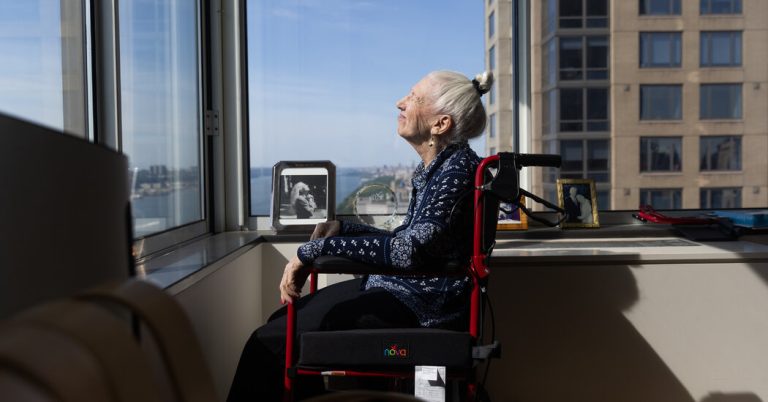
However, her activism has not come without challenges. At 59, Netherland, who works for a nonprofit, was diagnosed with breast cancer in 2019. “I underwent a full year of aggressive treatment,” she shared, detailing her journey through chemotherapy, a mastectomy, and radiation treatment every weekday for five weeks, followed by six months of two oral medications.
After a period of recovery, she was devastated to learn that her cancer had returned. Although metastatic breast cancer is incurable, she is currently managing her condition with medication. Despite feeling fortunate, she grapples with fatigue, brain fog, gastrointestinal issues, and joint pain. “My energy is really limited,” she admitted.
As she continued to reach out to legislators, Netherland harbored a fear that she might not live to see the aid-in-dying bill—first introduced in New York in 2016—become law.

‘A Breakthrough Moment’
On June 9, 2025, Netherland was present in the state Senate chamber as the Assembly approved the bill. She watched in anticipation as the votes in favor mounted, ultimately leading to its passage. Governor Kathy Hochul signed an amended version of the bill in February, with an effective date set for August 5.
Illinois is also on track to implement a similar law in September, which would make it the 13th state (along with the District of Columbia) where medical aid in dying is legal.
Kevin Díaz, president of Compassion & Choices, hailed the moment as “a breakthrough.” After nearly three decades since Oregon enacted the first law in 1997, the addition of two populous states means that nearly a third of Americans will now reside in areas where medical aid in dying is legally available. “It shows that there’s broad support for this model,” Díaz noted.
Polling data supports this assertion. A recent Pew Research Center survey revealed that almost two-thirds of respondents do not view the practice as “morally wrong.” Support spans various political and religious demographics, with a narrow majority of Republicans and 76% of Democrats finding “physician-assisted death” acceptable.
In New York, a Siena poll indicated that 54% of respondents supported aid in dying, with majorities across gender, age, and geographic lines. While a plurality of Latinos supported the measure, Black respondents showed a narrow opposition.
Thaddeus Pope, a bioethicist and professor at Mitchell Hamline School of Law, noted that the process of passing these laws has become somewhat easier. “You can point to the experiences of states like California and Oregon, where nothing bad has happened in the years since implementation,” he explained.
‘You Need A, B, and C’
Despite the progress, legalizing medical aid in dying (MAID) remains a contentious issue. Opposition comes from Catholic leadership and many disability organizations. The American Medical Association has stated that “physician-assisted suicide is fundamentally incompatible with the physician’s role as healer,” citing potential societal risks.
Legal challenges persist, with the Patients’ Rights Action Fund pursuing lawsuits in several states, arguing that aid-in-dying laws discriminate against individuals with disabilities. “This is a litigation strategy we’ve developed to ultimately get to the Supreme Court,” said Matt Vallière, the group’s executive director.
Even in states where aid in dying is legal, navigating the process can be complex. Eligibility typically requires patients to have incurable illnesses and a prognosis of six months or less to live. The process involves multiple requests to two doctors, with mandated waiting periods and the necessity for patients to have mental capacity.
Additionally, any healthcare provider can opt out of providing aid in dying, and religiously affiliated institutions often do so. “The state can say ‘You need A, B, and C,’ and a hospital can add its own requirements,” Pope explained.
Hotly Debated, Seldom Used
These restrictions may contribute to the low utilization rates of aid-in-dying laws, with typically only 1% or fewer of deaths annually occurring under these provisions. While support for patient autonomy at the end of life is widespread, the actual desire to exercise this option remains limited.
However, as studies indicate that many patients seeking MAID die before completing the process, some states have begun to relax restrictions. California, for example, reduced its waiting period from 15 days to 48 hours.
Compassion & Choices is also looking to challenge residency requirements in additional states and aims to expand its efforts in regions with differing cultural and political climates, such as Florida.
Medical aid in dying signifies a shift in power, allowing individuals to decide when their suffering is enough. “The person who has to bear the burden of the suffering should have the ability to decide when it’s enough,” Díaz emphasized.
Anne Gurnett Bander, a 72-year-old retired research scientist, faced her own challenges when diagnosed with ALS. After caring for her husband through the disease, she found herself grappling with the same fate. Planning to travel to Switzerland for medical aid in dying, she became an advocate for the New York bill, despite her advancing illness.
Both Bander and Netherland express uncertainty about whether they would ultimately use lethal drugs to end their lives. Yet they firmly believe that the choice should be theirs. “It can offer so much peace of mind,” Netherland stated. “I thought, ‘People should have this option.’ Now, they will.”
The New Old Age is produced through a partnership with The New York Times.
Jules Netherland, a resident of the Bronx, has made several trips to the New York State Capitol in Albany over the past few years. Her mission? To advocate for a medical aid-in-dying bill that would permit terminally ill patients to end their lives with a lethal prescription. This journey has been fueled by her personal experiences and her commitment to the cause.
Netherland has actively participated in rallies and visited legislators’ offices alongside fellow members of the advocacy organization Compassion & Choices. In 2024, during a crucial debate in the state Assembly regarding the aid-in-dying bill, she helped unfurl a banner in the chamber gallery that boldly proclaimed, “Stop the Suffering.”
However, her activism has not come without challenges. At 59, Netherland, who works for a nonprofit, was diagnosed with breast cancer in 2019. “I underwent a full year of aggressive treatment,” she shared, detailing her journey through chemotherapy, a mastectomy, and radiation treatment every weekday for five weeks, followed by six months of two oral medications.
After a period of recovery, she was devastated to learn that her cancer had returned. Although metastatic breast cancer is incurable, she is currently managing her condition with medication. Despite feeling fortunate, she grapples with fatigue, brain fog, gastrointestinal issues, and joint pain. “My energy is really limited,” she admitted.
As she continued to reach out to legislators, Netherland harbored a fear that she might not live to see the aid-in-dying bill—first introduced in New York in 2016—become law.
‘A Breakthrough Moment’
On June 9, 2025, Netherland was present in the state Senate chamber as the Assembly approved the bill. She watched in anticipation as the votes in favor mounted, ultimately leading to its passage. Governor Kathy Hochul signed an amended version of the bill in February, with an effective date set for August 5.
Illinois is also on track to implement a similar law in September, which would make it the 13th state (along with the District of Columbia) where medical aid in dying is legal.
Kevin Díaz, president of Compassion & Choices, hailed the moment as “a breakthrough.” After nearly three decades since Oregon enacted the first law in 1997, the addition of two populous states means that nearly a third of Americans will now reside in areas where medical aid in dying is legally available. “It shows that there’s broad support for this model,” Díaz noted.
Polling data supports this assertion. A recent Pew Research Center survey revealed that almost two-thirds of respondents do not view the practice as “morally wrong.” Support spans various political and religious demographics, with a narrow majority of Republicans and 76% of Democrats finding “physician-assisted death” acceptable.
In New York, a Siena poll indicated that 54% of respondents supported aid in dying, with majorities across gender, age, and geographic lines. While a plurality of Latinos supported the measure, Black respondents showed a narrow opposition.
Thaddeus Pope, a bioethicist and professor at Mitchell Hamline School of Law, noted that the process of passing these laws has become somewhat easier. “You can point to the experiences of states like California and Oregon, where nothing bad has happened in the years since implementation,” he explained.
‘You Need A, B, and C’
Despite the progress, legalizing medical aid in dying (MAID) remains a contentious issue. Opposition comes from Catholic leadership and many disability organizations. The American Medical Association has stated that “physician-assisted suicide is fundamentally incompatible with the physician’s role as healer,” citing potential societal risks.
Legal challenges persist, with the Patients’ Rights Action Fund pursuing lawsuits in several states, arguing that aid-in-dying laws discriminate against individuals with disabilities. “This is a litigation strategy we’ve developed to ultimately get to the Supreme Court,” said Matt Vallière, the group’s executive director.
Even in states where aid in dying is legal, navigating the process can be complex. Eligibility typically requires patients to have incurable illnesses and a prognosis of six months or less to live. The process involves multiple requests to two doctors, with mandated waiting periods and the necessity for patients to have mental capacity.
Additionally, any healthcare provider can opt out of providing aid in dying, and religiously affiliated institutions often do so. “The state can say ‘You need A, B, and C,’ and a hospital can add its own requirements,” Pope explained.
Hotly Debated, Seldom Used
These restrictions may contribute to the low utilization rates of aid-in-dying laws, with typically only 1% or fewer of deaths annually occurring under these provisions. While support for patient autonomy at the end of life is widespread, the actual desire to exercise this option remains limited.
However, as studies indicate that many patients seeking MAID die before completing the process, some states have begun to relax restrictions. California, for example, reduced its waiting period from 15 days to 48 hours.
Compassion & Choices is also looking to challenge residency requirements in additional states and aims to expand its efforts in regions with differing cultural and political climates, such as Florida.
Medical aid in dying signifies a shift in power, allowing individuals to decide when their suffering is enough. “The person who has to bear the burden of the suffering should have the ability to decide when it’s enough,” Díaz emphasized.
Anne Gurnett Bander, a 72-year-old retired research scientist, faced her own challenges when diagnosed with ALS. After caring for her husband through the disease, she found herself grappling with the same fate. Planning to travel to Switzerland for medical aid in dying, she became an advocate for the New York bill, despite her advancing illness.
Both Bander and Netherland express uncertainty about whether they would ultimately use lethal drugs to end their lives. Yet they firmly believe that the choice should be theirs. “It can offer so much peace of mind,” Netherland stated. “I thought, ‘People should have this option.’ Now, they will.”
The New Old Age is produced through a partnership with The New York Times.