As Screwworm Cases Mount, U.S. Officials Ramp Up Response
The U.S. Department of Agriculture (USDA) has reported three new cases of New World screwworm, marking the first instances found in dogs and goats. This announcement, made on Monday, raises the total number of cases in the nation to five. The USDA has committed to intensifying and accelerating mitigation efforts against this parasitic fly, which was declared eradicated in the 1960s.
During a news briefing, federal and Texas state officials revealed that they are employing A.I.-driven technology to monitor screwworm populations. They are also training ranchers to identify infections in livestock and expanding facilities that produce and distribute sterile flies, the primary method for managing screwworm outbreaks.
Additionally, officials are contemplating the emergency authorization of a new genetically engineered strain of flies that could enhance the speed and efficiency of sterile fly production.
“We prevented and eradicated this pest before,” Texas Governor Greg Abbott stated during the briefing. “We can do it again.”
The recent cases were identified in a calf in La Salle County, Texas, a goat in Gillespie County, Texas, and a dog in Lea County, New Mexico. It remains unclear whether the dog contracted the parasite in the U.S.; initial reports suggested it may have traveled from Mexico, but officials later stated its travel history is unknown.
The USDA had previously reported the first two cases, both in calves located in Zavala County, Texas, just last week.
Secretary of Agriculture Brooke Rollins emphasized that the resurgence of the New World screwworm was anticipated. The insect has been migrating north through Central America for several years, and Rollins credits monitoring and containment efforts for delaying its entry into Texas.
“Every model indicated that the New World screwworm would reach Texas by early last summer, so we bought ourselves an additional year to prepare for this moment,” Ms. Rollins remarked.
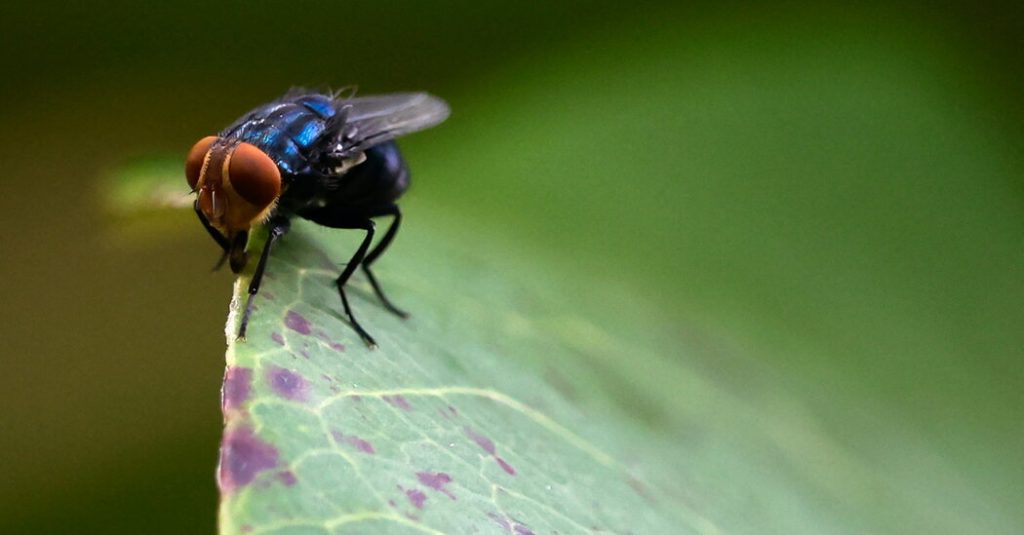
The New World screwworm is a blowfly that feeds on living flesh. Adult females lay their eggs in open wounds or orifices of warm-blooded animals. Once the eggs hatch, the larvae burrow into the wound, consuming the animal’s tissue. If left untreated, screwworm infections can be fatal within a week.
Screwworm infections in humans are rare. Last year, health officials confirmed a travel-related case in a Maryland resident who had recently visited El Salvador, but no domestically acquired human cases have been reported.
Historically, the parasitic fly was a significant livestock threat in the southern United States during the early 20th century. Officials successfully eradicated it using the sterile insect technique, which involved breeding large quantities of flies, sterilizing them through radiation, and releasing them into the wild. This approach led to a dramatic decline in the screwworm population as wild females, which mate only once, bred with the sterile males.
While the technique relies on releasing sterile males, separating male and female flies during mass rearing has proven impractical. As a result, both sexes are typically raised, sterilized, and released.
A male-only strain would enhance the efficiency of this method. Recently, scientists have made progress in developing a male-only strain known as NovoFly, a genetically engineered version of the New World screwworm.
“It’s going to allow us to almost instantaneously double the number of sterile flies that we put in the fight,” Scott Hutchins, Under Secretary for Research at the USDA, stated during the briefing.
The NovoFly contains genes for two unusual proteins. In males, these proteins primarily induce sterility, while in females, they cause embryonic death, ensuring that only sterile males reach adulthood—unless an antidote, tetracycline, is administered.
“It’s never been tested in the field, and that has to be the next step,” remarked Maxwell Scott, an entomologist at N.C. State University, whose lab contributed to the NovoFly’s development.
As a genetically engineered organism, the NovoFly is classified as a pesticide and would typically undergo a lengthy approval process before environmental release. However, due to the public health and economic risks associated with a screwworm outbreak, the Environmental Protection Agency is considering an emergency exemption to expedite its release.
If approved, the NovoFly could become one of the few genetically engineered animals released into the wild. In 2006, a modified version of the invasive pink bollworm was released in Arizona, and more recently, the Oxitec mosquito has been deployed in areas plagued by mosquito-borne diseases, including the Florida Keys.
While the approval status of the NovoFly’s emergency exemption remains uncertain, the USDA has reaffirmed its commitment to supporting efforts that could lead to the complete eradication of screwworms. “We are going to turn over every stone to find more sterile flies,” stated John Bellinger, the USDA’s Senior Advisor for New World Screwworm Preparedness, during the briefing. “We have to be ready next spring.”
The U.S. Department of Agriculture (USDA) has reported three new cases of New World screwworm, marking the first instances found in dogs and goats. This announcement, made on Monday, raises the total number of cases in the nation to five. The USDA has committed to intensifying and accelerating mitigation efforts against this parasitic fly, which was declared eradicated in the 1960s.
During a news briefing, federal and Texas state officials revealed that they are employing A.I.-driven technology to monitor screwworm populations. They are also training ranchers to identify infections in livestock and expanding facilities that produce and distribute sterile flies, the primary method for managing screwworm outbreaks.
Additionally, officials are contemplating the emergency authorization of a new genetically engineered strain of flies that could enhance the speed and efficiency of sterile fly production.
“We prevented and eradicated this pest before,” Texas Governor Greg Abbott stated during the briefing. “We can do it again.”
The recent cases were identified in a calf in La Salle County, Texas, a goat in Gillespie County, Texas, and a dog in Lea County, New Mexico. It remains unclear whether the dog contracted the parasite in the U.S.; initial reports suggested it may have traveled from Mexico, but officials later stated its travel history is unknown.
The USDA had previously reported the first two cases, both in calves located in Zavala County, Texas, just last week.
Secretary of Agriculture Brooke Rollins emphasized that the resurgence of the New World screwworm was anticipated. The insect has been migrating north through Central America for several years, and Rollins credits monitoring and containment efforts for delaying its entry into Texas.
“Every model indicated that the New World screwworm would reach Texas by early last summer, so we bought ourselves an additional year to prepare for this moment,” Ms. Rollins remarked.
The New World screwworm is a blowfly that feeds on living flesh. Adult females lay their eggs in open wounds or orifices of warm-blooded animals. Once the eggs hatch, the larvae burrow into the wound, consuming the animal’s tissue. If left untreated, screwworm infections can be fatal within a week.
Screwworm infections in humans are rare. Last year, health officials confirmed a travel-related case in a Maryland resident who had recently visited El Salvador, but no domestically acquired human cases have been reported.
Historically, the parasitic fly was a significant livestock threat in the southern United States during the early 20th century. Officials successfully eradicated it using the sterile insect technique, which involved breeding large quantities of flies, sterilizing them through radiation, and releasing them into the wild. This approach led to a dramatic decline in the screwworm population as wild females, which mate only once, bred with the sterile males.
While the technique relies on releasing sterile males, separating male and female flies during mass rearing has proven impractical. As a result, both sexes are typically raised, sterilized, and released.
A male-only strain would enhance the efficiency of this method. Recently, scientists have made progress in developing a male-only strain known as NovoFly, a genetically engineered version of the New World screwworm.
“It’s going to allow us to almost instantaneously double the number of sterile flies that we put in the fight,” Scott Hutchins, Under Secretary for Research at the USDA, stated during the briefing.
The NovoFly contains genes for two unusual proteins. In males, these proteins primarily induce sterility, while in females, they cause embryonic death, ensuring that only sterile males reach adulthood—unless an antidote, tetracycline, is administered.
“It’s never been tested in the field, and that has to be the next step,” remarked Maxwell Scott, an entomologist at N.C. State University, whose lab contributed to the NovoFly’s development.
As a genetically engineered organism, the NovoFly is classified as a pesticide and would typically undergo a lengthy approval process before environmental release. However, due to the public health and economic risks associated with a screwworm outbreak, the Environmental Protection Agency is considering an emergency exemption to expedite its release.
If approved, the NovoFly could become one of the few genetically engineered animals released into the wild. In 2006, a modified version of the invasive pink bollworm was released in Arizona, and more recently, the Oxitec mosquito has been deployed in areas plagued by mosquito-borne diseases, including the Florida Keys.
While the approval status of the NovoFly’s emergency exemption remains uncertain, the USDA has reaffirmed its commitment to supporting efforts that could lead to the complete eradication of screwworms. “We are going to turn over every stone to find more sterile flies,” stated John Bellinger, the USDA’s Senior Advisor for New World Screwworm Preparedness, during the briefing. “We have to be ready next spring.”