ETFs vs. Mutual Funds in 2026: Essential Differences Every Investor Should Understand

Roundhill Investments CEO Dave Mazza discusses the record-breaking performance of the DRAM ETF and the A.I.-driven demand boosting memory stocks on Making Money.
Investors today have a plethora of exchange-traded funds (ETFs) and mutual funds to choose from as they strategize their investment portfolios. However, it’s crucial to understand the key differences between these two types of funds.
Since their inception in the early 1990s, ETFs have experienced rapid growth, with the total assets of the U.S.-listed ETF industry reaching approximately $13.5 trillion by the end of 2025. This represents a remarkable 30% year-over-year increase, according to the Institute of Business & Finance.
In contrast, mutual funds have been around for over a century. The IBF reports that mutual funds held $31.4 trillion in net U.S. assets at the end of last year, marking an annual growth rate of about 10%.
“ETFs and mutual funds are both designed to help investors pool their money to invest in a broad mix of stocks or bonds, offering the benefits of diversification and professional management,” explained Kathy Kellert, head of index equity product at Vanguard, in an interview with FOX Business. “Many are index funds, where portfolio managers work to closely track a specific benchmark.”
HOW ETFS CAN BE EFFECTIVE BUILDING BLOCKS FOR RETIREES
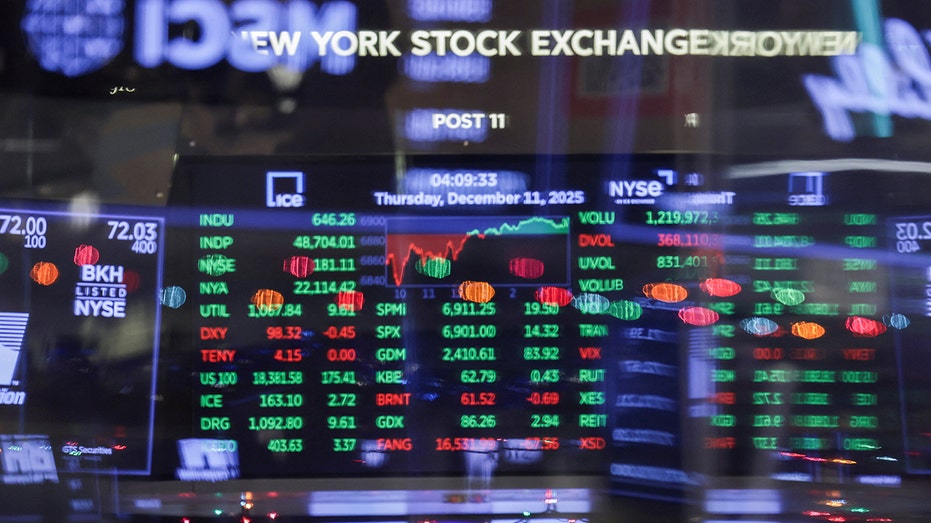
ETFs are growing faster than mutual funds in terms of total U.S. assets, according to IBF data. (Jeenah Moon/Reuters)
When evaluating ETFs and mutual funds, investors should consider several factors, including trading mechanisms, tax efficiency, and management styles—active versus passive.
“Ultimately, both ETFs and mutual funds can play an important role in a well-diversified, long-term investment strategy. The right choice depends on an investor’s preferences around trading flexibility, tax considerations, and overall financial goals,” Kellert noted.
How They Trade
Kellert elaborated that “ETFs trade on an exchange throughout the day, similar to stocks, with prices updating in real time. In contrast, mutual funds are priced only once daily after the market closes, meaning all investors receive the same end-of-day price.”
Rizwan Hussain, a senior investment portfolio strategist at Schwab Asset Management, added that the price of an ETF reflects the underlying portfolio holdings’ prices, providing investors with liquidity throughout the day.

The opening bell of the New York Stock Exchange in New York City, on 28 May 2025. (Adam Gray for Fox News Digital)
However, when buying or selling ETF shares, the price may differ from the net asset value (NAV) of the ETF. This discrepancy, known as the ‘bid/ask spread,’ is usually nominal but can be more significant for less actively traded ETFs.
Hussain pointed out that mutual fund transactions are executed once daily, with prices based on the net asset value (NAV) at market close.
ETFS VS MUTUAL FUNDS IN 2026: WHICH IS RIGHT FOR YOUR PORTFOLIO?
Tax Efficiency
Kellert noted that ETFs are generally more tax efficient than mutual funds due to their trading mechanisms and the methods fund managers use to rebalance ETF holdings.
“Because ETF shares are typically exchanged between investors, and portfolio activities like rebalances are often handled ‘in kind’—using securities rather than cash—ETFs are less likely to realize capital gains. In contrast, mutual funds may need to sell holdings to meet redemptions, generating gains that are distributed to all shareholders,” she explained.
Hussain added that ETFs “can potentially generate fewer capital gains for investors since they may have lower turnover (particularly passive ETFs) and can use the in-kind creation/redemption process to manage the cost basis of their holdings.” This makes mutual funds historically more relevant for investors holding them in tax-deferred accounts.

Wedbush Securities analyst Dan Ives is launching an AI ETF. (iStock)
WHAT ARE ACTIVE ETFS AND HOW ARE THEY RESHAPING HOW AMERICANS INVEST?
Active and Passive Management
According to IBF data, the total amount of passively managed assets in U.S. funds was approximately $19.3 trillion at the end of December 2025, compared to about $17.4 trillion in actively managed funds.
“Most ETFs are passive investments pegged to the performance of a particular index (‘passive’); however, ‘active’ ETFs have gained popularity over the last year,” Hussain noted.
There are also differences in how frequently ETFs and mutual funds disclose their portfolio holdings. ETFs typically disclose holdings daily, while mutual funds do so less frequently, which can be advantageous for active mutual fund managers.
“ETF managers are generally required to disclose fund holdings daily, whereas mutual funds disclose full portfolio holdings on a less frequent basis, typically monthly or quarterly. This later disclosure periodicity is typically a benefit to active mutual fund managers who are looking to avoid disclosing their strategy details to competitors,” Hussain added.
Roundhill Investments CEO Dave Mazza discusses the record-breaking performance of the DRAM ETF and the A.I.-driven demand boosting memory stocks on Making Money.
Investors today have a plethora of exchange-traded funds (ETFs) and mutual funds to choose from as they strategize their investment portfolios. However, it’s crucial to understand the key differences between these two types of funds.
Since their inception in the early 1990s, ETFs have experienced rapid growth, with the total assets of the U.S.-listed ETF industry reaching approximately $13.5 trillion by the end of 2025. This represents a remarkable 30% year-over-year increase, according to the Institute of Business & Finance.
In contrast, mutual funds have been around for over a century. The IBF reports that mutual funds held $31.4 trillion in net U.S. assets at the end of last year, marking an annual growth rate of about 10%.
“ETFs and mutual funds are both designed to help investors pool their money to invest in a broad mix of stocks or bonds, offering the benefits of diversification and professional management,” explained Kathy Kellert, head of index equity product at Vanguard, in an interview with FOX Business. “Many are index funds, where portfolio managers work to closely track a specific benchmark.”
HOW ETFS CAN BE EFFECTIVE BUILDING BLOCKS FOR RETIREES
ETFs are growing faster than mutual funds in terms of total U.S. assets, according to IBF data. (Jeenah Moon/Reuters)
When evaluating ETFs and mutual funds, investors should consider several factors, including trading mechanisms, tax efficiency, and management styles—active versus passive.
“Ultimately, both ETFs and mutual funds can play an important role in a well-diversified, long-term investment strategy. The right choice depends on an investor’s preferences around trading flexibility, tax considerations, and overall financial goals,” Kellert noted.
How They Trade
Kellert elaborated that “ETFs trade on an exchange throughout the day, similar to stocks, with prices updating in real time. In contrast, mutual funds are priced only once daily after the market closes, meaning all investors receive the same end-of-day price.”
Rizwan Hussain, a senior investment portfolio strategist at Schwab Asset Management, added that the price of an ETF reflects the underlying portfolio holdings’ prices, providing investors with liquidity throughout the day.
The opening bell of the New York Stock Exchange in New York City, on 28 May 2025. (Adam Gray for Fox News Digital)
However, when buying or selling ETF shares, the price may differ from the net asset value (NAV) of the ETF. This discrepancy, known as the ‘bid/ask spread,’ is usually nominal but can be more significant for less actively traded ETFs.
Hussain pointed out that mutual fund transactions are executed once daily, with prices based on the net asset value (NAV) at market close.
ETFS VS MUTUAL FUNDS IN 2026: WHICH IS RIGHT FOR YOUR PORTFOLIO?
Tax Efficiency
Kellert noted that ETFs are generally more tax efficient than mutual funds due to their trading mechanisms and the methods fund managers use to rebalance ETF holdings.
“Because ETF shares are typically exchanged between investors, and portfolio activities like rebalances are often handled ‘in kind’—using securities rather than cash—ETFs are less likely to realize capital gains. In contrast, mutual funds may need to sell holdings to meet redemptions, generating gains that are distributed to all shareholders,” she explained.
Hussain added that ETFs “can potentially generate fewer capital gains for investors since they may have lower turnover (particularly passive ETFs) and can use the in-kind creation/redemption process to manage the cost basis of their holdings.” This makes mutual funds historically more relevant for investors holding them in tax-deferred accounts.
Wedbush Securities analyst Dan Ives is launching an AI ETF. (iStock)
WHAT ARE ACTIVE ETFS AND HOW ARE THEY RESHAPING HOW AMERICANS INVEST?
Active and Passive Management
According to IBF data, the total amount of passively managed assets in U.S. funds was approximately $19.3 trillion at the end of December 2025, compared to about $17.4 trillion in actively managed funds.
“Most ETFs are passive investments pegged to the performance of a particular index (‘passive’); however, ‘active’ ETFs have gained popularity over the last year,” Hussain noted.
There are also differences in how frequently ETFs and mutual funds disclose their portfolio holdings. ETFs typically disclose holdings daily, while mutual funds do so less frequently, which can be advantageous for active mutual fund managers.
“ETF managers are generally required to disclose fund holdings daily, whereas mutual funds disclose full portfolio holdings on a less frequent basis, typically monthly or quarterly. This later disclosure periodicity is typically a benefit to active mutual fund managers who are looking to avoid disclosing their strategy details to competitors,” Hussain added.