7 everyday habits to improve your lung health

Your lungs are two soft, spongy organs located on either side of your chest. They play a crucial role in your body by drawing in the air (oxygen) necessary for survival. Once inhaled, this oxygen is transferred into your bloodstream and circulated throughout your body.
Simultaneously, carbon dioxide—a waste product generated by your body—moves from your blood to your lungs, where it is expelled during exhalation. Beyond gas exchange, your lungs also serve as a protective barrier, filtering and expelling harmful substances.
However, certain lifestyle choices or genetic factors can impair lung function, potentially leading to serious health conditions such as chronic obstructive pulmonary disease (COPD), asthma, infections, and even lung cancer.
To help you maintain optimal lung health, we consulted Dr. Ramit Singh Sambyal, a Senior Consultant and Lead at Health City Cayman Islands, Western Caribbean, for practical tips.
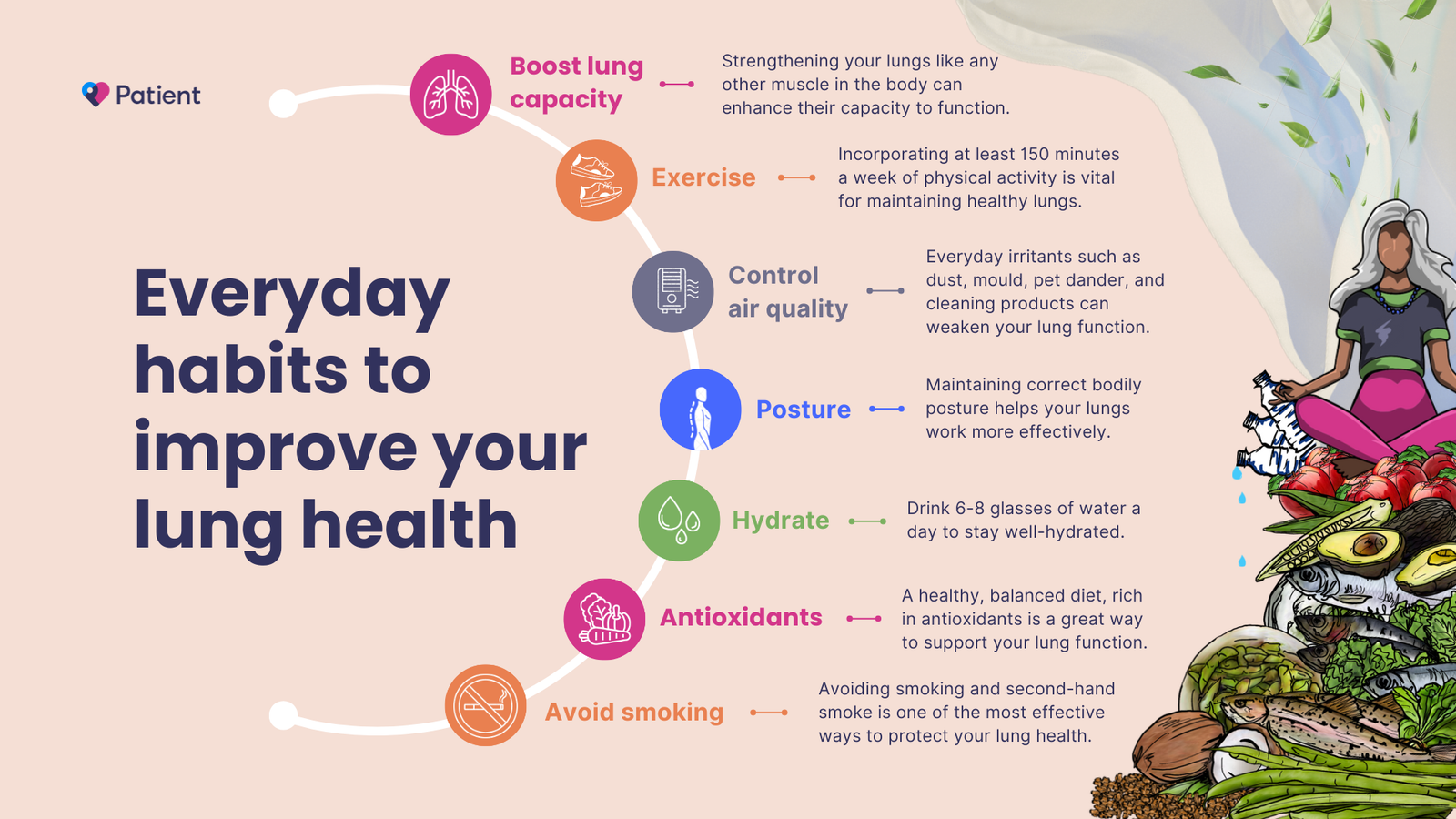
7 Everyday Habits to Improve Your Lung Health
Graphic: Ben Hudson
Daily habits that fortify your lungs can significantly enhance their functionality and support your overall health. Dr. Sambyal emphasizes that just like any other muscle in the body, strengthening your lungs can improve their capacity to function effectively.
“Many people don’t realize how daily habits can either strengthen or weaken lung function,” he notes. “Breathing is automatic, but the way we breathe makes a big difference.”
Sambyal advises shifting from shallow chest breathing to deep diaphragmatic breathing, also known as belly breathing. This technique can enhance lung strength and increase stamina.
Incorporating at least 150 minutes of physical activity each week is vital for maintaining healthy lungs. “Movement plays a crucial role in lung health,” Sambyal explains. “Your lungs thrive on activity, yet exercise is often overlooked as a way to improve breathing.”
Sambyal recommends the following forms of exercise to encourage full lung expansion, better oxygen flow, and improved circulation:
-
Cardio workouts – such as brisk walking, swimming, or cycling.
-
Strength training – a strong core supports your diaphragm, making every breath more efficient.
“Even simple activities, such as laughing or singing, help your lungs work harder, improving elasticity and clearing out stale air,” he adds.
The quality of the air you breathe is another crucial factor that shouldn’t be overlooked. Sambyal warns that everyday irritants like dust, mold, pet dander, and chemicals from cleaning products can weaken lung function over time.
He suggests the following ways to support your respiratory health:
Aim to drink 6-8 glasses of water daily to keep your body well-hydrated. Sambyal explains that hydration is essential for lung health, as they require moisture to function properly.
He says: “Dehydration can lead to thickened mucus, making it harder for your lungs to expel irritants. Drinking enough water throughout the day helps prevent congestion and keeps them functioning at their best.”
5. Practice Good Posture
Maintaining correct posture can also enhance lung efficiency. Sambyal notes that slouching compresses your lungs, limits oxygen intake, and can lead to shallower breathing.
He recommends these tips to help your lungs expand better and get more oxygen to your body:
6. Nourish Your Body with Antioxidants
A healthy, balanced diet rich in antioxidants is a great way to support lung function.
Sambyal advises incorporating the following antioxidant-rich foods into your meals:
“These will help reduce inflammation and protect your lung tissue,” he explains. “Conversely, processed foods and excessive dairy can increase mucus production, making breathing more difficult.”
As we age, lung function naturally declines. However, one significant step you can take to mitigate these effects is to refrain from smoking. Sambyal emphasizes that avoiding smoking and second-hand smoke is one of the most effective ways to protect your lung health.
He reassures that even former smokers can take comfort in knowing their lungs remain resilient. Lung function can begin to improve within just weeks of quitting smoking.
To keep your lungs healthy, they require daily care and attention. “Small, consistent lifestyle changes such as deep breathing exercises, staying active, and improving indoor air quality can make a lasting impact on respiratory health,” Sambyal concludes. “Eating a lung-friendly diet also plays a key role in supporting long-term lung function.”
Patient picks for Lung health

General health and lifestyle
The Effect of Air Pollution on Asthma Sufferers
Asthma is a common, long-term lung condition that causes inflammation and narrowing of your airways, leading to symptoms such as shortness of breath, wheezing, chest tightness, and coughing. Air pollution can irritate your airways, making your asthma worse. We look at what you can do to ease symptoms and better manage your asthma when pollution is high.
by Lawrence Higgins

Chest and lungs
How to Handle Asthma During the Winter Months
Many people with asthma find their symptoms worsen in the winter months. Discover how to manage your asthma as the days get colder and what you can do to avoid triggers.
by Victoria Raw
Your lungs are two soft, spongy organs located on either side of your chest. They play a crucial role in your body by drawing in the air (oxygen) necessary for survival. Once inhaled, this oxygen is transferred into your bloodstream and circulated throughout your body.
Simultaneously, carbon dioxide—a waste product generated by your body—moves from your blood to your lungs, where it is expelled during exhalation. Beyond gas exchange, your lungs also serve as a protective barrier, filtering and expelling harmful substances.
However, certain lifestyle choices or genetic factors can impair lung function, potentially leading to serious health conditions such as chronic obstructive pulmonary disease (COPD), asthma, infections, and even lung cancer.
To help you maintain optimal lung health, we consulted Dr. Ramit Singh Sambyal, a Senior Consultant and Lead at Health City Cayman Islands, Western Caribbean, for practical tips.
7 Everyday Habits to Improve Your Lung Health
Graphic: Ben Hudson
Daily habits that fortify your lungs can significantly enhance their functionality and support your overall health. Dr. Sambyal emphasizes that just like any other muscle in the body, strengthening your lungs can improve their capacity to function effectively.
“Many people don’t realize how daily habits can either strengthen or weaken lung function,” he notes. “Breathing is automatic, but the way we breathe makes a big difference.”
Sambyal advises shifting from shallow chest breathing to deep diaphragmatic breathing, also known as belly breathing. This technique can enhance lung strength and increase stamina.
Incorporating at least 150 minutes of physical activity each week is vital for maintaining healthy lungs. “Movement plays a crucial role in lung health,” Sambyal explains. “Your lungs thrive on activity, yet exercise is often overlooked as a way to improve breathing.”
Sambyal recommends the following forms of exercise to encourage full lung expansion, better oxygen flow, and improved circulation:
-
Cardio workouts – such as brisk walking, swimming, or cycling.
-
Strength training – a strong core supports your diaphragm, making every breath more efficient.
“Even simple activities, such as laughing or singing, help your lungs work harder, improving elasticity and clearing out stale air,” he adds.
The quality of the air you breathe is another crucial factor that shouldn’t be overlooked. Sambyal warns that everyday irritants like dust, mold, pet dander, and chemicals from cleaning products can weaken lung function over time.
He suggests the following ways to support your respiratory health:
Aim to drink 6-8 glasses of water daily to keep your body well-hydrated. Sambyal explains that hydration is essential for lung health, as they require moisture to function properly.
He says: “Dehydration can lead to thickened mucus, making it harder for your lungs to expel irritants. Drinking enough water throughout the day helps prevent congestion and keeps them functioning at their best.”
5. Practice Good Posture
Maintaining correct posture can also enhance lung efficiency. Sambyal notes that slouching compresses your lungs, limits oxygen intake, and can lead to shallower breathing.
He recommends these tips to help your lungs expand better and get more oxygen to your body:
6. Nourish Your Body with Antioxidants
A healthy, balanced diet rich in antioxidants is a great way to support lung function.
Sambyal advises incorporating the following antioxidant-rich foods into your meals:
“These will help reduce inflammation and protect your lung tissue,” he explains. “Conversely, processed foods and excessive dairy can increase mucus production, making breathing more difficult.”
As we age, lung function naturally declines. However, one significant step you can take to mitigate these effects is to refrain from smoking. Sambyal emphasizes that avoiding smoking and second-hand smoke is one of the most effective ways to protect your lung health.
He reassures that even former smokers can take comfort in knowing their lungs remain resilient. Lung function can begin to improve within just weeks of quitting smoking.
To keep your lungs healthy, they require daily care and attention. “Small, consistent lifestyle changes such as deep breathing exercises, staying active, and improving indoor air quality can make a lasting impact on respiratory health,” Sambyal concludes. “Eating a lung-friendly diet also plays a key role in supporting long-term lung function.”
Patient picks for Lung health
General health and lifestyle
The Effect of Air Pollution on Asthma Sufferers
Asthma is a common, long-term lung condition that causes inflammation and narrowing of your airways, leading to symptoms such as shortness of breath, wheezing, chest tightness, and coughing. Air pollution can irritate your airways, making your asthma worse. We look at what you can do to ease symptoms and better manage your asthma when pollution is high.
by Lawrence Higgins
Chest and lungs
How to Handle Asthma During the Winter Months
Many people with asthma find their symptoms worsen in the winter months. Discover how to manage your asthma as the days get colder and what you can do to avoid triggers.
by Victoria Raw