California City Approves Historic Measure to Permanently Ban Data Centers
Shah Gilani, founder and CIO of ANSRR Market Analytics, explains why artificial intelligence stocks are experiencing extreme volatility.
In a significant move reflecting local sentiment, voters in a Southern California city have decisively approved a ballot measure that permanently bans data centers within city limits. This decision highlights the growing resistance to the infrastructure that supports the booming artificial intelligence sector.
In Monterey Park, the measure known as Measure NDC was passed with overwhelming support, receiving 10,321 votes in favor and just 1,362 against, translating to an impressive 88.34% approval rate, as reported by Los Angeles County.
This measure amends the city’s General Plan to enforce a citywide prohibition on data centers, with the stipulation that the ban can only be lifted through a future vote by the residents.
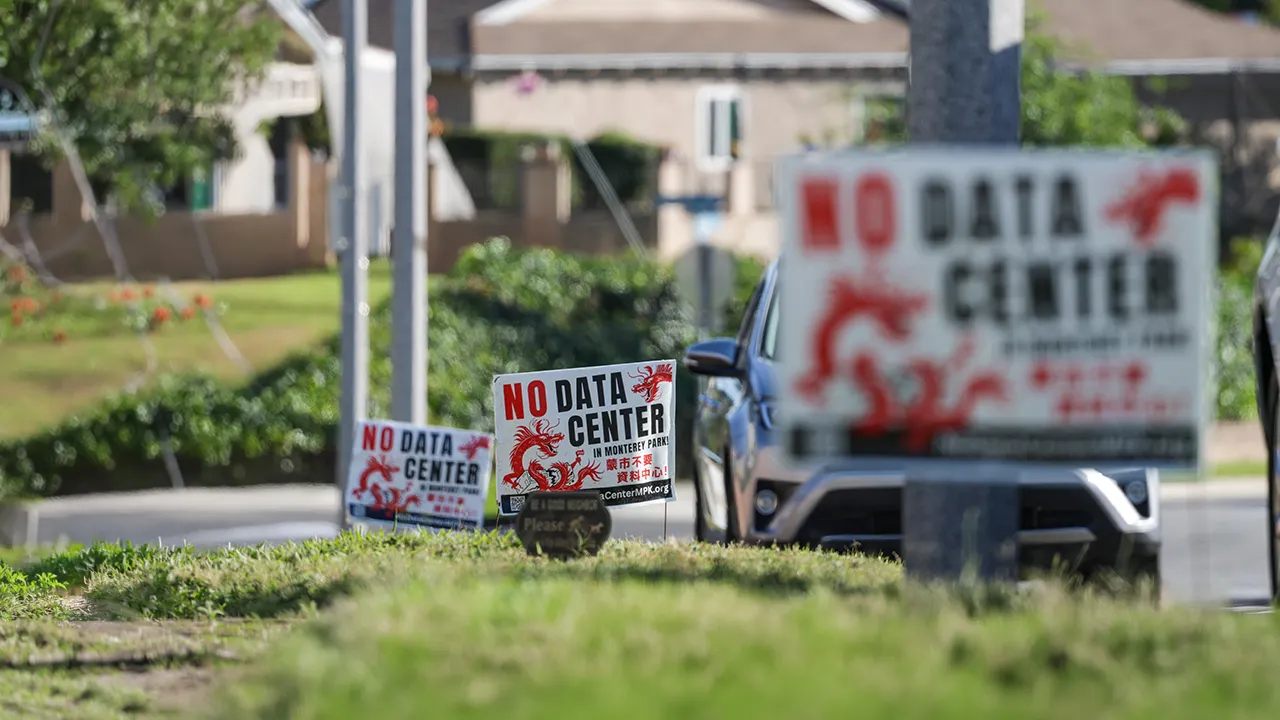
Signs of protest against data centers pepper front yards in a residential neighborhood in Monterey Park, California, on April 1, 2026. (Robert Gauthier/Los Angeles Times via Getty Images)
The ballot measure was framed as a means to protect air quality, safeguard drinking water resources, and ensure public health, while also addressing concerns about potential increases in electricity and water rates.
KEVIN O’LEARY SAYS UTAH AI DATA CENTER PROJECT WILL SHRINK AFTER LAWMAKERS DEMAND CUTS
This vote follows a contentious period surrounding a proposed data center project at 1977 Saturn Avenue, which became a focal point for community opposition to large-scale digital infrastructure development.
The project, initiated by Australian investment firm HMC StratCap through its DigiCo platform, aimed to transform the site into a substantial 218,400-square-foot data center intended to support extensive computing operations, including those related to artificial intelligence.
Corning chairman and CEO Wendell Weeks discusses the company’s newly announced partnership with Amazon to expand fiber-optic production for data centers on ‘The Claman Countdown.’
According to project documents, the facility was projected to require around 50 megawatts of peak electrical capacity and generate approximately $5 million annually in tax revenue for the city.
KEVIN O’LEARY DETAILS MASSIVE UTAH AI DATA CENTER TO RIVAL CHINA’S TECH DOMINANCE
However, opponents contended that the project’s demands for electricity, water, and its environmental impact outweighed the economic advantages. Public dissent against the Saturn Avenue proposal grew throughout 2024 and 2025, ultimately leading city officials to seek restrictions on future data center developments. The project was subsequently withdrawn.
On March 4, the Monterey Park City Council unanimously voted to place the measure on the June ballot.
Following the election, Mayor Elizabeth Yang expressed her excitement on Facebook, stating, “Landslide win!! Congratulations to our city Monterey Park on making history!!!”
This vote arrives at a time when technology companies and developers are investing billions into data centers to accommodate the rapid growth of artificial intelligence and cloud computing services.

On March 4, the Monterey Park City Council unanimously voted to place the measure on the June ballot. (iStock)
This rapid growth has sparked nationwide discussions regarding electricity demand, water usage, land-use planning, and the economic benefits that such facilities can provide to local communities.
Monterey Park officials have hailed the measure as a historic milestone in curbing data center development. However, broader questions linger about how communities across the country will manage the increasing demand for digital infrastructure while addressing local concerns about energy consumption, resource depletion, and overall quality of life.
CLICK HERE TO GET FOX BUSINESS ON THE GO
As the adoption of artificial intelligence accelerates, disputes regarding the location and construction of data centers are likely to remain a pivotal issue for local governments, developers, and residents throughout the United States.
Shah Gilani, founder and CIO of ANSRR Market Analytics, explains why artificial intelligence stocks are experiencing extreme volatility.
In a significant move reflecting local sentiment, voters in a Southern California city have decisively approved a ballot measure that permanently bans data centers within city limits. This decision highlights the growing resistance to the infrastructure that supports the booming artificial intelligence sector.
In Monterey Park, the measure known as Measure NDC was passed with overwhelming support, receiving 10,321 votes in favor and just 1,362 against, translating to an impressive 88.34% approval rate, as reported by Los Angeles County.
This measure amends the city’s General Plan to enforce a citywide prohibition on data centers, with the stipulation that the ban can only be lifted through a future vote by the residents.
Signs of protest against data centers pepper front yards in a residential neighborhood in Monterey Park, California, on April 1, 2026. (Robert Gauthier/Los Angeles Times via Getty Images)
The ballot measure was framed as a means to protect air quality, safeguard drinking water resources, and ensure public health, while also addressing concerns about potential increases in electricity and water rates.
KEVIN O’LEARY SAYS UTAH AI DATA CENTER PROJECT WILL SHRINK AFTER LAWMAKERS DEMAND CUTS
This vote follows a contentious period surrounding a proposed data center project at 1977 Saturn Avenue, which became a focal point for community opposition to large-scale digital infrastructure development.
The project, initiated by Australian investment firm HMC StratCap through its DigiCo platform, aimed to transform the site into a substantial 218,400-square-foot data center intended to support extensive computing operations, including those related to artificial intelligence.
Corning chairman and CEO Wendell Weeks discusses the company’s newly announced partnership with Amazon to expand fiber-optic production for data centers on ‘The Claman Countdown.’
According to project documents, the facility was projected to require around 50 megawatts of peak electrical capacity and generate approximately $5 million annually in tax revenue for the city.
KEVIN O’LEARY DETAILS MASSIVE UTAH AI DATA CENTER TO RIVAL CHINA’S TECH DOMINANCE
However, opponents contended that the project’s demands for electricity, water, and its environmental impact outweighed the economic advantages. Public dissent against the Saturn Avenue proposal grew throughout 2024 and 2025, ultimately leading city officials to seek restrictions on future data center developments. The project was subsequently withdrawn.
On March 4, the Monterey Park City Council unanimously voted to place the measure on the June ballot.
Following the election, Mayor Elizabeth Yang expressed her excitement on Facebook, stating, “Landslide win!! Congratulations to our city Monterey Park on making history!!!”
This vote arrives at a time when technology companies and developers are investing billions into data centers to accommodate the rapid growth of artificial intelligence and cloud computing services.
On March 4, the Monterey Park City Council unanimously voted to place the measure on the June ballot. (iStock)
This rapid growth has sparked nationwide discussions regarding electricity demand, water usage, land-use planning, and the economic benefits that such facilities can provide to local communities.
Monterey Park officials have hailed the measure as a historic milestone in curbing data center development. However, broader questions linger about how communities across the country will manage the increasing demand for digital infrastructure while addressing local concerns about energy consumption, resource depletion, and overall quality of life.
CLICK HERE TO GET FOX BUSINESS ON THE GO
As the adoption of artificial intelligence accelerates, disputes regarding the location and construction of data centers are likely to remain a pivotal issue for local governments, developers, and residents throughout the United States.