Larry Kudlow Reveals How Trump’s Hidden Oil Reserves Might Stabilize Fed Interest Rates
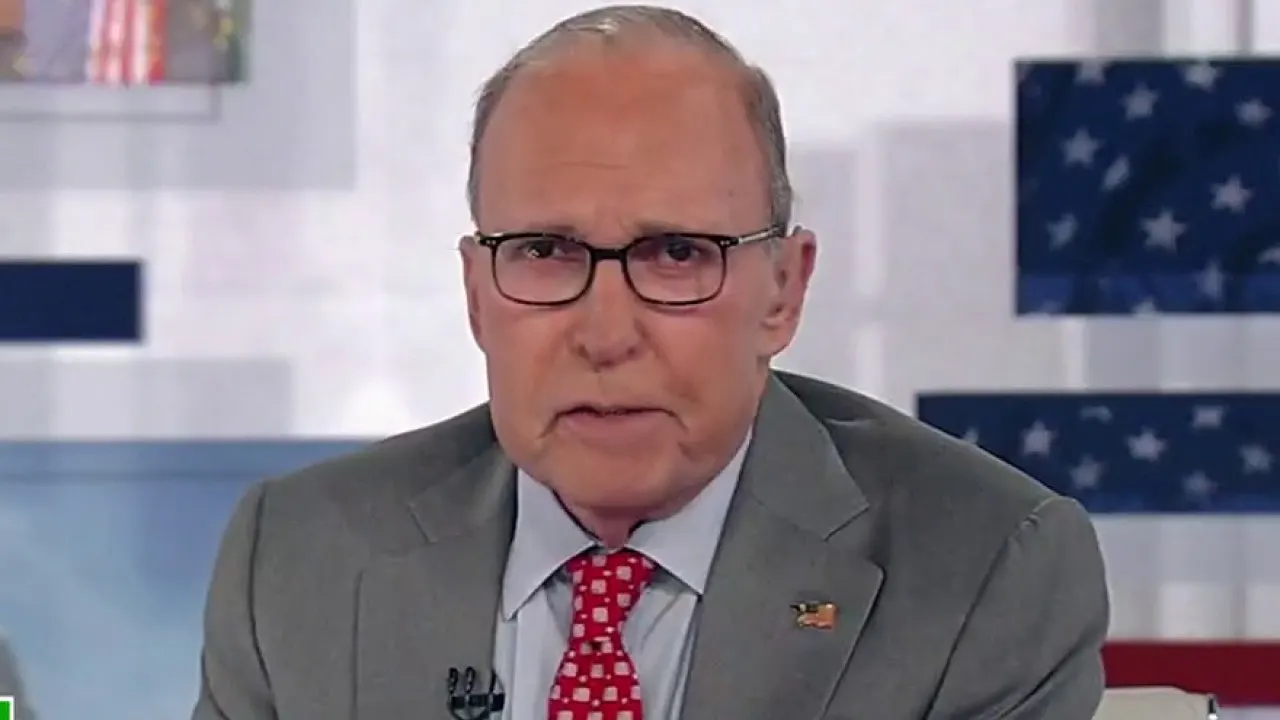
FOX Business host Larry Kudlow discusses the Trump administration’s handling of the war in Iran and analyzes economic performance on ‘Kudlow.’
Recently, President Trump revealed that Project Freedom, aimed at reopening the Strait of Hormuz, has been quietly operational for the past month. According to his disclosure, our military has assisted over 200 commercial ships carrying more than 100 million barrels of oil through this crucial waterway.
This operation involved facilitating safe transit for these vessels rather than providing direct escorts. Trump stated, “You know I can say it now. Something you didn’t do. You know, we’ve been taking out millions of barrels of oil. Nobody knows it. You know who doesn’t know about it? Iran. Until right now.” He elaborated on a recent operation where “we took out the other night 22 ships late at night with no lights, because they don’t have any radar, because we blasted the crap out of it. We took out. That’s why oil is $85 a barrel.”
Indeed, the absence of lights, transponders, and Iranian radar has played a significant role in this operation. The figures mentioned by Trump appear accurate, with 100 million barrels of oil successfully transported through the Strait over the past month. This translates to an increase of approximately 3 million barrels per day in global oil supply.
Israeli special ops veteran Aaron Cohen and The Heritage Foundation’s Victoria Coates discuss how oil prices can be maintained amid the conflict with Iran on ‘Kudlow.’
To put this in perspective, the global supply and demand balance hovers around 100 million barrels per day. By secretly reopening the Strait of Hormuz, the additional 3 million barrels represents a significant 3 percent increase in global oil supply. This increase has likely prevented oil prices from skyrocketing to $150 or even $200 per barrel. For context, the United States currently produces about 13.6 million barrels per day.
West Texas Intermediate (WTI) crude oil prices peaked at $113 but have since dropped to around $90, marking a nearly 20 percent decrease. Gasoline prices, which reached $4.56 in May, are now averaging $4.15 according to AAA’s national tally—a drop of almost 10 percent. Notably, many states are now seeing gasoline prices with a $3 handle. While this situation has caused some anxiety, many believe it is a small price to pay for liberating the Middle East and combating radical Islam in Iran. Trump’s assertion that this conflict will soon conclude, leading to lower oil and gasoline prices, resonates with many.
Turning to the latest Consumer Price Index (CPI) data, it shows a year-on-year increase of 4.2 percent, with a more modest 2.9 percent rise when excluding food and energy. The primary driver behind this increase has been a staggering 104 percent annual rise in energy prices over the past three months, alongside a 250 percent surge in gasoline prices. Interestingly, prices for goods, excluding food and energy, remain relatively flat, challenging the notion of tariff-induced inflation.
Sen. John Kennedy, R-La., emphasizes that the primary concern for most Americans is the soaring cost of living, not foreign policy or cultural debates, on ‘Kudlow.’
Despite these challenges, the economy is thriving. Key sectors such as manufacturing, business capital goods, and construction are flourishing, alongside rising profits and productivity. With low taxes, minimal regulation, and the ongoing A.I. boom, America’s economy is growing at nearly 4 percent with low unemployment rates. This represents a supply-side revolution.
Looking ahead to next week’s Federal Reserve meeting, there is hope that Chairman Kevin Warsh will clarify that economic growth does not inherently lead to inflation, nor does a temporary spike in energy prices. Anticipation surrounds the potential for new models and fresh perspectives from the new chairman.
FOX Business host Larry Kudlow discusses the Trump administration’s handling of the war in Iran and analyzes economic performance on ‘Kudlow.’
Recently, President Trump revealed that Project Freedom, aimed at reopening the Strait of Hormuz, has been quietly operational for the past month. According to his disclosure, our military has assisted over 200 commercial ships carrying more than 100 million barrels of oil through this crucial waterway.
This operation involved facilitating safe transit for these vessels rather than providing direct escorts. Trump stated, “You know I can say it now. Something you didn’t do. You know, we’ve been taking out millions of barrels of oil. Nobody knows it. You know who doesn’t know about it? Iran. Until right now.” He elaborated on a recent operation where “we took out the other night 22 ships late at night with no lights, because they don’t have any radar, because we blasted the crap out of it. We took out. That’s why oil is $85 a barrel.”
Indeed, the absence of lights, transponders, and Iranian radar has played a significant role in this operation. The figures mentioned by Trump appear accurate, with 100 million barrels of oil successfully transported through the Strait over the past month. This translates to an increase of approximately 3 million barrels per day in global oil supply.
Israeli special ops veteran Aaron Cohen and The Heritage Foundation’s Victoria Coates discuss how oil prices can be maintained amid the conflict with Iran on ‘Kudlow.’
To put this in perspective, the global supply and demand balance hovers around 100 million barrels per day. By secretly reopening the Strait of Hormuz, the additional 3 million barrels represents a significant 3 percent increase in global oil supply. This increase has likely prevented oil prices from skyrocketing to $150 or even $200 per barrel. For context, the United States currently produces about 13.6 million barrels per day.
West Texas Intermediate (WTI) crude oil prices peaked at $113 but have since dropped to around $90, marking a nearly 20 percent decrease. Gasoline prices, which reached $4.56 in May, are now averaging $4.15 according to AAA’s national tally—a drop of almost 10 percent. Notably, many states are now seeing gasoline prices with a $3 handle. While this situation has caused some anxiety, many believe it is a small price to pay for liberating the Middle East and combating radical Islam in Iran. Trump’s assertion that this conflict will soon conclude, leading to lower oil and gasoline prices, resonates with many.
Turning to the latest Consumer Price Index (CPI) data, it shows a year-on-year increase of 4.2 percent, with a more modest 2.9 percent rise when excluding food and energy. The primary driver behind this increase has been a staggering 104 percent annual rise in energy prices over the past three months, alongside a 250 percent surge in gasoline prices. Interestingly, prices for goods, excluding food and energy, remain relatively flat, challenging the notion of tariff-induced inflation.
Sen. John Kennedy, R-La., emphasizes that the primary concern for most Americans is the soaring cost of living, not foreign policy or cultural debates, on ‘Kudlow.’
Despite these challenges, the economy is thriving. Key sectors such as manufacturing, business capital goods, and construction are flourishing, alongside rising profits and productivity. With low taxes, minimal regulation, and the ongoing A.I. boom, America’s economy is growing at nearly 4 percent with low unemployment rates. This represents a supply-side revolution.
Looking ahead to next week’s Federal Reserve meeting, there is hope that Chairman Kevin Warsh will clarify that economic growth does not inherently lead to inflation, nor does a temporary spike in energy prices. Anticipation surrounds the potential for new models and fresh perspectives from the new chairman.