Warren Buffett’s Straightforward Tips for New Investors in the Stock Market
‘Mornings with Maria’ panel assesses yields and previews Q1 earnings for Nvidia and retailers.
Over the past 30 years, the S&P 500 index has generated a staggering total return of 1,770% as of June 5. This impressive performance underscores the notion that the stock market is one of the most effective asset classes for wealth growth. For instance, a starting investment of $10,000 in this benchmark back in June 1996 would now be worth approximately $187,000. The gains have been even more pronounced over the last decade.
Recognizing the significant impact such performance can have on financial well-being, it may be time for new investors to consider allocating some of their savings into the stock market. However, the process can feel overwhelming, leaving many unsure of where to start.
This is where Warren Buffett comes into play. The legendary investor is not only a financial titan but also an excellent educator. His advice is invaluable for those new to the stock market.
WARREN BUFFETT ERA ENDS AFTER 60 YEARS AS CEO WITH GREG ABEL TAKING OVER

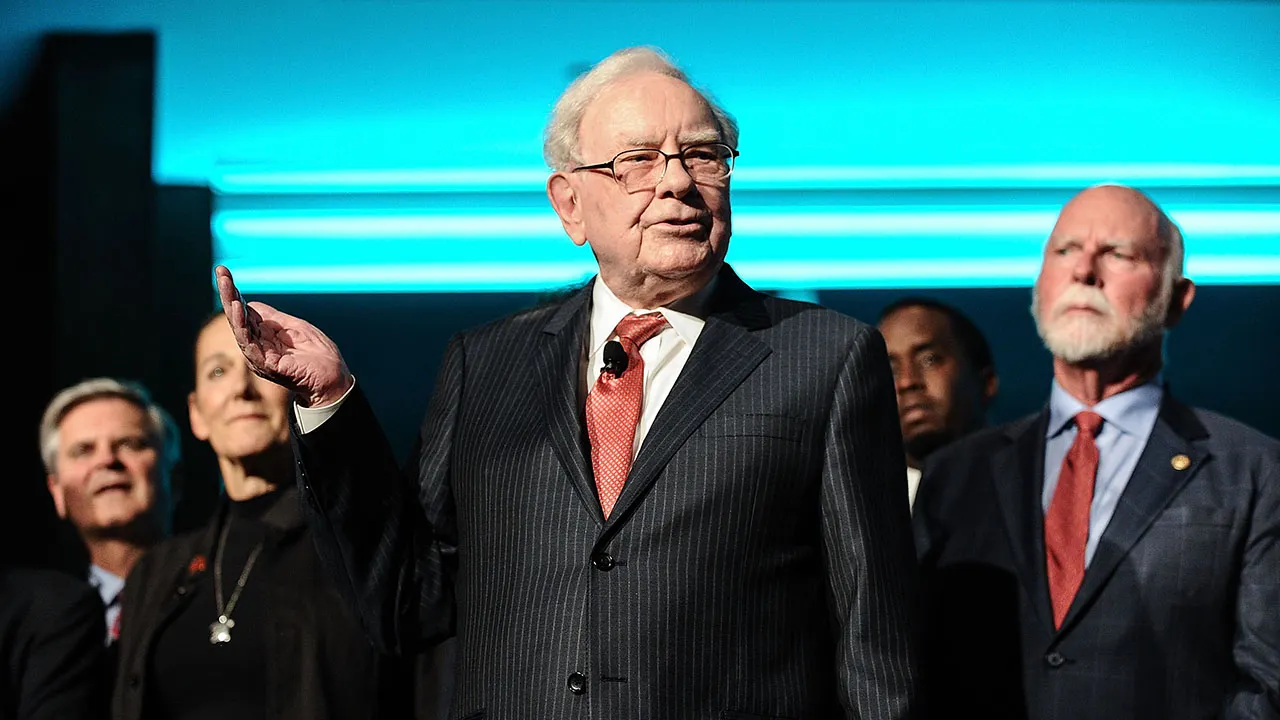
Warren Buffett stepped down as CEO of Berkshire Hathaway late last year after a 60-year run. (Daniel Zuchnik/WireImage)
Keep it Simple
Buffett is renowned for his exceptional capital allocation skills, having compounded Berkshire Hathaway’s share price at nearly 20% annually for six decades. Yet, his advice for most investors is surprisingly straightforward: buy a low-cost S&P 500 index fund.
This recommendation likely stems from the reality that the average individual lacks the time, expertise, or desire to pick individual stocks and manage a portfolio. Furthermore, expert fund managers often struggle to outperform the market.
THIS SECTOR HAS DOMINATED ETF RETURNS SO FAR IN 2026
Active management strategies have a poor track record, with data indicating that most large-cap fund managers fail to beat the S&P 500 over the long term. This raises the question: why don’t more investors opt for the passive route?
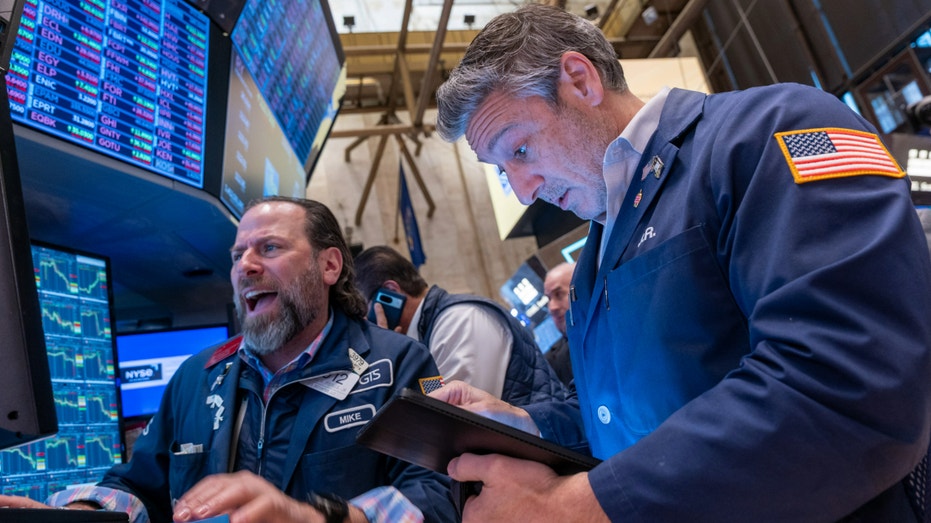
Over the past 30 years, the S&P 500 index has generated a total return of 1,770%, as of June 5. (Spencer Platt/Getty Images)
Consider This Popular Exchange-Traded Fund
One of the top choices for investors is the Vanguard S&P 500 ETF, which boasts an incredibly low expense ratio of just 0.03%. Over time, this means investors will pay significantly less than what active managers typically charge, allowing for more money to remain in their pockets.
| Ticker | Security | Last | Change | Change % |
|---|---|---|---|---|
| VOO | VANGUARD S&P 500 ETF – USD DIS | 679.68 | +1.68 | +0.25% |
This ETF tracks the S&P 500 index, meaning its holdings align with the benchmark. The top five holdings include Nvidia, Apple, Microsoft, Amazon, and Alphabet, showcasing a strong presence in the information technology sector. Investors will benefit from exposure to the rapidly evolving artificial intelligence landscape.
It’s important to note that this ETF encompasses all sectors of the economy, making it a hassle-free way to gain broad market exposure.
Maintain a Long-Term Perspective
Currently, the S&P 500 index trades at a historically high valuation, raising questions about its future return potential. While the remarkable trailing 10-year total return of 316% may not be repeated, investing in the stock market still holds merit.
TAP INTO THE HUMANOID ROBOTICS BOOM WITH THIS ETF
Profit growth and margins remain strong. The leading companies, many of which have been mentioned, are among the most dominant in history, deserving of the market’s attention.
| Ticker | Security | Last | Change | Change % |
|---|---|---|---|---|
| NVDA | NVIDIA CORP. | 208.64 | +3.54 | +1.73% |
| AAPL | APPLE INC. | 301.54 | -5.80 | -1.89% |
| MSFT | MICROSOFT CORP. | 411.74 | -4.93 | -1.18% |
| AMZN | AMAZON.COM INC. | 245.22 | -0.81 | -0.33% |
| GOOGL | ALPHABET INC. | 363.31 | -5.00 | -1.36% |
If the current valuation concerns you, consider adopting a dollar-cost averaging (DCA) strategy. This approach allows you to allocate fresh savings to the market on a monthly or quarterly basis, effectively removing the pressure of determining the ideal starting valuation.
Even small contributions to a DCA strategy can yield significant long-term results. For example, if you start with a $10,000 investment in the Vanguard S&P 500 ETF and add $100 each month, assuming a historical 10% annualized total return, you could accumulate around $382,000 after 30 years. Naturally, investing larger amounts will result in an even higher total.
GET FOX BUSINESS ON THE GO BY CLICKING HERE
Neil Patel has positions in Vanguard S&P 500 ETF. The Motley Fool has positions in and recommends Alphabet, Amazon, Apple, Berkshire Hathaway, Microsoft, Nvidia, and Vanguard S&P 500 ETF. The Motley Fool has a disclosure policy.
‘Mornings with Maria’ panel assesses yields and previews Q1 earnings for Nvidia and retailers.
Over the past 30 years, the S&P 500 index has generated a staggering total return of 1,770% as of June 5. This impressive performance underscores the notion that the stock market is one of the most effective asset classes for wealth growth. For instance, a starting investment of $10,000 in this benchmark back in June 1996 would now be worth approximately $187,000. The gains have been even more pronounced over the last decade.
Recognizing the significant impact such performance can have on financial well-being, it may be time for new investors to consider allocating some of their savings into the stock market. However, the process can feel overwhelming, leaving many unsure of where to start.
This is where Warren Buffett comes into play. The legendary investor is not only a financial titan but also an excellent educator. His advice is invaluable for those new to the stock market.
WARREN BUFFETT ERA ENDS AFTER 60 YEARS AS CEO WITH GREG ABEL TAKING OVER
Warren Buffett stepped down as CEO of Berkshire Hathaway late last year after a 60-year run. (Daniel Zuchnik/WireImage)
Keep it Simple
Buffett is renowned for his exceptional capital allocation skills, having compounded Berkshire Hathaway’s share price at nearly 20% annually for six decades. Yet, his advice for most investors is surprisingly straightforward: buy a low-cost S&P 500 index fund.
This recommendation likely stems from the reality that the average individual lacks the time, expertise, or desire to pick individual stocks and manage a portfolio. Furthermore, expert fund managers often struggle to outperform the market.
THIS SECTOR HAS DOMINATED ETF RETURNS SO FAR IN 2026
Active management strategies have a poor track record, with data indicating that most large-cap fund managers fail to beat the S&P 500 over the long term. This raises the question: why don’t more investors opt for the passive route?
Over the past 30 years, the S&P 500 index has generated a total return of 1,770%, as of June 5. (Spencer Platt/Getty Images)
Consider This Popular Exchange-Traded Fund
One of the top choices for investors is the Vanguard S&P 500 ETF, which boasts an incredibly low expense ratio of just 0.03%. Over time, this means investors will pay significantly less than what active managers typically charge, allowing for more money to remain in their pockets.
| Ticker | Security | Last | Change | Change % |
|---|---|---|---|---|
| VOO | VANGUARD S&P 500 ETF – USD DIS | 679.68 | +1.68 | +0.25% |
This ETF tracks the S&P 500 index, meaning its holdings align with the benchmark. The top five holdings include Nvidia, Apple, Microsoft, Amazon, and Alphabet, showcasing a strong presence in the information technology sector. Investors will benefit from exposure to the rapidly evolving artificial intelligence landscape.
It’s important to note that this ETF encompasses all sectors of the economy, making it a hassle-free way to gain broad market exposure.
Maintain a Long-Term Perspective
Currently, the S&P 500 index trades at a historically high valuation, raising questions about its future return potential. While the remarkable trailing 10-year total return of 316% may not be repeated, investing in the stock market still holds merit.
TAP INTO THE HUMANOID ROBOTICS BOOM WITH THIS ETF
Profit growth and margins remain strong. The leading companies, many of which have been mentioned, are among the most dominant in history, deserving of the market’s attention.
| Ticker | Security | Last | Change | Change % |
|---|---|---|---|---|
| NVDA | NVIDIA CORP. | 208.64 | +3.54 | +1.73% |
| AAPL | APPLE INC. | 301.54 | -5.80 | -1.89% |
| MSFT | MICROSOFT CORP. | 411.74 | -4.93 | -1.18% |
| AMZN | AMAZON.COM INC. | 245.22 | -0.81 | -0.33% |
| GOOGL | ALPHABET INC. | 363.31 | -5.00 | -1.36% |
If the current valuation concerns you, consider adopting a dollar-cost averaging (DCA) strategy. This approach allows you to allocate fresh savings to the market on a monthly or quarterly basis, effectively removing the pressure of determining the ideal starting valuation.
Even small contributions to a DCA strategy can yield significant long-term results. For example, if you start with a $10,000 investment in the Vanguard S&P 500 ETF and add $100 each month, assuming a historical 10% annualized total return, you could accumulate around $382,000 after 30 years. Naturally, investing larger amounts will result in an even higher total.
GET FOX BUSINESS ON THE GO BY CLICKING HERE
Neil Patel has positions in Vanguard S&P 500 ETF. The Motley Fool has positions in and recommends Alphabet, Amazon, Apple, Berkshire Hathaway, Microsoft, Nvidia, and Vanguard S&P 500 ETF. The Motley Fool has a disclosure policy.